SHORT STORIES
How To Survive Hitchhiking in America
I asked where they were going and they told me Los Angeles. When I asked what was in Los Angeles, the girl just looked at me and said, “The whole world, man.”

The Hungarian had fallen asleep in the pool and his soft snores were making the water sputter. His head bobbed, and he swayed the way you do when you want to puke and forget about the world. I felt as uncomfortable as I had felt all night. The sun disappeared fast and the pool water quickly became cold and uninviting. I gazed out at the olive grove and noticed its leather green trees—once giant and magnificent—were suddenly ominous and foreboding. We were swiftly thrust into a haunted part of Tuscany, and the guests I had dined with only hours earlier appeared to me as monsters.
“It wasn’t the first time I hitchhiked in California, though,” Roman, the charismatic Londoner, said.
“Is that right?” I said absently.
The Hungarian continued to snore and short ripples ran across the water.
“Not even close, I’d hitchhiked a hundred times before then,” Roman continued, even though nobody seemed to care. “Where did you say you were from?”
“Oakland,” I said.
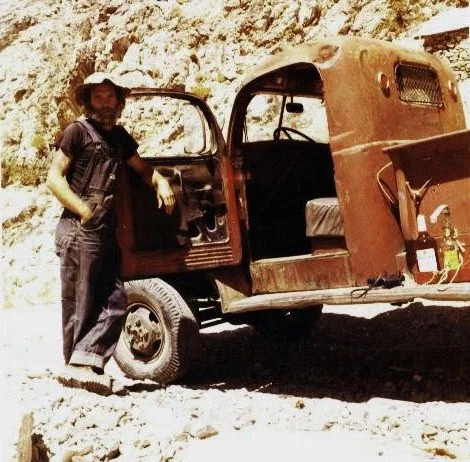
“San Francisco, right!” he said. “Okay, so, I was hitchhiking in San Francisco years ago. This would have been 1967. I was younger then—much better looking than I am now. If you can believe it…” He paused, waiting for me to laugh. When I didn’t, he took a quick snort of rose, forgot how bad it was, gagged, and went on. “I was in Muir Woods. You ever go up there? It’s beautiful. These giant redwood trees that stretch to the sky. Truly magnificent. Anyway, I went there for a hike one afternoon by myself and I guess time just got away from me. By that time, the trees were so large and the sky was positively camouflaged, I couldn’t see the sun disappear, on the west coast no less. When I finally got out of the woods it was very nearly dark. I started trekking toward the city and had my finger out, you know, to flag down drivers. Nobody wanted to stop at first, but then a truck—one of those old Power Wagons—finally pulled over and honked for me to get in. It was dark by this time, so I couldn’t tell the color of the truck, but thought it might have been green…I suppose it doesn’t matter now.”
I think I said something to Roman at this point, though I’m not entirely sure.
“I climbed in and the woman in the passenger seat slid over to the middle,” Roman went on. “There was a scraggly looking man driving. He had a thick beard and dark, black hair slicked back with what I thought was Brylcreen—we used a lot of Brylcreem in those days. I guess you guys call it mousse. The fella didn’t look at me as I got in, but the girl did. I noticed she was pregnant, maybe seven or eight months by the look of it, and she had this serene way about her. But it was like her smile was medicated—like her happiness wasn’t there…but it was, you know?”
A jerk of motion was issued by the sleeping Hungarian, but rather than wake, it seemed as though he were having a bad dream, and he promptly sunk back into his sleep.
“They asked where I was going and I said I was meeting some friends in North Beach. They were picking up some friends in the Haight, but said they could drop me off. They seemed really pleasant. I mean, she seemed more pleasant than he…he was a bit of a sour apple, driving like the road was taunting him, you know? Full of quiet fury, as I like to call it. I asked where they were going and they told me Los Angeles. When I asked what was in Los Angeles, the girl just looked at me and said, ‘The whole world, man.’ People talked like that in those days. The guy thought Los Angeles was the ‘groovy place’ to be.
“As we crossed over the Golden Gate Bridge I looked out at the city. It was very dark, but the fog hadn’t yet come in, so I could see the city’s lights. I could even see the spotlight of Alcatraz—operationally, the prison had closed a few years prior to this, but there were still a couple people who lived on the island—I think one of them was the former warden, but don’t quote me on that. I even asked them if they’d been out to Alcatraz—at that time The Rock didn’t do tours, but you could take a boat out around the island and see it from the water. They said they hadn’t been there, and the guy seemed especially aggravated with the question, so I dropped it altogether.
“When we got to North Beach I thanked them for the ride and the guy put the parking brake on and said, ‘Don’t mention it, we could all use a break sometime.’ I’ll never forget that. It wasn’t a terribly impressive thing to say or anything, but, later, it’d be something I’d play back in my head for years. Even now, as I’m wading in this cold, cold pool in the middle of the Tuscan valley, I can’t help but think about what he said.
“I wished the woman luck with her upcoming birth and she smiled at me with glazed eyes that were completely uncomprehending of anything. We never exchanged names—that’s usually how people did it when they hitched—but I’d recognize them a couple years later when I saw their names in the paper for the murder of Sharon Tate: it was Susan Atkins and Charles Manson.”
I blinked at Roman for a long while, frowning, but not meaning to. He was inspecting the bubbly rose again, wondering if it was safe to drink yet.
“Wait…” I said. “What was that?”
“Quite mad, huh?” he said, knowing I heard him.
The sleeping Hungarian suddenly sprung to life, thrashing in the water. He looked at us and asked, “Who is Charles Mason?” and I was surprised he’d heard a single word of Roman’s story.
“Oh…” Roman said calmly. “He’s just a…he’s something of a boogeyman, I guess.”
“Mumus,” The Hungarian said instantly.
“Mumus?” Roman and I said in unison.
“Yes,” he said. “The golem.”
“Yes. The golem,” Roman repeated. But I said nothing. Roman threw back the sparkling rose and drank, this time without gagging. By this time, it was too cold to stand it, I had to get out of the water.
Published in The Junction on January 6, 2019.

We Can't Play FIFA No More
As we pulled out of the parking lot, the stranger who read me the mail told me how proud she was my achievement(s), but all I could think about was the game of FIFA I wanted to play when I got home.

Photo by Timon Studler on Unsplash
I’ve avoided my wife all morning. Since I got back from over there—which was six weeks ago now—I’ve barely even looked at her. Last night we went to dinner at Applebee’s—she had the Tequila Lime Chicken with steamed rice and a vegetable medley and I had the Bourbon Onion Steak (medium-well) with a baked potato. I also had the vegetable medley. It was fine. During dinner, I think my wife and I spoke a couple dozen words—eight of which were us saying, “Oh, yeah?” The night before that we went to dinner at Red Robin—which was also fine. I got the Prime Chophouse Burger with extra pickles and a side of honey mustard—which is what I usually get when we go to Red Robin. My wife got the Burnin’ Love Burger with extra cheese and a side of fried onion strings. She also asked for a side of BBQ sauce. She usually just uses ketchup, but since I’ve been back from over there she’s ordered BBQ sauce. She seems to be enjoying the BBQ sauce more.
I’ve also started drinking again. Not when we go out or anything, but if she goes to Costco or meets up with her girlfriends at the Olive Garden, then I usually have a highball or two. I used to drink highballs of Old Turkey rye, but I could tell when she got home she could smell it on me—she never said anything or nothing, I could just tell—so I’ve since switched to Smirnoff vodka. I don’t really like the taste of vodka or anything, I just don’t want to deal with the hassle and all.
About two weeks after I got back from over there, my wife and I got an invitation in the mail. There was to be a party with my old infantry, and they were giving out awards for things like bravery or courage or honor or one of those buzz words the Army likes to pat themselves on the back for. I was getting honored for one of those adjectives, but I don’t remember which one it was. I think maybe they were giving me a plaque, too. Maybe. My wife said she thought it was so thoughtful and wonderful and kind and all of those things that wives say. But as she was telling me all of those things my award was supposed to be, all I could do was stare at her. It was like a stranger was standing in my kitchen reading me the mail. My wife simply was not there.
I ended up saying something like—and don’t quote me on this—“Oh, really?” After that I went into the basement and played Xbox. I don’t remember which game I played, though. That’s happened to me since I’ve been back: the more I play, the less I seem to remember. My mind is in a lull and I’m two steps behind where I think I should be. Nothing seems tan...
tan....
tang.....
tangi......
tangible.......
As I played Xbox, I stole a few nips from a flask I’d hidden under the couch. It was Gilbey’s gin—which is fine—and when I went upstairs I don’t think she could smell it.
Before I left for over there I don’t even remember having an Xbox. Maybe my wife got it for me as a homecoming present. Maybe. If she did, it was awfully nice. Though, I don’t think I told her I thought so. Or maybe I did tell her and just forgot. Maybe that was it.
A few days later I was in the basement eating a junior bacon cheeseburger and a bowl of chili from Wendy’s. I was also playing Xbox—this time I was playing FIFA, I’m sure of it—and that stranger who was reading me the mail came down and told me it was time to go. I asked the stranger where we were going and she said it was to get my award. The one that was for bravery, courage, or honor and was going to be thoughtful, wonderful, or kind. It took about eight or nine more minutes to finish my game of FIFA, the junior bacon cheeseburger, and the rest of my chili before I got ready. Then the mail-reading-stranger drove us to the V.A.
We walked in and the place smelled like Ball Park Franks and stale Coors Light. The smell didn’t bother me, but the stranger who drove me to the V.A. said it made her sick. She immediately went to the bathroom and I was left alone.
Later, before they started handing out the awards, I ordered the stranger her second Tanqueray and soda with three limes and ordered a seltzer water with lemon for myself. When I delivered it, I overheard her gossiping with one of our neighbors about why Mr. Geere up the street had moved away. After that I went to the bathroom and chugged the three Coors Lights I had stashed earlier in the night. I don’t think anyone saw me, but I guess I wasn’t looking for anyone either.
Even though the awards ceremony was for me and my infantry, I didn’t see anyone I recognized. Their faces were blank, nameless. But they all seemed to be nodding at me, curious and attentive. I didn’t know what else to do but nod back, so I nodded back. The entire night, though, we never said anything to one another, it was just the nodding.
When it was time to give out the awards it turned out the Army decided to give me an award for “the distinction of honor”—or at least that’s how they put it. As I walked up to claim the plaque I was terrified I’d have to give a speech. But the man—a Sergeant of some sorts—simply handed me the cheap piece of wood and offered me a limp handshake. There was a single flash from a nearby photographer and then the Sergeant directed me back to my seat.
As we pulled out of the parking lot, the stranger who read me the mail told me how proud she was my achievement(s), but all I could think about was the game of FIFA I wanted to play when I got home.
*
Shortly after I got over there I was sent to a small village just outside of Baghdad—I don’t remember its name, though—and stationed outside the village’s only school, a modest building with no windows and an ugly roof made of sundried mud brick. My objective was never clear. I mostly wandered the school’s perimeter until my commanding officer told me it was time to go, at which point I would go back to the barracks and think about nothing in particular.
One day—my day off—I was asked to cover the shift of another officer who had taken ill. I knew this was a lie as I remember that officer coming back to the barracks well after midnight, piss drunk, complaining about the Redskins’ offensive line. But since the drunk officer outranked me I had no choice but to accept. That was always pretty rotten when you had to patrol on your day off.
I got to the school at half past seven in the morning. Classes were already underway and I could hear the children participating in morning prayer. It was stiflingly hot and I was already feeling lightheaded. I’m not sure how much time had passed before I felt a little girl tugging at my fatigues. I turned around and, through a rusty chain-link fence, saw a girl—no more than nine-years old—dressed in a dull purple Abaya and a pair of dilapidated beige sandals. She had big brown eyes full of inexplicable wisdom and a nose no bigger than a button. She was looking at me thoughtfully, without the slightest trace of skepticism. I’m sure I had a glum sort of look on my face—as I said, it was awfully hot that morning. When she saw my expression, she pulled her fingers back through the fence and placed her hands behind her back. Her posture was impeccable, almost daunting, and I remember it made me feel intimidated.
Behind her, a handful of Iraqi children were playing soccer—or football, as they called it—and a handful more were acting as spectators, cheering on whichever team they felt compelled to cheer on—as it usually goes. Since it was, after all elementary school, I’m sure a fair amount of politics was involved. But the girl staring at me on the other side of the fence didn’t seem at all interested in who was playing, let alone who would win.
She pointed at the patch on my left shoulder and said, “You are American?” She spoke with a wonderfully delicate Arabic accent, using her English words carefully, but confidently.
“Yes,” I said, pointing at the U.S. flag sewn into my fatigues. “I’m American.”
“I see that flag often,” she said.
“You do?”
“Yes. It’s everywhere,” she said. “They even put one in our school.”
“You speak very good English,” I said.
“I speak English very well,” she said, though I wasn’t sure why.
“Do you like the flag?” I asked.
“I don’t know,” she shrugged. “Do you like the Iraqi flag?”
I thought about it for a long time before I said, “You know, I’m not quite sure what an Iraqi flag looks like.” After I said it I thought the girl might appear angry or mildly miffed, but she just stared at me with all the placidity in the world and said, “We have one of those in our school, too.”
“Do you like the Iraqi flag?”
“I suppose.”
Across the school yard I saw the girl’s teacher staring at me distrustfully. She was very tall, but slight, almost frail, and had these angry eyes that I was convinced could cut through the sharpest of people.
“Is that your teacher?” I asked the girl.
“Yes,” she said, without turning around.
“Do you like her?”
“You ask a lot of questions,” said the girl.
I smiled and felt the muscles in my face twinge—as if I hadn’t smiled in years. “Well,” I said, “I guess since you came up to me and I wasn’t sure what else to do.”
The girl looked surprised. In fact, she almost laughed. “Oh no,” she said. “I didn’t mean—It’s just that—Well, I ask a lot of questions, too. My teacher says that’s because I’m cur...curmous...curmously?”
“Curious?” I said.
“Yes!” she exclaimed. “That’s it! Curious. Are you curious, too?”
“I don’t know,” I said. “I’ve never been really curious about anything.”
“Oh...” The girl sighed, looking slightly disappointed. “That’s okay. Not everyone has to be...curious.”
On the field, a boy of about 11 scored a goal and those on his team surrounded him in a celebratory circle shouting the Arabic word for goal. I could have told you what the word was at the time, but today I just can’t seem to remember it. Though, I do recall it sounding very nice.
“You don’t like soccer?” I asked.
The girl looked puzzled. “Soccer?”
I smiled again, feeling those muscles spring to life. “Sorry. Football.”
“Oh, soccer.” She said the word very mindfully, as if absorbing it entirely. “I do, normally. But the ball the school plays with is very worn, and very flat.” She shuddered. “And very dirty.”
“You only have one ball?”
“Yes,” she said gloomily. “But the others don’t seem to mind. It’s just so flat it’s like they’re kicking around a sack of broken rice. It’s really very sad.”
“Why won’t the school get you a new one?” I asked.
This time the girl looked exceptionally puzzled, as if I’d grunted my words rather than spoke them. “I...” she stammered. “I’m afraid I don’t understand.”
“Can’t you ask your teacher for a new ball?”
“No,” she said flatly. “Is that what you can do in America?” She asked this question expectantly, her words full of hope and desire.
I shrugged and said, “Yeah, I guess so.”
“Wow!” she said. “That’s really something. I bet I’d like America.”
The girl’s teacher dispatched a boy of about six to come and check on us. After the teacher had given him his instructions, the boy dropped his shoulders and sauntered over, acting as if this were the last thing in the world he’d ever want to do.
“Somebody’s coming to see you,” I said, motioning to the six-year old.
She gave the boy a quick, dismissive glance. “Oh,” she practically scoffed, “that’s Nassir. He’s so...” Again, she searched for the word.
“Nice?” I said.
“No,” she said, frustrated. “The opposite.”
“Annoying?” I said.
“Yes!” she proclaimed. “He’s so annoying. He does whatever the teacher tells him to do, even though I think he doesn’t like it.”
“In America we call that being ‘a teacher’s pet,’” I said.
She smiled. “A teacher’s pet? I like that.”
Nassir approached us, scowling and looking particularly miserable. “Mrs. Hamir says you have to come and play with the others,” he told the girl.
“I don’t want to,” she said.
He looked absolutely dumbfounded. His lip trembled. “But...” he said quietly, and then repeated, “she said you have to.”
“You speak very good English, too,” I said to Nassir.
He looked at me, unimpressed. “I speak English very well,” he said, just like the girl. Though, again, I wasn’t sure why.
“Well, then you speak English very well,” I said anyway.
“They make us,” was all he said, and walked away.
“He’s going to tell Mrs. Hamir I didn’t listen to him,” the girl said.
“I hope you don’t get in trouble because of me.”
“It’s all right,” she said. “They don’t like when we...” She paused, stuck out her tongue at a crooked angle, and searched for that elusive word. “Fran...Frat...Fraternity?”
“Fraternizing?” I said.
“That’s it! They don’t like us ‘fraternizing with the soldiers.’” She spoke as if she had been taught that phrase, but didn’t entirely understand it.
“Why not?”
She shrugged. “Who knows?”
The same boy who had scored the first goal scored a second goal and, again, his classmates mobbed him with adoration. When his mob of fans subsided, I saw the boy look over at me. He didn’t have the same quizzical look Nassir and his teacher had. In fact, he seemed to be smiling. He was wearing a white t-shirt, which was far too big for him, with a black and white photograph of Pele on the front. The boy pumped his fist and ran back to his side of the field.
“He’s very good,” I said to the girl.
“That’s Akram,” she said. “He loves football. If it were up to him he’d live in that t-shirt, but the people don’t like it too much—they’d rather he wore his Thawb—so they only let him wear the t-shirt when we play outside.”
The balls deterioration was evident even across the yard. Most of the black pentagons had faded to a faint grey and, indeed, the ball was half-deflated giving it the appearance of an oblong pancake rather than a perfect sphere.
“Would you like a new soccer ball?” I asked the girl.
“I don’t think that’s—you don’t have to,” she said. “Mrs. Hamir said we should be thankful for what we have.”
“But what if I could get you one, would you like that?”
She shrugged. “I suppose I would. Maybe then I would play.”
“Maybe then you could show Akram a thing or two.”
The girl shrugged again. “Maybe. Though I’m really not very good. At least, not as good as him.”
“Well, maybe with the new ball it’ll be a different story.”
“Maybe,” she said again.
Mrs. Hamir blew the small, metallic whistle around her neck and several of the school children groaned. She shouted something in Arabic and the children systematically began to line up.
“I should go,” said the girl, starting back for the school.
“What’s your name?” I called after her.
“Shada,” the girl said, turning back momentarily. “What’s yours?”
I told her my name and the girl named Shada went back inside.
*
I went back to the barracks without an inkling of animosity toward the hungover officer I was asked to cover. Speaking with Shada was the most productive conversation I had had since arriving in Baghdad. Her free, liberal eyes beamed in a way that made me think the world turned just for her. And I was foolish enough, even in that instant, to believe it.
The first thing I did when I got back—even before I stowed my rifle and hung up my gear—was ask my commanding officer if there were any extra soccer balls on base.
“What’ya want those for?” he grunted.
“There’s this school, sir,” I said. “And they only have one soccer ball. And it’s in real rough shape.”
“So?”
“So I thought I could give them one.”
“No,” he said.
“No?”
“We need ‘em here,” he said, scowling.
“I just thought, sir, if we had extra we could—“
He removed a Nicaraguan cigar from his breast pocket and bit off the end. “We need ‘em here,” he said again, then spit the torn cigar end in the sand.
“How many do we have, sir?”
“As many as we need.” He lit the cigar and took a short, hollow drag. “Boys are gonna need ‘em. And the boys get what the boys want. Anything else?”
I shook my head and he headed off, chewing audibly on the end of his $18 Nicaraguan cigar.
Later that night I snuck into the recreational bunk—the tent where things like board games, cards, footballs, basketballs, and, yes, soccer balls were stored. I stuffed the most pristine soccer ball I could find into my saddle pack and—honest to God—actually tiptoed back to my bunk. I couldn’t wait to see Shada’s big brown eyes light up when I handed her that ball.
*
The next morning I got up extra early and slipped out before my commanding officer could assign me elsewhere. I signed out with PFC George Warby at the front gate and he didn’t seem to notice the sphere-shaped bulge in my sack. I got to the school just in time to hear the students’ morning prayer end and Mrs. Hamir start the first lesson. I had no idea how long that lesson would be until their recess, and knew the minutes would drag by in a seemingly endless succession.
Six layers of perspiration had soaked through my undershirt before the back doors to the schoolhouse opened and the students poured into the quad. I was stricken with an overwhelming sense of anxiety when, at first, I didn’t see Shada. I saw Akram (still wearing his Pele t-shirt) and Nassir, and even saw Mrs. Hamir, but the schoolyard was void of Shada.
I shoved the soccer ball further down in my pack and turned back to the barren street, preparing to look for things I had no idea what to look for. I did a lot of that in the Army.
I heard two or three goals (all of which, I assumed, were scored by Akram) before I felt a tugging at the back of my fatigues. My heart swelled with hope and I spun around and saw Shada, dressed in a tattered maroon Abaya, smiling up at me.
“Hello,” she said.
“Hello there,” I said, my glee barely containable.
“You’re back.”
“I am,” I said. “I brought you something.” I reached into my pack and extracted the magnificent soccer ball. In the early morning sun I swear the thing practically glowed.
At first, Shada looked at the ball sardonically, as if she wasn’t quite sure what it was. Maybe she hadn’t seen a ball in such good shape before. Maybe. But then she said, “You have a football.”
“I brought it for you,” I said.
She looked from me to the ball and back to me again. “What do you mean?”
“I mean, this is a gift I brought for you. For all of your friends, actually.”
“Oh...” she said. “I’m not sure Mrs. Hamir—“
“Don’t worry about her,” I said. “Isn’t it a teacher’s job to make sure her students are happy?”
“I suppose.”
“So if this soccer—I mean, football makes you guys happy, wouldn’t she be happy?”
“I suppose,” she said again.
“Very good! Then I’ll throw it over.”
In full view of Mrs. Hamir, I tossed the ball over the chain-link fence and it landed right in Shada’s arms. Mrs. Hamir gave no indication my gift made her nervous or displeased, but that still didn’t remove the almost-permanent scowl embedded on her pale, gaunt face.
“Thank you,” Shada said. “This will make everyone so happy.”
“Are you happy?” I asked.
“Very much so,” she said, and ran immediately to Akram.
Akram was the first to wave his appreciation, and many of the other students followed in suit—even though none of them knew who I was (or, at least, why in the holy hell a soldier would ever bring them a brand new soccer ball). One of the students, a boy with a thick build and vaguely amphibian-looking features, picked up their old deflated soccer ball and set it carefully in an equipment bag near Mrs Hamir—who was still giving no indication as to whether she was satisfied or furious. Akram kicked off and I watched the students play until Mrs. Hamir blew the whistle and they were summoned inside for the rest of the morning.
*
Elation is a funny sort of thing. It can consume you almost to a debilitating degree. You feel formidable, invincible, full of charisma. You are not defined by your elation; you are powered by it. You do not walk on air, for air feels nothing but gratitude to be beneath your awesome feet. The sounds of the world are sharper, the sights clearer, the smells—all sweet and grand—are tangible. Elation moves you to degrees you never thought possible, for you are capable of the grandest achievements, even ones you never, in your wildest dreams, anticipated.
And then, like all moments of elation, it is stripped from your soul, as if by some hapless thief, before it is cast away like some cheap, shapeless stone.
*
As I headed back to the barracks—the afternoon sun beating down on my chapped lips and rose-colored face—I practically skipped. Figuring it to be quite odd for a soldier in uniform to be skipping, I settled for a quick trot to make it look as if I were exercising. I hadn’t made it more than three blocks from the school before I felt the ground beneath me shake and the buildings around me rattle. Dust from the apartment complex above me settled onto my hands and helmet and a quick tremor made my knees buckle.
I looked in the direction of the school and saw plumes of smoke leaping across the buildings in the foreground. Another quick tremor ran through the streets and I nearly fell over.
There was a vacant stillness in the air before the screams came. The screams were of no distinction; men were screaming, women were screaming, children were screaming, they all blended together in one horrific sonata.
And then I began to run—as fast as my jelly legs would carry me—toward the screams. After the first block, I bumped into a man with a grey beard who was walking aimlessly through the cloud of thick dust forming in the streets. After another block, I collided with a woman, in her mid 20s. She had a long laceration across her forehead. Another woman was helping her, but they both were walking blinding in the cloud of dust that had transformed into a dense fog of prickly sand. Cries of immense agony echoed off the village’s mud walls and I was paralyzed by my own disorientation.
Finally, I came across a small Toyota, torn apart, starting from the trunk—no doubt a car bomb. The metal was jutting out at all angles, the paint stripped away and replaced with a heavy black blanket of ash. Fire crackled in both the front and back seats and putrid smell of burning rubber kidnapped my nostrils.
Beyond the car I saw the school, now in ruins. The windowless building was now a heaping pile of rubble and the mud roof was nothing more than broken pebbles. Even the chain-link fence had been blown over, now a twisted piece of aluminum resting in the place the kids once played socc—football.
I ran around to the other end of the school, where part of the building was still standing, and made my way through a narrow opening I found near the building’s corner. I had to crawl at first, but after a few feet I was able to stand. I saw books strewn about, covered in dust, followed by desks that had toppled over in the blast.
I turned a corner and saw the legs of a body sticking out from under a desk—the teacher’s desk. I pulled at the legs and realized they had been separated from the body and the torso was on the other side of the room. I crawled to the torso and saw it was Mrs. Hamir, the rusty, cut-rate whistle still around her neck.
I crawled a few more feet and found another body, this one Nassir’s. His eyes were still open, but covered in a thin layer of soot which made him look almost peaceful. Next to him was the student I recognized with the thick build and amphibian-like features. His eyes were closed and neither peace nor terror seemed to have found him.
I crawled over several more bodies and vomited.
I finally felt the touch of fabric in my palm. I looked down and saw a decapitated body on its back. The fabric I touched was so badly shredded, it had practically been reduced to a rag. But I did notice the black and white print of Pele on the front, and knew the headless body near the school’s only bookcase belonged to Akram.
I waded through a sea of severed hands and shrapnel-riddled feet before I came to the body I dreaded most. Shada lie in the middle of the room, all of her limbs intact. At first glance it didn’t appear as though she’d suffered a single scratch, and for a fleeting moment I thought she might be alive. But as I sidled up alongside her, I noticed her heart was still and her chest no longer rose. One of her hands rested on her belly and the other was on the ground. The soccer ball was only feet away—still in pristine condition—unmolested by the car’s devastating blast.
*
Even though I’ve avoided my wife all morning, I know she wants to go to the Cheesecake Factory for dinner. I know this because she wrote it on the whiteboard we keep in the kitchen, and also texted me several times something to that effect.
I don’t respond to her texts and can hear her walking around upstairs. I wonder how long it’ll be before she comes down and asks if I’ve looked at my phone.
I finish the last of the gin in the flask.
I don’t particularly like Cheesecake Factory, although their Baja Chicken Tacos with chipotle rice and beans is pretty good. My wife usually gets the Herb Crusted Filet of Salmon with asparagus and mashed potatoes—which is also pretty good, but I’ve only ever had a bite or two.
Even though I don’t plan on responding to her texts, I know we’ll end up going.
I’ve been sitting in my basement for the last six hours playing FIFA and nursing the 20 Chicken McNuggets I picked up at lunch. I’ve lost three straight times now but refuse to play with anyone other than Real Madrid—I just like how that Cristiano Ronaldo plays, I guess. He’s a very good player. I wonder how long he had to train to become that good. Probably pretty long. His skills are very tangible.......
tangi......
tang.....
tan...
tan...
Upstairs I hear the mail slot in our front door clink and know the postman has dropped off our letters. While nothing in those deliverables will interest me, I know it’s only a matter of time until that stranger upstairs will meet me in the kitchen and start reading me the mail.
I hear the stranger walk across the new Bellawood floors we just put in and scoop up the letters before she heads back to kitchen.
I get another text but don’t look at my phone.
I decide to play another game—this time against Barcelona—but quit when they score a goal twenty seconds in. I eat the last Chicken McNugget with some difficulty and turn off the Xbox. Before going upstairs I stand in the calm of my basement, listening only to the sounds of the tearing envelopes and the stranger’s sighs. Above our Kingsman fireplace I notice the stranger has hung up the plaque I got at the V.A. I have no idea how long it’s been there. I think about taking it down but decide it’s too much work and go upstairs to listen to the mail.
Mailboxes Are Always The Only Victims
I’m home from college for Christmas. I don’t know why. College is tedious, but holidays are ghastly.

I’m home from college for Christmas. I don’t know why. College is tedious, but holidays are ghastly.
The air is so thick when I step off the plane I can barely breathe. My friend picks me up from the airport and mentions something about a party near the Marina. He lights a cigarette, seems strung out. His eyes are glazed, inundated by paranoia. He mentions the party again and I’m not sure if he thinks I didn’t hear or immediately forgot he told me. Regardless, he never asks if I want to go, he just drives there. His driving is sluggish and he won’t stop talking. I sit still, half listening to him.
We arrive at the party and the thick air turns to rain. The place is nice, but there are too many loud people there. My ears hurt.
A girl comes up to me at some point and tells me her name. I can’t hear what it is, but nod anyway. She asks if I want some coke. I tell her no.
“Where you from?” she asks.
“Here.”
“I haven’t seen you around.”
“I’ve been away.”
“Whereabouts?”
The music is so loud I can barely hear her. “All over,” I say.
“You’ve been all over?”
“Yeah.”
“What about New York? You been to New York?”
“Yeah.”
“Paris? I bet you’ve never been to Paris.”
“Yeah, been there.”
“Zurich.”
“Sure.”
“How ‘bout the moon then?”
“Of course. I go there all the time.”
She stares at me, doesn’t think I’m funny. We stand there like mannequins, listening to the music ten seconds longer than I’d have liked. She asks again if I want some coke.
Can people not hear me?
I tell her no again and she wanders off with some other guy. This guy has tattoos and muscles and is wearing a spiked collar. He looks sort of like a dog. At any moment his mouth could start to foam and his fat tongue will loll out of his even-fatter mouth. They go into a back room and close the door. College seems so far away.
I go get another drink. A scotch. I don’t drink it; I just wander around with it. When the ice melts I dump out the booze and pour another.
I hear a chorus of carolers roving through the streets. I think about going outside to watch them, but, instead, watch the ice melt in my cup. The sound of the carolers fades away and the party’s droning music reestablishes its reign.
I see the Coke Girl a little while later. Her eyes are red and angry, but strangely vacant. She wipes her mouth and licks her lips, makes a sour face.
The dog collar guy who went with her keeps sniffing and scratching his nose. They both look insane. Though, I’m sure they’re thinking the same about me. I don’t mind. There are worse things than insanity.
I step out on the balcony and feel the city’s cold, brutal breath. It stops raining. I think about lighting a cigarette, realize I don’t have any. I smell the air instead and it hurts my lungs. The entire atmosphere seems foreign. I’m a stranger in my own town. It’s as if I want to wander, but realize I’m not lost.
I hang out on the balcony until the party winds down and my friend finds me. He’s with Coke Girl. I don’t see the guy with the dog collar and realize my friend has now become the insane one. He tells me she’s coming back with us. I shrug and she reintroduces herself, offers me coke again. I tell her no. She says her name again, but I still don’t hear it. She’ll always be Coke Girl to me.
They tell me they’re going to pull the car around front. My friend is stumbling and I wonder who’s going to drive.
Not long after, I see his car come careening around the corner. The car swerves, straightens, then veers into a mailbox. The mailbox tips over and letters spill everywhere. Sparks spew up from between the metal and concrete. A fine mist of steam leaks out from under the car’s hood. A gust of wind races up the street and carries some of the letters away. I can’t help but wonder where those letters were going.
My friend gets out of the driver's seat, starts to yell. He’s too far away for me to untangle his mess of words, but I can tell he’s irate. Coke Girl gets out of the car and he starts yelling at her, spewing irrational accusations as his pale face flushes.
She yells back, also indecipherable.
In spite of the steam, his car doesn’t look too bad. The mailbox took the brunt of it.
My friend yells something that sounds like “bitch” and then doubles over and vomits.
Coke Girl screams as if she’s never seen anyone puke before. She covers her mouth, leans over, and retches.
I wonder where the dog collar guy is. He doesn’t know it, but he sure lucked out.
A few minutes later Coke Girl and my friend get back in the car and drive away. I guess they forgot about me. The cops never come. A group of college kids pass by the letters, but they’re too drunk to notice. Nobody pays too much attention to a broken mailbox nowadays.
I look back inside and realize more people are leaving. After a while everyone has left. The host of the party comes and asks me when I’m going to go. I don’t answer. I keep staring out at the city, transfixed. She gets annoyed and makes some veiled threat about going to get her boyfriend. I wonder if it’s dog collar guy.
Still, I don’t leave.
She heads off yelling the name Joe or John or Jay or some combination of all three. Her boyfriend never comes and I’m not surprised. Even her non-existent boyfriend has better things to do.
The city is quiet and I savor the fact that the party’s dead. I see the bridge in the distance and think I see somebody readying to jump. There is a shadow moving across the beams, steady, unwavering, as if the shadow has done this a thousand times before. I squint through the fog just as the shadow jumps from the bridge’s lower beam. I wait and wait and wait, but don’t see a splash. The wind kicks up and carries a few more letters away. I convince myself the shadow was just my imagination. Besides, shadows can’t kill themselves.
I take a cab home and the cabbie asks me which way to take. I tell him I’m not sure and he says it’s gonna cost me. I keep repeating the address and he closes the divider between the front and back seats. He turns up the radio and I listen to the ramblings of some lyricist I’ve never heard of.
I get home and my father is waiting up for me. He launches into a lecture about responsibility and respect, but I can’t stop thinking about the shadow on the bridge.
How lucky it must be to be a shadow, I realize as spittle flies from my father’s mouth. His eyes look as insane as my friend’s, as Coke Girl’s, as dog collar guy’s, and as the boyfriend-less party-thrower’s. I think he’s about ready to have an aneurysm when he pours himself a scotch and settles down next to me.
“You have a good flight?” he asks.
I notice his hands are shaking.
“Not to bumpy, I hope.”
I shrug.
“Sorry I couldn’t pick you up.”
I shrug again.
He downs his scotch and goes to bed. I watch the remaining ice in his glass melt before going to bed myself.
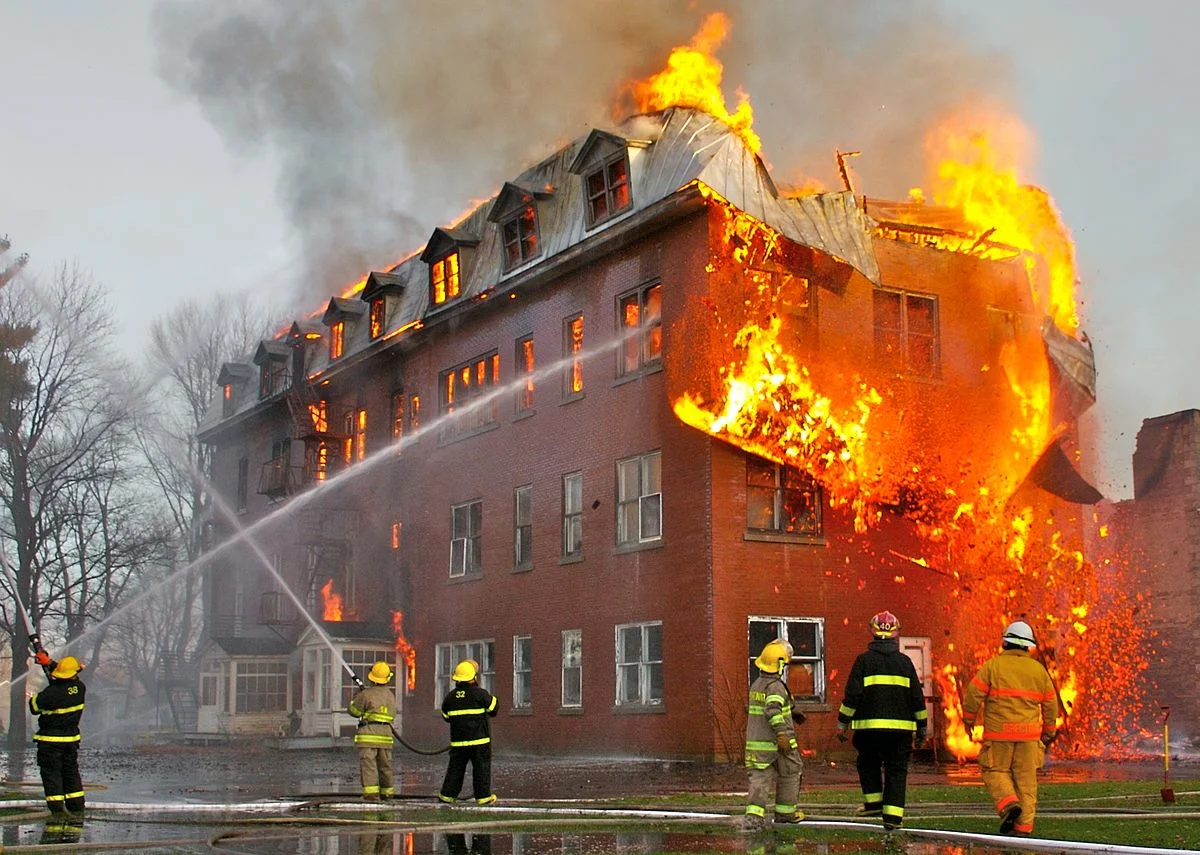
The next morning I peruse the newspaper to see if anyone offed themselves. I don’t see anything and I’m not sure if I’m glad or not. I turn on the news, but all the anchors are talking about are the weather, the high school Class 5A state football results, and a young boy with autism who saved a cat from a storm drain. A fireman is patting the boy on the head. The boy holds the cat close to his chest, but doesn’t seem too pleased.
I turn off the TV and go outside to check the mail, but the postman hasn’t come. It must be Sunday. Or the holiday has finally arrived. Or maybe it was the postman who jumped from that bridge. Either way, the mail isn’t coming.
Originally published in Diverse Voices Quarterly and Honorable Mention Recipient for Glimmer Train Press’s New Writer Award.
Supper
The thing smelled the way copper smells when it’s gently heated. The top of it crackled, the ketchup my father had slathered on now bitter and burned.

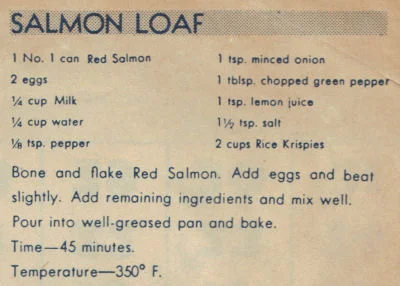
This vintage recipe was published on the back of a calendar page dated 1942, it was found in a large collection. Courtesy: Recipe Curio.
I was sitting in this dreary restaurant on West 58th Street in New York with an equally dreary expression on my face. The restaurant was the kind of place that had white tablecloths that were greyed by age, and the waiters wore stuffy penguin suits with coattails so long they seemed to be dragging across the mildewed carpet. I was dining alone in the nearly empty place when I saw the hostess lead a family of three through the sea of vacant tables and seat them a few feet away. It never ceases to amaze me the number of times somebody has plopped down next to my table when the rest of the restaurant is a ghost town.
The family was well dressed, the father in a dark navy suit with matching tie and the mother in a long black dress with a mink shawl wrapped around her neck. They looked comfortable in their formal attire, which is more than could be said for the boy. He had on a tight pair of trousers paired with an even tighter blue blazer. He was a plump boy of about 10 still wearing the clothes his mother had bought when he was 8. His hair was combed forward, the bangs sticking up with the support of some sort of expensive gel. They were, no doubt, on their way to the theater and, for reasons I could not fathom other than its proximity to Broadway, had stopped into the drab confines of the West 58th Street restaurant for an egregiously priced dinner.
I ordered a bottle of chilled sparkling wine and a plate of Kumamoto oysters. The waiter grunted a response and disappeared. I watched the mother swat her son’s hand away from his forehead as he tried to smooth out his ridiculous looking bangs.
“You look fine,” she said.
“It feels weird,” said the boy.
“Style isn’t meant to be comfortable,” she told him.
The father ordered for the table and when their food arrived I had no clue what any of the dishes were. I threw back an oyster and sipped on my wine and stared at their plates of nothingness with the same level of disgust the boy appeared to share. He poked at his food as though asked to perform some sort of science experiment on it. The parents ate happily away at their dishes of brown and yellow with parsley sprinkled around the edges. They had this potent satisfaction on their faces that made me want to vomit the Kumamotos up.
“Why aren’t you eating?” the father asked.
“Look at it,” the boy said, poking at the brown blob. It bounced back at him like a cheap piece of rubber.
“Nonsense,” said the mother. “Eat up.”
“I don’t think I can,” the boy said with such a palpable honesty it nearly knocked me out of my seat.
“If you don’t eat you can forget about dessert,” the father said.
“And the theater,” the mother added.
The boy made a sour face and looked at his plate, seriously weighing his options...
When I was a boy, the neighborhood kids and I used to make bonfires in one of our backyards. We’d roast marshmallows, attempt to relay the scariest stories any of us knew, and, when the parents weren’t looking, throw unopened cans of soda in the hottest part of the fire and wait for the pressure to build up before they exploded. And then when the fire had died and the parents were fast asleep, we’d sneak off to the darker parts of the neighborhood and play hide-and-go-seek tag until one of the many curmudgeons who lived on our block called our parents to complain we had traipsed through their Azalea garden or destroyed their coveted blackberry bush. At this point, my father would ring the cowbell he kept in the garage to signal 1) it was time to come home and 2) there was hell to pay.
Like most nights before the bonfires we sat down for family dinner, which was always scheduled for 6:00pm sharp. Most of our meals composed of simple, Midwestern-fare that had such little remarkability I won’t waste precious words on their lackluster existence. But on this particular evening, as the other kids were finishing their usual dinners of tater tot hotdish or fried walleye and tartar sauce, my father set before us a steaming tin of Salmon Loaf. He had baked it in one of our old bread tins, the one that had begun to rust at the bottom and always smelled faintly of sour milk.
My brother and I looked up at my father half-expecting tonight’s main course to be a joke. After all, the thing looked more like a museum artifact than a Friday night supper. But when he saw our expressions his face turned grave and all he said was, “Well...eat up.”
“What is it?” my brother asked.
“Salmon Loaf,” he said beaming, as if he’d just cracked the Holy Grail of culinary ventures.
“What’s Salmon Loaf?” I asked.
“That is.”
The thing smelled the way copper smells when it’s gently heated. The top of it crackled, the ketchup my father had slathered on now bitter and burned. The parts of the salmon we could see were green in places, yellow in others, and brown in the ones that weren’t green or yellow; but nowhere in the entire bread tin did we see pink or orange to signal what we were looking at was, indeed, salmon.
“Is this canned?” my brother asked.
“Of course it’s canned,” he said. “You think I’m made of money?”
My father cut into the Salmon Loaf similarly to how you would cut into meatloaf, but upon making the first cut the horrendous smell kidnapped the kitchen. He shoveled the first piece onto my mother’s plate. She looked at the thing apathetically, but, to her credit, managed to not make a face. I, on the other hand, upon my first glance at the fetid slab of loaf, raised an eyebrow, flared my nostrils, and frowned so severely I felt the muscles in my neck twinge.
“It smells like the used car lot near my school,” my brother said.
“That’s a junkyard, dear,” my mother corrected.
My father scooped a serving onto my plate, next came my brother before he portioned one off for himself and took a seat.
“I don’t think I can eat this,” my brother said.
“Yes, you can,” my father said sternly.
“I can’t either,” I said, still wearing that eyebrow-raising, nostril-flaring, frowny-face expression.
“Don’t be ridiculous,” he said. “Salmon is high in Omega-3s.”
“I don’t know what those are,” I said.
“You can’t go out and play until the salmon is cleaned from your plates,” he said.
“That’s not fair.”
“I work all day...” he began with the same speech he had recited to us for years previous. We knew what was coming, but that didn’t stop him, “...and I come home and slave over the stove to put food—food your mother and I work hard to get, by the way—but put food on the table, and all we ask of our children is to be appreciative of what we provide.”
“How can anyone appreciate this?” my brother said, poking at a green piece of salmon flesh. “It looks prehistoric.”
“You’re right!” I said. “It does smell like that car lot.”
“It’s a junkyard, dear,” my mother corrected again.
“I’m prepared to sit here all night if I have to,” my father warned. “You boys aren’t going out until that salmon is all the way down in your bellies. You’ll thank me for this later.”
As it turned out, we never thanked him for it later.
Ninety minutes came and went and we hadn’t so much as touched the salmon. In a bizarre twist of events, my brother and I had devoured our Brussels sprouts, wolfed down the wilted kale, and inhaled the baked yam without so much as a peep; but when we tried to put a teaspoon of Salmon Loaf near our lips all we could do was make that eyebrow-raising, nostril-flaring, frowny-face expression.
The doorbell rang and my neighbor Joe asked if we were ready for the bonfire. My mother informed him of the unfortunate news that we couldn’t come out until our dinner was done.
“What are you having?” Joe asked, genuinely curious, either because of the putrid smell hanging above our house (and, most likely, the neighborhood) or his own hunger had gotten the best of him. Let’s just say Joe was a well-fed boy. He had this round belly that looked like a perfect sphere. He never passed up an opportunity for a meal even when the rest of us were agonizingly full. One time he ate an entire container of potato salad before taking down a nearby container of coleslaw, thus ruining his mother’s forthcoming barbeque. They still had ribs, I suppose, but once Joe got his hands on those, the guests quickly vacated the premises.
Joe looked at our plates, saw the pinkless salmon, and made that all-too-familiar eyebrow-raising, nostril-flaring, frowny-face expression. He said, “Good luck, I guess. Hope to see you tonight,” and promptly left.
At one point I dropped my Salmon Loaf on the floor and said, “Oops” to which my father responded by slopping another piece onto my plate.
My brother tried to take down half his piece in one mouthful (and, to his credit, he got it down), but that killed the rest of his stomach and all he could do was sit there the rest of evening wondering what the hell had happened.
I finally choked down a third of the piece by plugging my nose and closing my eyes.
“Don’t do that,” my father said.
“You never said we had to enjoy it,” I told him.
My father, annoyed he hadn’t enacted such an amendment before making us eat, sat back in his chair and watched me struggle with the rest of the salmon.
I took a second third down, chasing it with half a glass of milk. “It’s not bad if you mask the flavor,” I told my brother, impressed by my own epiphany. He tried the same thing, but it was much too late for him—my brother was already lost. He ended up spitting the milky piece of loaf onto his plate and staring blankly at the white residue.
The third bite took some struggle, but I got it down and regretted not leaving a few Brussels sprouts behind to taper off the dreadfulness of the Salmon Loaf.
“All right,” my father said. “You can go out and play.”
I practically ran to the front door.
“Aren’t you forgetting something?” he said just as I turned the knob. And, of course, I had forgotten something. After each dinner it was required of us to set our plate in the sink and thank our father for dinner. But on this evening, it wasn’t the clearing of the plates my father was concerned about.
I gritted my teeth. “Thanks for dinner,” I said, and ran out to the bonfire as fast as my legs would take me.
I came back inside hours later, after the coals of the fire had died, the exploded soda cans had stopped hissing, and the many games of hide-and-go-seek tag had ended. As I crept into the house, careful not to disturb the usual creaky floorboards, I found my brother sitting at the kitchen table, enveloped in the room’s darkness. He was staring at that yellow-brown-green-anything-but-pink piece of salmon resting on his plate, and that eyebrow-raising, nostril-flaring, frowny-face expression was still stuck on his pallid face.
Back at that gloomy West 58th Street restaurant, I gathered up the empty Kumamoto shells and deposited them back onto the crushed ice. I paid my tab, gathered up my coat, and left, feeling the full effects of that bottle of sparkling wine. As I passed the boy on my way to the exit I noticed he still hadn’t touched a corner of that yellow mess his parents called a meal, and I couldn’t help but wonder if they ever wound up making it to the theater.
We Don't Ever Fully End Up Becoming Ourselves
Mercury always seems to be in retrograde, I think.

I’m standing in line at the coffee shop and this guy behind me is bragging to his buddy that his girlfriend told him she loves him and he didn’t say it back. I glance down at the San Francisco Chronicle and see two headlines: the first that a two-time All-Star pitcher died in a boating accident off the coast of Miami, and the second that a series of attacks in Aleppo have killed 58 Syrians, 18 of which were children. I blink at the headlines, staring at them, though, I hardly absorb them. I realize there is an idea behind these headlines, something visceral, poignant, but there is also something hauntingly vacant. It’s a terrible thing to understand lurking hostility in situations you cannot fully understand but—
The guy in line keeps going on about his girlfriend, pausing, only momentarily, to ask me, “Have you already been helped?”
“No,” I say, and turn back around.
I’m slightly irritated he asks me this as I’m clearly standing in line. Though, I suppose he’s a little puzzled by the fact I’m already holding a cup of coffee. You see, my girlfriend doesn’t like the coffee shop I go to, so every Sunday, Tuesday, Thursday and Saturday I have to go to two coffee shops: the first place to get my coffee—
The Syrian kids...
—the second place to get hers. Normally something like this would annoy me, except for the fact that every Monday, Wednesday, and Friday she has to do the same thing. And I suppose that’s a fair trade off considering—
“Next in line,” the barista says.
“Café Latte,” I say. “With room for milk.”
“There’s already milk in there, sir.”
“She wants more.”
“Who?”
“My girlfriend.” I pause. “What does that matter?”
The barista goes on as if I’ve said nothing. “More what?”
“She wants more milk than is already in there.”
“I’m not sure if we can do that.”
“What do you mean?” I say. “It’s a coffee shop.”
“Let me just go check with my supervisor.”
The barista heads off and briefly engages with a Salvadorian woman wearing a hairnet and a stained apron. I notice a small teardrop tattoo under her left eye and a faint scar running across her cleft chin. The Salvadorian woman nods patiently. She looks at me, waves, and smiles.
I wave back.
The barista must be new.
The barista comes back a moment later and says, “Sorry, I’m new. It’s only my second day.”
I nod, but say nothing.
“Just the Café Latte then?” she asks.
I slap the copy of the Chronicle on the counter. “And the paper, too.”
“Let me go and check to see how much that is,” she says, and heads back over to the Salvadorian woman.
Since it’s Sunday the Chronicle costs $3.00 + tax. A hefty sum considering nobody reads—
I try to take my usual way home, but one of the streets is blocked because of some charity 5K race. I catch a glimpse of one of the fliers and see the race is to raise money for puppies. Specifically, it’s to raise money for blankets for puppies. Across the street I see a homeless man huddled in a gap between a new French restaurant I haven’t tried and a Korean nail salon. He holds a Styrofoam® cup with a trembling hand and watches listlessly as the runners pass him by.
“You’re saving so many puppies!” I hear one of the race-watchers shout to the runners. “You guys are heroes!”
I double back and hike up six blocks to an overpass and head back to my apartment. By the time I get home, my $6 Americano has gone cold.
I give my girlfriend her $8 Café Latte and she reminds me we have to go to her friend’s BBQ later. I ask what friend. She says a name I don’t recognize, but I just nod and say, “Oh, that’s right.”
“Did you hear the terrible news?” she asks.
“About the Syrian airstrike?”
“No,” she says, confused. “About that pitcher who died in the boating accident in Miami. Isn’t that just terrible?”
“Yes,” I say. “It’s terrible.”
Our Frigidaire® microwave does a lousy job of warming my coffee and I can’t seem to get it hot again.
“Is the microwave broken?” I ask.
“Huh?” she says.
“Never mind.” I give up and dump the $6 Americano down the drain.
On my $399 iPhone 6 I get a CNN News Alert. Through the cracked screen I read that a Malaysian Airlines flight carrying 189 passengers has gone missing somewhere over the Indian Ocean. I tell my girlfriend about the plane and she says, “Well, it’s the last day Mercury is in retrograde, so hopefully tomorrow will be better.”
Mercury always seems to be in retrograde, I think.
My girlfriend only drinks a third of her $8 Latte and I end up pouring that down the drain, too.
Unbeknownst to me, we’ve been enlisted to bring chips and dip to the BBQ, so my girlfriend and I stop at the nearest Safeway. She wants to get Tostitos® and Hidden Valley® Buffalo Ranch Dip, but I see that Lays® and Lipton® French Onion Dip are on sale and buy those instead. She grouses as I’m checking out that nobody likes French Onion Dip, but since I don’t know anybody who’ll be at the BBQ, I don’t particularly care.
I swipe my Chase Sapphire ReserveSM card in the machine and the cashier says, “Does your card have a chip?”
“Yeah,” I shrug. “I guess so.”
“You need to put it in the chip reader then,” she says. “You can’t swipe it.” She’s annoyed. “It says right there to use the chip reader slot for cards with chips.”
“All right,” I say, and use the chip reader.
As I’m signing my bill for the $7.58 chips and dip, the cashier asks my girlfriend if she heard the “terrible news.”
“About the baseball player in Miami?” she says.
“No,” the cashier says. “I didn’t even hear about that. What happened?”
My girlfriend relays the tragic tale and we never up hearing the terrible news the cashier had to deliver.
We take the BART to Oakland for the BBQ. On the way I overhear a guy telling his girlfriend that a golf legend (whose name I don’t hear) passed away at the age of 87. I wonder if that was the “terrible news” the cashier was referencing. The guy’s girlfriend asks him if he heard the news about the pitcher who died in Miami and he says he had.
“It’s probably because Mercury is in retrograde,” the girl says.
“Yeah...” he says to no one in particular.
They sit in silence until the BART arrives at Lake Merritt Station and the girl and her boyfriend get off.
My girlfriend and I get off at the next stop and hike the last four blocks to the BBQ. It’s hot, and as I’m hiking up the hill I can feel the Lipton® French Onion Dip start to sweat in my hand. I keep shifting the Lays from the crux of one arm to the other and can hear the chips breaking as I do. I know that by the time we get to the BBQ the Lays® and French Onion Dip will be in such rough shape nobody will want to eat them.
We get to the party and the friend whose name I had forgotten turns out to be Olivia. She greets us with a sad sort of smile and asks, “Did you hear the terrible news?”
What a way to greet your party guests, I think.
“About the Malaysian flight?” I say.
She shoots me a contemptuous look that makes me think her family has stock in Malaysian Airlines and says, more to my girlfriend than to me, “No, about Arnold Palmer.”
“The pitcher?” my girlfriend says.
“No, he was a golf legend.” Olivia shoots my girlfriend the same contemptuous look I thought was reserved only for me and I can see my girlfriend thinking Olivia must have stock in the Professional Golfers Association. “Who’s the pitcher?” Oliva asks.
My girlfriend tells her about the pitcher who died in Miami and she looks so crestfallen I’m absolutely convinced Olivia has stock in Major League Baseball®.
“Mercury, am I right?” says Olivia.
“I know!” my girlfriend says.
“Thank god it’s the last day of retrograde.”
They both sigh. I just stand there with the crushed Lays® and heat-stroked French Onion Dip.
“Where’s your new boyfriend?” my girlfriend asks. “I can’t wait to meet him.”
Olivia slumps her shoulders. “He’s in Seattle for some conference.”
“Oh...that’s a bummer...”
“Yeah...” Olivia sighs. “But when the mice are away, the cat will play, am I right?” She cackles.
“It’s ‘when the cat’s away, the mice will play,’” I say.
“Huh?” Olivia grunts.
“It’s ‘when the cat’s away, the mice will play,’” I repeat. “Not ‘when the mice are away, the cat will play.’”
“I don’t think so,” she says. “It’s like when the mice are away, the cat can just relax and not have to run around chasing mice.”
“Well...Where do the mice go?” I ask.
“I don’t know!” she shrieks. “Where does the fucking cat go?”
Things are not going well with Olivia.
I ask where I should put the bone-battered Lays® and coagulating French Onion Dip and Olivia snatches them from my hands mumbling something about how she would have preferred Hidden Valley® Buffalo Ranch Dip. About five minutes later I see her shoving the dip in the back of her stainless-steel Viking® refrigerator and stuffing the chips in the corner of her mahogany-finished lazy Susan. It turns out I was right about nobody eating the chips and dip, and this gives me a fleeting moment of satisfaction. But the brief jolt of serotonin immediately evaporates as I remember the Blankets for Puppies 5K.
As I’m eating an undercooked Costco® burger and poking at over-mayonnaised potato salad the guy next to me shows me the News Alert on his $599 iPhone 7. It says seven priests have been indicted for child abuse and another 13 are under investigation by the FBI.
I ask the guy if the Catholic Church released a statement. He shrugs, says he doesn’t know, then asks me if I heard about Arnold Palmer. Instead of answering I take a bite of the E.coli-laced beef and motion that I shouldn’t talk with my mouth full.
He nods that he understands, but still seems miffed. I wait for him to mention Mercury’s retrograde, but he moves off and I don’t see him the rest of the party.
I suppose it’s just as well.
Across the yard I see Olivia yelling at one of her friends that there aren’t enough Solo® cups. The friend has two bags of Solo® cups in her hands and I’m unsure what Olivia is concerned about. I can’t really make out what she’s saying; it’s just a cacophony of unadulterated rage. The only thing I can make out is, “Are you trying to ruin this party?” None of the other guests seem to be paying them much mind, and I figure this is usually how Olivia acts when she throws a party. I can’t help but wonder why my girlfriend is friends with her.
I have three Anchor Steams® and an Absolut® and tonic before my girlfriend comes and asks if I’m ready to go.
I’ve been ready for some time, but all I say is: “Sure.”
She asks if I want to walk up to the lake and watch the sunset.
I say, “Sure” again.
Even though the sun is beyond the ridge of the city, it’s still agonizingly hot. There’s a layer of perspiration on my girlfriend’s forehead and the $85 Everlane® linen shirt I’m wearing is sticking to my back. I hope that by the time we get to the lake things will have cooled down. But I’m wrong, and things have only gotten muggier. As we round Lake Merritt’s farthest peninsula I see a black man by one of the water-damaged picnic tables. He’s on his knees, hands behind his head. There are six police offices surrounding him, each has their pistol drawn. They’re all screaming, and the black man just kneels there, a placid, resigned expression on his face. The cops keep screaming, their voices one indistinguishable blur. All I can make out is one cop yell, “You want me to fucking waste you? You fucking want me to waste you, motherfucker?”
We stop walking and watch this unfold with a mixture of terror and confusion. A small crowd gathers around us.
A second policeman yells, “You got a gun?” And then, louder: “You got a gun, cocksucker?”
While the policemen shout at the obviously-unarmed-black-man, a girl behind me says to her boyfriend, “I thought the Riesling we had at lunch today was too sweet.”
“That wasn’t Riesling,” he says. “It was Moscato.”
“Are you sure?” she asks.
“Yes.”
“What’s the difference between Riesling and Moscato?”
“Moscato is sweeter than Riesling.”
“Surely not all the time.”
“Most of the time,” he says.
“He’s reaching for something!” a third cop yells.
The black man lies down on his stomach, keeping his hands behind his head. And, while he still hasn’t said anything, one of the cops (I believe it was the one who called him a “cocksucker”) yells, “Shut your mouth! Shut your fucking mouth!”
“Then what’s the difference between Muscat Blanc and Moscato?” the woman asks her boyfriend.
“They’re the same thing,” he says.
There’s a long pause before she says, “No, that can’t be right.”
Shots ring out and the black man seizes, his body contorting in the most horrific of angles. He emits a low, guttural groan before his body becomes still. The first and third cops holster their weapons, but the other four keep their pistols trained on the lifeless black man.
“Somebody should call this in,” the fourth cop, hands shaking, mutters. But nobody calls it in.
They just...stand there.
“Oh my god...” the girl whispers to her boyfriend. “I completely forgot to ask, did you see Arnold Palmer died?”
“I know,” the boyfriend says. “Wasn’t that terrible?”
They turn around and head off in the opposite direction. The rest of the crowd disperses as well, a few of them muttering something about the pitcher from Miami. They all seem to agree it’s because Mercury is in retrograde.
My girlfriend and I stand there a long time. It takes a while for me to realize she’s taken my hand in hers. I’m no longer sweating, but the night still feels hot and the bugs have started to come out.
It takes close to thirty minutes for the ambulance to arrive. The paramedics get out and chat with the six police officers for a few minutes before inspecting the black man’s body. They shake their heads listlessly. One of them lights an American Spirit® while wearing latex gloves.
I feel my mind twisting as the cops huddle up and offer each other solemn praise, occasionally patting one another on the back.
Bugs are everywhere.
“I’d like to go home now,” my girlfriend says unevenly.
“All right,” I say.
We walk past the cops and, amidst their murmurs, I hear one of them say, “Did you guys hear Arnold Palmer died?”
“Yeah,” the paramedic smoking the American Spirit® says. “He was The King.”
“Terrible fucking news,” the cop who called the black man a “cocksucker” says.
(Originally published under the title “Out of the Fold”)
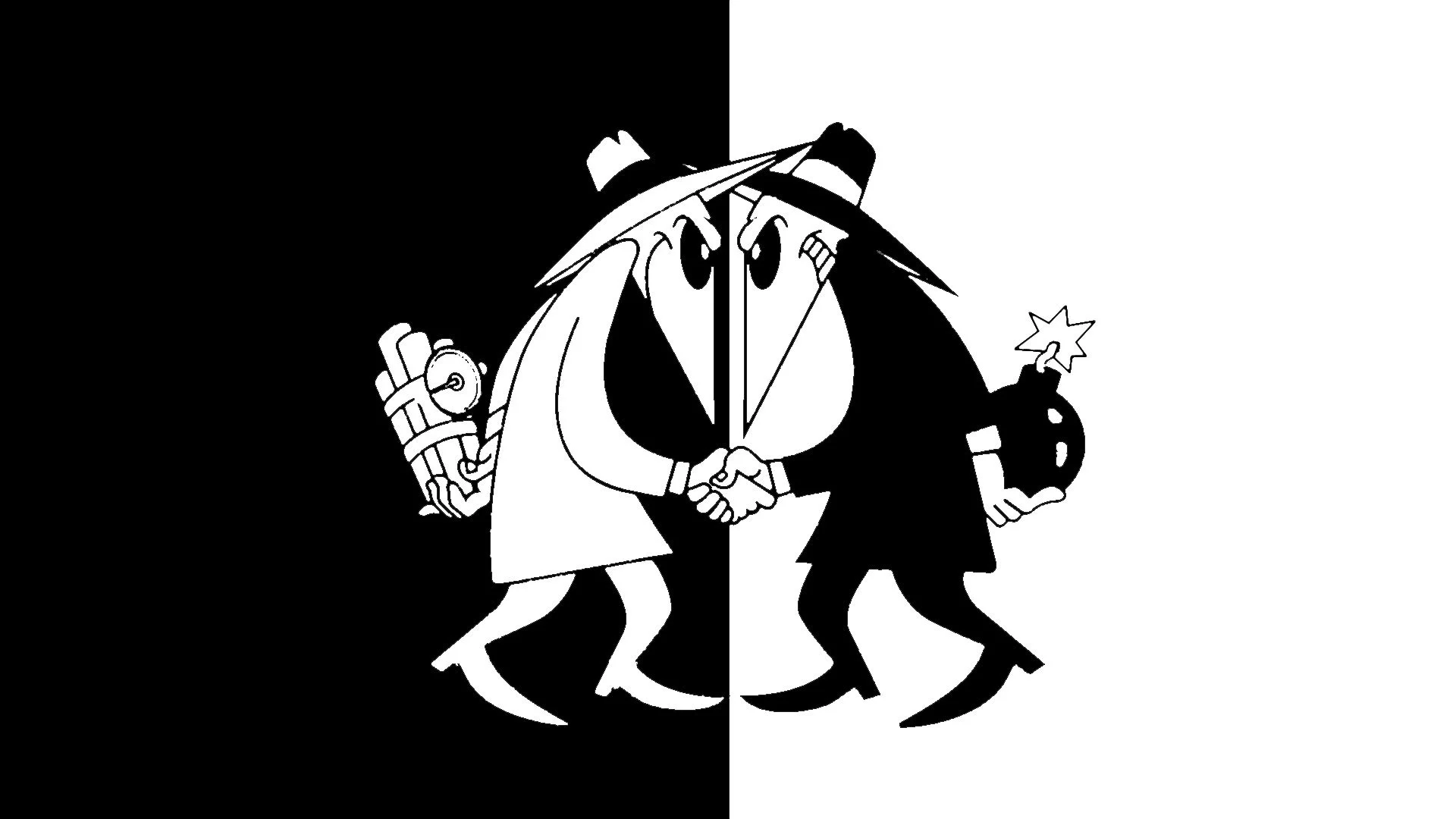
Spies Like Me
I used to date this girl who was absolutely convinced I was a spy.

Spy vs. Spy
I used to date this girl who was absolutely convinced I was a spy. This came at a particularly stressful time in my life because I had to travel a lot for work, which, coincidentally enough, was one of the reasons she thought I was a spy. I remember this came about when, before an upcoming trip to Denmark, The Girl asked where I was going.
“To Denmark,” I said.
“Why are you going there?” she asked.
“For work,” I’d always say, but this answer never seemed to suffice.
“What is it you do again?” she’d ask, elongating her Staten Island accent.
I must have told her what my job was a hundred times but she’d never stop asking what I do. “I have to go talk to a windmill manufacturer,” I’d say.
“You what?” she’d always ask.
“I help import Windmills,” I’d say. “You know this.”
She went on pretending she didn’t know this, and then the next week I’d go to Denmark. When I get back she’d ask, “Where were you?”
“Denmark,” I’d say. “You know this.”
I realize being the middleman for a Windmill manufacturer isn’t the sexiest job in the world, but, honestly, she would never stop asking what I do. We dated for six months and weekly she’d ask something like, “Why are you going to Zurich?”
“To meet with the windmill guy,” I’d say.
Another reason The Girl thought I was a spy was because I had two phones.
“Why do you have two phones?” she’d say.
“One’s my work phone and one’s my personal phone,” I would tell her.
I didn’t understand how having two phones would make her think I was a spy. I remember thinking, wouldn’t spies have some sort of secret red rotary phone concealed inside of a globe, or maybe a sophisticated chip implanted in their head? What was so odd about having two phones? But The Girl would always say something like, “I bet one of those phones is a spy phone.”
“What’s a spy phone?” I’d ask.
She’d say, “One of those phones, you know?”
“No,” I’d say. “I mean, what does a spy phone do?”
“It’s the phone where they call and tell you about your missions and stuff,” she’d say.
I’d always just ask, “Missions?”
“Yeah, like when you have to go and like spy on people and stuff,” she’d say. “Like China and stuff.”
She said “stuff” a lot. This seemed to go on for forever. The Girl was all right and all, but, seriously, she would never stop asking if I was a spy.
I also owned a lot of suits. There’s nothing strikingly abnormal about that, though I suppose it didn’t help that they all looked very similar. All of them had black slacks, a black jacket with pointed lapels, white shirt, and a silk black tie. It always looked like I was on my way to some wedding. “Again,” I’d tell her, “I bought the suits because I needed to go be the middleman to a Windmill manufacturer.”
“In Denmark?” she’d ask.
“No,” I’d say. “This time I have to go to Oslo.”
“Oslo?” she’d say, all startled. “You are a spy?”
I remember thinking, if I was a spy, why would I be going to places like Denmark, Zurich, and Oslo? Wouldn’t I be going some place exotic, like Prague or Moscow or something?
“You’re going to Moscow?” she’d ask when I’d raise this point, as if she didn’t even listen to my question. “Only spies go to Moscow; and only spies where suits like that. Honestly, who owns that many suits?””
Stuff like this went on for a while.
I also carried around a lot of cash. It wasn’t weird or anything, I just liked to have cash and got anxious whenever I had to use a credit card, like a waitress might come to my table and tell me my Amex has been declined. It’s tough to think of something more humiliating—at least for me. So I paid for most things in cash. Another thing about the cash, though—and I admit this is weird—is that I often carried it around in a large briefcase. It didn’t matter where I went, whether it was to the coffee shop or the post office—on one occasion I even took it to the opera—my briefcase full of money was usually in tow. I just liked how it looked, I guess. Is that such a crime? The Girl didn’t harass her friends for carrying around their purses, so why should she harass me for carrying around a briefcase? If anything, I should be commended for such a bold fashion accessory. But whenever we went out and somebody brought it up, The Girl would always say the same thing, “He carries that briefcase around because he’s a spy.”
I suppose the most incriminating piece of evidence to support the statement that I was a spy was that The Girl found a shoebox full of passports—all with my picture, just different names—in a crawlspace behind my dresser. This, justifiably, was most peculiar to her. It’s tough enough getting one passport from the U.S. government, let alone thirteen of them. I told her I’d gotten them at a novelty shop in Nisswa, Minnesota, but The Girl picked up her phone, called her friend, and said, “Marsha, I just found a shoebox full of passports behind his dresser! I told you he was a spy!” Now Marsha was involved.
At this point, I knew it was time to let The Girl go; my life was turning into one nagging migraine. Of course, I told her the reasons we were suddenly parting ways was because of my hectic travel schedule and the tiring hours at the windmill factory, but I doubt she bought it. I suppose that’s just as well, and truly hope there were no hard feelings.
Well, I should run, there’s a windmill convention in Damascus this weekend and I really oughtn’t miss it.

The Bridge Between Seasons
The street’s antebellum homes sported massive Roman columns and wide windows that looked out on their peaceful street. Large steel gates surrounded the complexes and their faultless lawns were always green, even in the crisp winter months.

Photo by Phil Henry on Unsplash
There were once two towns flanking both banks of the Mississippi River. The town on the north bank thrived both economically and socially while the south bank was riddled by poverty and wrought with despair. The only thing linking the two communities was a small footbridge running the width of the river. The north end of town considered the engineering of this footbridge as an unfortunate incident since, before its construction, it took nearly an hour for any south sider to reach the north end of town. But after the bridge was finished in the winter of 1948, anybody could walk from the south end of town to the north end of town in just under fifteen minutes—depending on the time of day, of course.
The north and south towns I speak of were once referred to, respectively, as Benedict and Luther. As you can imagine, the town of Benedict was unapologetically secure and clean. There was a town doctor who graduated from Yale, a town lawyer who graduated from Harvard, and a town teacher who graduated from Sarah Lawrence. There were plenty of policemen and firemen—though their services were rarely needed considering the town’s safety record was nearly impeccable. There was also a salon the women frequented, and a barbershop the men frequented. It was in these two places where most of the gossip—and, subsequently, the lies—were exchanged. The town of Benedict was simple, but pristine.
The town of Luther was a stark contrast to the confines of Benedict. There was one school, the credibility of which was constantly called into question, and crime was at its highest level since the turn of the century. Morphine was the drug of choice in Luther and hundreds of WWII veterans found comforts within the town’s borders, especially since the drug was so easily attainable. A dilapidated grocery store was near the town’s only park and the only white resident was a burly man named Buford who owned the local butcher shop. On Sundays, most of the townsfolk could be found at the Baptist Church on the town’s east edge. Quite frankly, the church was about the only orderly thing in Luther. It represented a place where people could come together—donning their only respectable attire, naturally—in search of the solace that was usually reserved for the people along the river’s illustrious north end.
In the town of Benedict—no more than fifty yards from the aforementioned barbershop—lived a mute. The mute lived on the second floor of a mansion he had converted into a duplex—a duplex he shared with an Argentinian doctor named Santiago. Santiago was thin and wiry with a golden face full of wrinkles and wisdom. He had exceptionally dark hair and an even darker mustache, and always seemed to be sporting a smile. The townspeople of Benedict trusted Santiago, which is more than could be said for the mute. The mute, whose name was Copeland, had invested what little money he had in American munitions companies shortly before Hitler invaded Poland and, by the time the Third Reich fell, had made a small fortune. The money he had come to invest was money he inherited after his parents were killed in a train derailment outside of Tallahassee two days before his eighteenth birthday. Copeland never cared too much for his parents, but he was still terribly sad when this tragedy came to pass. Along with the money, he also inherited the family mansion near Benedict’s town center. The duplex was located on Claiborne Street, an attractive stretch of road where the town’s most affluent resided. The street’s antebellum homes sported massive Roman columns and wide windows that looked out on their peaceful street. Large steel gates surrounded the complexes and their faultless lawns were always green, even in the crisp winter months. Copeland’s mansion was the only mansion to be converted into something that was rentable; this brought many whispers of speculation as to why the renovation had happened. Of course, inevitably, there was speculation Copeland was struggling financially after the death of his parents. But this simply was not accurate. In truth, Copeland was merely lonely. He spent a great many hours in silence, and his empty house would only worsen his undeniable lonesomeness. So, in the spring of 1944, after the Argentinian returned from Picardy, France, Copeland rented the room to Santiago.
An Argentinian living on Claiborne Street was sure to raise eyebrows. But once the town of Benedict discovered Santiago was a doctor—not to mention a war hero—they were quite accepting. This was more than could be said about their attitude toward Copeland, for they treated poor Copeland like a Hun. Mothers could often be seen ushering their children across the street as he made his way into town. Together, however, Santiago and Copeland got along quite well, especially during the later months of Santiago’s residence. Most of the other townsfolk in Benedict knew very little about Copeland, but on many afternoons they would see Santiago and Copeland strolling in the park or dining on oysters and beignets at Café L’Amande. They often got haircuts together and both enjoyed the films of Howard Hawks and John Ford. Whenever they were seen walking about town, Santiago was often speaking animatedly, mixing between Spanish and English as he flung his arms wildly about. Copeland would listen attentively, occasionally nodding at the Argentinian with thoughtful regard. Most nights the two could be found on the duplex’s front porch, Santiago smoking his pipe while Copeland drank beer from his favorite Mason jar. Usually, Copeland was the first to grow tired and would retire to his bed upstairs. This left Santiago alone to finish his pipe, open the evening newspaper, and fall asleep in the rocking chair, not waking until the summer mosquitos finally pestered him inside.
Santiago’s reputation grew steadily and by the winter of his third year he had a fairly sizable client list. Not only did he service members of Benedict, he also carved away time to visit those in Luther. They considered the Argentinian quite lively and found his demeanor strong and agreeable. Most of those in Luther could not afford his services, so Santiago spent one day a week in the town center and offered free medical services to anyone who sought them. At first, this disgruntled the town of Benedict, as their good doctor was only available six days a week rather than seven. But, eventually, they began to adapt and accept the fact that Santiago might be needed elsewhere. It was perhaps the only thing the people of Benedict were willing to offer those in Luther.
On one chilly Tuesday morning, Santiago took Copeland to Luther and suggested he explore the city. Copeland spent the day wandering the streets and was perfectly happy being lost. It wasn’t often Copeland ventured outside the borders of Benedict, and he was happy Santiago had suggested they go.
The footbridge connecting the two towns was scheduled to be finished on the last day of August—a month that had seen twelve record temperatures—but, unfortunately, the mayor of Benedict, a wheezing man with a perpetually red face named Oscar LeBeauf, blocked a measure for additional safety cables along the bridge’s railing. While this issue was being sorted, no persons, whether from Benedict or Luther, were allowed to cross the bridge. This didn’t seem like a terribly large issue at the time until a little girl in Luther grew terribly ill. Santiago was informed of this while feasting on a tray of crawfish with Copeland at Café L’Amande. Santiago left at once, making his way to the bridge with his medical bag in tow. Upon arriving, however, a policeman told him the bridge was closed and he would not be allowed across. Santiago pleaded with the man, but his petitions fell deafly on the policeman’s ears. He was told he would have to go around the river, adding another forty-five minutes to his journey. Santiago hurried as fast as his Argentinian legs would carry him, but it was of no use. Three minutes after he arrived, the girl succumbed to the sickness in her belly and died.
Six days later, the footbridge was completed.
After the girl’s passing, Santiago made his way back to Claiborne Street feeling rotten and weary. When he arrived home Copeland was waiting for him on the porch, sipping at the beer in his dingy Mason jar. Santiago told him of the entire affair, growing most agitated when he spoke of the policeman on the bridge. Copeland listened to him patiently, pausing only once to nod his head and take another sip of beer. When Santiago was finished he took a seat in his rocking chair but was too worked up to light his pipe. He told Copeland he had some errands to run and would return around supper. Copeland smiled at him and the Argentinian went into town.
Santiago’s first stop was at his bank, where he withdrew $300 and retrieved his treasured Medalla El Ejército Argentino al Herido en Combate from his safe deposit box. His second stop was at Café L’Amande where he had a glass of chartreuse and three beignets before he left one of his three hundred dollar bills as payment and scurried out the door before the owner could stop him. Santiago’s third stop was at the hardware store where he spent very little time in the back before retrieving the item he had come for. He paid for this item with the second hundred-dollar bill and insisted it was payment for the credit he had accrued. The shopkeeper, an affable, but odd-looking fellow named Walter, insisted Santiago’s credit was fine and that he only owed for the bag of nails and hammer he had picked up the week previous. Santiago assured him this wasn’t true and left the store with his item in hand and the hundred left on the counter. Walter didn’t think much of this at the time—after all, it was quite rare for the doctor to be wrong—but in the coming days, the image of Santiago leaving the store with his sagging shoulders and slumped head would haunt Walter for the rest of his days.
Santiago returned home just as dusk wrapped its arms around Benedict and found Copeland still sitting in his rocking chair smiling at the giant oak trees wavering along Claiborne. Santiago apologized for rushing off in such haste, but Copeland brushed his remarks aside and offered him a seat. Santiago declined, saying he was quite tired from such a trying day, and would retire to his room for the evening. Copeland sipped at his beer and smiled and nodded his goodnight before Santiago disappeared inside.
Santiago’s apartment was relatively sparse. There was a tall bookcase situated by the fireplace that held mostly books of the pre-Civil War era. There was a desk that held his stationary and a small gas lamp next to his twin mattress. In his kitchen—where he spent very little time—there was a kettle for tea and a cutting board he used to serve meats and cheeses to Copeland on rainy Saturday afternoons. They would often drink wine and watch the storm clouds roll off into the horizon as they nibbled on Imberico ham and aged Manchego. Apart from these meager belongings, Santiago’s first floor apartment had very little decoration.
He went to his fridge and found half a wedge of cheese and a few slices of Imberico left. He laid them out on his cutting board, poured himself a glass of remaining Rioja, and ate from the board slowly. When the meat and cheese were gone he washed and dried the cutting board, threw away the empty bottle of wine, and placed his beloved Medalla El Ejército Argentino al Herido en Combate along with the last hundred-dollar bill in a legal envelope and wrote on its front: COPELAND. When he was satisfied everything was in order, he retrieved the item he had purchased from the hardware store: a length of rope roughly around five feet. Coming from the porch Santiago could hear Copeland rocking back and forth in his chair listening to the Louisiana wind rustling the branches of those monstrous oaks. He smiled at the sounds coming from the front porch before tying one end of the rope around a beam in the ceiling and the other around his neck. Carefully, he situated the only chair in his apartment below the beam and stepped onto the seat. Outside, as Copeland rocked away, the Mason jar resting lazily in his lap, Santiago kicked the chair out from beneath his dusty shoes and snapped his neck.

CENTS - A Novella
Abby took the middle seat of the futon and watched a cockroach crawl up the far wall, just above her bed. She thought about going to kill it, but realized more cockroaches would inevitably come and there would be little use.

Photo by Buco Balkanessi on Unsplash
The restaurant where Abby Harper found herself had not always been a restaurant. In fact, the space had gone through eighteen renovations during its many years on Rue de l’Abbaye in Paris. The restaurant had first been a butcher shop, the owner of which was an Armenian refuge who had left Marseilles for the brighter prospects of Paris. His butcher business floundered after the first four years, during which he made a perfectly unremarkable living. The butcher shop was then turned into a series of cafes, each one more faceless than the last. Then there was that brief time in the 70s when the space had been abandoned, a blank canvas for tweekers and addicts alike. A Saudi businessman then leased it and turned the space into a nightclub. This particular venture was short-lived and the space was, once again, left abandoned. It would stay vacant until a man by the name of Monsieur Phillip Bonaparte would buy the space and turn it into Le Bonaparte Cafe. Bonaparte’s was simple, but always busy. Over its awning was pulled a taut vinyl canopy running the length of the cafe. Wicker chairs lined the outside walk in the quiet alcove that was the unremarkable street of Rue de l’Abbaye. Abby Harper, however, chose the friendly confines of Bonaparte’s interior. The weather had been much too hot that day, anyway.
She had arrived to Bonaparte’s late (a trait she had always despised in a person). But upon her arrival she found her date had not yet arrived and relief washed over her. She was seated near the kitchen, a placement she had found peculiar considering her date’s reputation and stature, not only among the Parisians, but most of Western Europe. She thought it wise not to fuss considering Bonaparte’s was unusually busy that night.
Abby ordered a bottle of Chateau Pavie and waited, fretfully tapping her fingers on the sterile white tablecloth. Guests chewed their food, clinked their glasses, and scraped their silverware. Everything was noisy, grating. Abby considered how lucky she was to be sitting at that table, to be drinking such a fine bottle of wine, and to be waiting for the man who was set to walk through Bonaparte’s narrow entrance.
To understand Abby Harper, one must understand her past. She had always wanted to be a journalist. She read voraciously as a child, penned essays pertaining to an array of studies, affairs, and subjects. She had been published in journals, magazines, newspapers, and, by the age of nineteen, had completed a novel outlining the life and death of Richard Nixon. She graduated from Columbia with a double major in English and Journalism and had been awarded a grant her junior year to study under Sam Sifton at the New York Times.
As far as Abby’s looks go, there’s not much to say. In short, she is a perfectly handsome girl. There is nothing stunning about her, but nothing offensive either. She has dark brown hair cropped just above her shoulders and possesses these unusually light brown eyes. So light, in fact, that sometimes by the shine of the moon they turn an odd shade of peach. Her shoulders are small, like a doll’s shoulders, slight and fragile. She is short, but not too short. She has fair skin, but not too fair. To the casual observer, Abby is fantastically ordinary. She never caught the attention of a man at Columbia, nor did she particularly care to.
Abby was content with her malfunctions just as she was content with her glimpse of resonance. She had many attributes, she’d written about many things, but what Abby didn’t have was what college admissions offices call “life experiences.” Born and raised in Manhattan, Abby hadn’t seen the outside of the Tri-state area in all of her 22 years. So three weeks before her 23rd birthday, Abby boxed up her typewriter and set out to take a low-level internship at Le Monde newspaper in Paris, excited at the possibility of garnering those highly coveted “life experiences.”
The morning she arrived in Paris was no exception to her experiences in life. She was carelessly ignored by the bagmen at the airport, crudely overlooked in the taxi line, and shrewdly received by her landlord at the flat she was renting. Her landlord was a beast of a man. He had a belly that poked below his undershirts, undershirts that were perpetually stained in red wine, body odor, and duck fat. He always wore suspenders, one strap running tightly across his shoulder, the other hanging loosely next to his waist. He had a grey beard and a puffy face wrought with broken capillaries, an affliction brought on by too many bottles of Chateau Rayas.
When Abby arrived at her flat she knocked on his door with three meek raps. He answered chewing a half-lit cigar and donning a frayed cream-colored fedora. “Qui êtes-vous?” he grumbled. “Et pourquoi êtes-vous sonner a ma porte putain!”
The man was speaking so fast all Abby could do was blink.
“Pourquoi?” he repeated.
“I’m Abby Harper,” she said softly.
“American?”
“Yes, Monsieur.”
The flat was located on the tiny side street Rue de Montmorency. During business hours the street was bustling with shoppers, tourists, and students, but at the strike of sundown it emptied, devoid of energy, its extravagance abandoned.
“What’s your name?” the landlord asked.
“I’m Abby Harper, Monsieur, I’m renting the flat upstairs. I mean—I’m going to be renting the flat upstairs—I believe we spoke on the phone. Are you Monsieur LeRouche?”
“Oui.” The LeRouche she was speaking to was Alfred LeRouche, a former transplant from Lyon whose wife had left him ten years previous and he hadn’t so much as walked fifteen feet from his leather sofa ever since. “You aren’t too much to look at, are you?”
Abby looked down at her pleated khaki skirt and checkered argyle sweater. Her hair was pulled back in a short ponytail and her loafers had a hole in one of its toes.
“Monsieur?”
“Well don’t just stand there blocking the walk,” said LeRouche. “Come in, come in. You’re letting the air out.” He stubbed out his cigar and discarded it into the street. LeRouche neglected to help her with the bags. He lumbered up the three flights of spiraling steps while scratching his hairy belly. Abby followed, lugging her two suitcases and perspiring through that sticky argyle sweater.
Abby’s flat was the last door on the third floor. LeRouche unlocked the door and pushed it open. It swung on its rusty hinges revealing a room no more than the size of a broom cupboard. There was a twin mattress on the floor (no bed frame, no boxspring, no sheets, no pillows, no blankets), a hot plate and a small sink in the corner, and, across from the bed, a futon that had seen the lights of better days. On one of the cushions was a faded orange stain that looked almost cartoonish; the other cushions had been shredded as if a herd of rats had taken to it with merciless savagery. A single incandescent light hung from the ceiling, a frayed mesh string dangling from its end. Perhaps the rats had gotten at that, too.
“It’s cozy,” said Abby.
“I know what it is,” LeRouche grunted.
“Well…” Abby watched a daddy longlegs crawl out from behind the hot plate. “…Thank you, sir.”
LeRouche didn’t turn to go.
“Merci,” she tried.
A flash of impatience dressed LeRouche’s face. While he wasn’t completely disgusted, he was awfully close. His body odor seemed to perfume with rage. He held out his arm and flipped opened his palm. Abby noticed how old his hand looked, blanketed in callouses and deep, meandering crevices. It looked like a piece of paper that had been crinkled up, tossed in the waste, fished out, and reopened.
“Oh, I’m sorry.” Abby reached into her purse and placed a Euro in that wrinkled hand.
“What the hell is dis?” the Frenchman asked. He tipped his head toward her, the end of his Fedora nearly poking her in the nose. “Silly American girl. The rent! I’m looking for the rent!” His yells shook the old building with each exclamation. Bits of cigar spittle sprayed from his mouth, slapping Abby in the face without so much as a delicate introduction. “You need to pay the first months rent in advance. That way I know you’re not going to do anything…” He cast a baleful glance at her khaki skirt. His contempt was blinding. “…That way I know you’re not going to do anything…well…American.”
“I’m won’t do anything…American,” she said, unsure what that even meant.
LeRouche scoffed. “That may very well be. But the point remains: I still need your rent, as that is my policy. If you choose to ignore this policy, along with any others that may come to mind, you’re welcome to hold residence in the street with the vagrants and the mimes.” They stood silently for a moment before LeRouche shouted, his arms raised exposing his odor stained undershirt, “Well, get on with it, Miss Harper!”
Abby, hand shaking, reached into her purse and removed a checkbook.
“A check?” he asked.
“Do you not take checks?”
LeRouche let out a sigh that made the entire hallway shudder. “My, my, my, young lady.” His shoulders slumped, his face darkened, he seemed to have lost his energy. “Les’ just get dis over wis’.”
Abby wrote out the check for the agreed upon amount and LeRouche left, slamming the door as he went. She heard him lumbering down the stairs, each foot dragging after the other.
Abby took the middle seat of the futon and watched a cockroach crawl up the far wall, just above her bed. She thought about going to kill it, but realized more cockroaches would inevitably come and there would be little use. There is always little use in killing a cockroach, she thought, her eyelids becoming heavy. The ceiling light flickered, casting shadows about the room. Her head lolled back against the futon’s springy cushion and sleep took her. Though it was a sleep that was full of angst and distress.
* * *
The man whom Abby was waiting for at the restaurant was an Englishman. Though, technically he was born in Wales, he was raised in west London since the age of three. The Englishman’s father owned three newspapers and the Englishman’s mother was married to the Englishman’s father. Neither of his parents were particularly interesting, though they made a fine living and that’s more than can be said about most people. One of the newspapers the Englishman’s father owned was Paris’ more conservative journal Le Figaro. The Englishman’s father was also part owner of Le Monde and a smaller, satirical newspaper that barely had 10,000 subscribers.
As for the Englishman’s looks, he was quite dapper. He usually wore a suit or a blazer, though rarely a tie. He was fit, but not arrogantly so, the type of body a swimmer might have. His jawline was so chiseled it looked as if his face was cut from a slab of marble. His hair was cropped short, his nails well manicured, and when he smiled Abby swore the blues of his eyes sparkled. Love, though, can play many nonsensical tricks on a person’s brain. Most of which are cruel and hardened.
The bottle of wine arrived and the waiter offered to pour her a glass. She decided to wait for the Englishman, as he never cared too much when she started without him.
The Englishman in question went by the name of Ross. Ellington Ross, to be precise. He was the youngest of four children and had always acted the spoiled part of his upbringing. His mother doted on him, his father fed him money—sometimes force-fed—and Ellington Ross went about his life acting the role of the socialite he had always hoped to be.
Abby came to meet Ellington Ross on her fourth day of work. It was at a raucous affair, an affair that should have been docile, but it turned into something of a fanfare. Champagne was popped, people danced, the food seemed never-ending. Abby’s boss and editor, Pierre Moucau, was the guest of honor. He had published his 1000th edition of Le Monde and was due to receive an accolade for such an accomplishment. Abby was invited since she was technically Le Monde staff (though she would be expected to stand in back and blend against the drab tapestries). Once she arrived, Abby felt this sensation of wonderment. Something magical was about to happen…
Then there, whilst standing against the wall, the man named Ellington Ross approached Miss Harper with his cool and casual confidence. He had swagger and he had grace, but, magnificently, he had little else. Ellington Ross was a one-note schmoozer, but he was pitch perfect. Abby fell into his trawls almost instantly. She had been standing against the door in a wrinkled navy blouse, awkwardly pressing the hem with her sweaty palms. Her hands were narrow and thin, but on this particular evening they looked bloated, like sausages stuffed with rancid air.
As luck would have it, Ellington Ross turned out to be an awfully smooth talker. It has been said (at some point or another) that he could talk the rattle off of a snake. “You look lost,” the Englishman said.
Abby turned and witnessed the well-crafted Englishman standing before her. He was dressed in a newly tailored suit, the black of his jacket exceptionally deep, and the white of his shirt crisp and starched. He wore no tie even though this was to be a black tie affair. The Englishman didn’t seem to mind, let alone care.
“I’m sorry, am I in your way?” Abby huddled into the corner.
“No,” he said, flashing that smile that had melted hundreds of girls previous. “You’re not in my way.”
Abby was sure he was speaking to someone else. And because she believed this, she said nothing.
“I’m Ellington Ross,” Ellington Ross said.
Still, she said nothing.
“And you are?”
“I’m Abby Harper?” she asked more than said.
“What a charming name you have, Miss Harper.”
“Is it?”
“Quite.”
“Well…thank you.”
“And what is it you’re doing over here all by your lonesome.”
Abby felt her face flush and her bloated hands clam. “I haven’t a clue, really.”
“Are you not enjoying the party?”
“I’m enjoying the party just fine.”
He looked her over, his eyes filled with skepticism. “That seems to be a lie, Miss Harper. You wouldn’t lie to Ellington Ross, would you?”
“You refer to yourself in the third person?” she asked, a merciful rush of relaxation finally finding her.
“Only when I find myself in the company of a beautiful girl.”
Abby had spoken to several men in her days, and had even gone on a handful of dates, and at no point during these liaisons did any of her male compatriots refer to her as beautiful. One boy—Josh something or other—referred to Abby as “cute.” But that was the extent of his comment and, in spite of her many phone messages, she never saw Josh-something-or-other again. But hearing the words for the first time from such a polished Englishman, Abby found her knees weakened by bashfulness.
“Are you sure you’re speaking of me?”
“You’re the only beautiful girl I see around,” he said. “So, yes, I’m speaking of you, Miss Harper.”
She wiped her sweaty forehead with the back of her sleeve.
“Would you care to dance?” Ellington Ross asked. He extended his arm indicating she should take it. “I promise I’ll go slow.” He leaned in so close she could feel the warmth of his breath. He whispered, “I’ve never been much of a dancer, but I’ll give it my worldly best—if you’ll have me. I’ve never been a presumptuous man and I don’t intend to start now.” All of this, of course, unbeknownst to Abby, was a lie.
But she said, “I’d love to,” and took his arm and followed him onto the dance floor. It was hard to ignore the stares of the other girls as he led her through the crowd. There were interns of which she was familiar and others she was not, there were editors from magazines who knew Ellington Ross far better than they would have liked, there were reporters on the edge of their chairs, knee deep in bacon wrapped figs and smoked turbot with lemon, all of them watching this young girl transfixed by a man who was both revered and loathed. Ellington Ross and Abby danced until her legs could take no more. When they were done he led her out of the ballroom just as Pierre Moucau was ready to take the stage. They walked and they talked and they got lost. Abby thought he might take her to Notre Dame, or perhaps a stroll along the Seine, but he finally led her to a park that had no name and they settled down on a small yellow bench. It had The paint was brittle and chipped, and there was a gold platelet near its base that read: L’amour est la riviere de la mer. As she took a seat she looked down the path and saw a row of elm trees sway listlessly in the wind. A pair of shadows appeared at the end of the narrow path and a couple appeared. They were holding hands but didn’t look all that happy. The man was glum, the woman bored. Another relationship that had gone stale. The couple passed them wordlessly.
“They weren’t all that pleasant, were they?” said Ellington Ross.
“No,” said Abby. “I suppose not.”
“I’d like you to know Miss Harper: you’ve charmed me; you have charmed me like no girl ever has.”
“Is that so?”
“Most definitely so. When I saw you standing there, a quiet girl against a door much too large, I was instantly captivated. My heart swelled and my soul became rich. You were the girl I had been looking for through all the superficial nonsense that is Paris. You, Abby Harper, are what makes captivation so bloody enticing.”
Abby felt a tremendous rush of comfort, as if she and Ellington Ross had known each other for years. He was no longer a stranger, but a partner. Ellington Ross, sensing such a moment, leaned across the decaying bench and kissed Abby on the mouth. Their lips parted and he put his hand on her waist. The warmth of the evening washed over her and the spring birds chirped amongst the elms. A flutter moved through her stomach. He brushed back her hair—the hair she had always considered to be intrinsically ordinary—unable to fathom the man who was meeting her lips. The night wore on until it turned into dawn and Abby returned home feeling the blinding palpitations of love. She didn’t sleep a wink the entire next day, there was too much to reflect on, too much to celebrate. Paris had finally reveled itself in the most unexpected of ways. And that was how Abby Harper came to meet Ellington Ross.
* * *
The waiter came around and asked Abby if everything was all right.
“Yes,” she said. “Why do you ask?”
“You’ve been sitting here a while, Madame, and your companion has not yet shown. I just want to make sure…” But the waiter didn’t finish the thought. “May I pour you some more wine, Madame?”
Abby looked at her glass which was already half full.
“Sure. Yes.”
The waiter hung his white towel across his left arm and poured an ounce and a half into her glass.
“Merci.”
The waiter disappeared and Abby resumed watching the door.
* * *
The next few weeks with Ellington Ross breezed by with more romanticism than Abby could imagine. He took her to the theater, to the symphony, to the opera. He paid for expensive dinners, bought rare jewelry. Their entire affair moved on without incident and the happiness Abby felt seemed eternal, unencumbered by the inevitable impracticalities of love.
And then came the day of the picnic…
The afternoon was cool, a light breeze kicking up off the Seine. Abby and Ellington Ross crossed the river and veered into The Tuileries Garden. He carried a wicker picnic basket he had packed with two short loaves of baguette, a wheel of Brie, Spanish olives, a bottle of white Burgundy, and a jar of preserved figs. They found a small bit of shade under a cluster of Mulberry trees and laid out a red, flannel blanket. They sprawled out on it and stared up at the cloudless sky. She curled into the crux of his arm as he nibbled on a bit of bread.
“Are you cold?” he asked.
“No.” Though, she was. He could tell.
“You seem cold.”
“I’m fine.”
“It’s such a marvelous day, isn’t it?”
“It really is.” Abby’s thoughts drifted to a faraway place. She wasn’t sure how much time had past when she heard him ask: “What’s on your mind, Miss Harper?”
“All sorts of things.”
“Top thought.”
“What?”
“What is the one thing that is at the forefront of your thoughts? Where is your mind fixed right this very minute?”
“I supposed most of my thoughts have been fixed on Le Monde’s essay competition.”
“Oh?”
“It’s stupid, I know.”
“Why is it stupid?”
“Because I’m all wrapped up in a competition I have no business winning.”
“Why do you say that?”
“Because there are so many great writers—great journalists—entering. And I’m just a lowly intern.”
“They’re all lowly interns,” he said. “It’s Le Monde’s essay competition designed specifically for interns and interns only. They do it every quarter.”
“You know it?”
“My father founded it.”
“Oh…”
“And he’s on the judging panel.”
Abby felt her face grow hot. “Oh…” her voice trembled. “I’m such a colossal fool sometimes.”
“I wouldn’t pay it much mind.”
“The competition or the gaffe.”
He smiled and it seemed to warm her. “Either.”
“I’d just like to win. That’s all. Maybe it’d give me some semblance of justification.”
“Justification for what?”
“For traveling to Paris. For taking a low-level internship at a paper most Americans have never heard of. I could have worked at the New York Times, the Washington Post, the Boston Herald. Instead, I chose Paris. Winning this competition…I don’t know…maybe it would make everything worth it.”
“Maybe,” he said. “Maybe not.”
“Do you not think so?”
“I don’t believe in competition.”
“That’s because…” But her voice faded.
He sat up and crossed his legs in front of her. “That’s because of what?”
“Nothing.”
“No, what did you mean?”
The red in her face transformed into a sickly grey. “I didn’t mean anything by—“
“No, Abby, that’s because what?”
“Ellington—“
“Tell me!” He snapped so quickly she felt her body jerk. The blanket mussed in one of the corners and a few of the garden’s onlookers took notice of them. She suddenly felt hypersensitive. She could hear the mulberry branches rattling against each another. She could hear the pebbles clicking as the wind blew them across the path.
She opened her mouth to speak but felt nothing but dry, hot air. And then the words came, timidly. “That’s because everything’s been handed to you. It’s hard to be in competition with anyone if you’re already ahead of the curve. You’ve lived a privileged life, Ellington. I’m not blaming you for it, it’s just something—”
“That is most certainly untrue!” “I don’t mean—“
“I had to work, Abby—Bloody hell! I have to work. And for you to insinuate my life has been easy, well that’s just…that’s just bloody preposterous!” Abby felt the tears welling up in her eyes. A pit grew in her stomach. She shivered. She could see a madness in his eyes, something deep, seeded; a canyon filled with rage and denial. This madness was fueled by many things, but logic was not one of them. “Jesus Christ, Abby! When did you decide to start being such a bitch?”
Abby’s lip quivered and the tears finally fell.
“And now you’re deciding to cry? Are you mad? Is this the path you’ve chosen? A path paved with insensibilities? If so, then I simply won’t have it!” Ellington Ross stood from the blanket, dusting off his lapels as he did, and headed off. She watched him until he disappeared amongst the crowd, then she let the tears consume her.
* * *
Abby checked her watched. Abby checked the door. Abby checked the back exit. None of them delivered good news.
“Are you sure you got the time right?” a voice asked.
Abby looked up and saw, once again, the pale-faced waiter towering over her. “Yes,” she said. “I’m sure. At least I think I’m sure.”
“Well, have you tried calling?”
“He doesn’t…He isn’t answering.”
“Well, as you can see Madame, we’re very busy tonight and—“
“He’ll be here. May I have another napkin? This one’s dirty.”
The waiter looked at the spotless napkin and rolled his eyes. “Of course. I’ll be right back.” He didn’t move right away. “Perhaps you’d like to call him one more time. Maybe he’ll answer…eventually.” He finally headed off.
Near the kitchen, another waiter dropped a tray of dishes and she shuddered against the noise.
* * *
Ellington Ross’ words refused to leave Abby’s thoughts. She wandered home from the garden, drifting through the streets without any real sense as to where she was going. At night, all of Paris looked the same. The alleys weaved into streets, the streets grew into roundabouts, and the roundabouts, somehow, transformed into dead ends. All of it was unique, but grotesquely familiar. And when it began to rain, it did little to deter her wanderings. She had left the picnic basket, but took the blanket and Brie. She bit off large corners, smacking her lips through soft mouthfuls of dairy. All those that passed her in the street watched the sad girl shuffling to and fro, a flannel blanket draped over her like a poncho, a handful of creamy cheese clutched in her fragile hand. She was miserable, yes, but the cheese was doing its damnedest to help.
“Madame Harper?”
Abby turned and saw Monsieur LeRouche shadowing the mouth of an alleyway. He had a small bag of groceries—a head of flat leaf parsley and the greens of two leeks stuck out of its top. In his other hand was a small umbrella. The rain scattered off the nylon top with sad little beats.
“Monsieur LeRouche?” Abby said through a mouthful of cheese.
“Madam Harper, what are you doing out on a night like this? It’s simply dreadful.”
“I…” But all she could do was look at her cheese. Soon she began to cry, the Brie quivering in her hand.
“Madame Harper, what ever is the matter?”
“My…My…My…”
LeRouche discontinued his inquiry and held out the umbrella. She moved listlessly toward him, the blanket slipping off one of her shoulders. LeRouche slipped the end back over her shoulder. “Come on, my dear, let’s get you home.” He led her through the rain, traversing the city’s streets like a wise Sherpa. She spoke very little at first, but by the time they made it back to Rue de Montmorency she had gone through the entire story. She told him of Ellington Ross’ outburst and the name he had called her and the look in LeRouche’s eyes was that of disgust. “He is not a man,” he said. “He is a child. He does not deserve you.”
“No, you don’t understand, Monsieur LeRouche, the thing about it is: I don’t deserve him! I really don’t! He’s too good for me. The entire incident had to do with me and my silly attitude! It was my fault. Besides, a girl like me has no business—“
LeRouche suddenly stopped. They were three doors from the flat and the rain had intensified, but LeRouche needed to get something off his chest. “Madame Harper, you are a treasure. You are a gem. A true gem. At first I was weary of you, sure, but since that time I have seen quite a remarkable girl begin to form into an even more remarkable woman. And no right-minded man would ever, in his life, call you something as appalling as that. You should be cherished, not chastised. And for you to blame yourself for such an incident is pure madness! I hope you understand that.”
She nodded and the Brie finally fell from her hand. They watched the rain carry the cheese away, slipping over the cobblestones before disappearing into a nearby drain.
“Come now, I shall make you a stew that will warm you for days. The recipe has been in my family for years, and if I should fail at its execution then the wine I’ve purchased shall be tonight’s perfectly acceptable substitute. Does that sound all right?” She nodded again and he led her inside.
That night they dined on the most delicious stew Abby had ever tasted. They drank three bottles of wine from the Rhone Valley and tore pieces of baguette so crusty LeRouche’s table was littered with crumbs before the second loaf was ever unpacked.
“So besides this boy, what else troubles you?” LeRouche asked. “I can tell when a woman’s heart is resting solely on one thing, but you, my dear, are shaken by many things.”
Abby told him all about Le Monde’s essay competition and, as she had done with Ellington Ross, assured LeRouche she had no business winning.
“Why do you say that?”
“Because I only just started there. Because I’m the only American entering. Because so many other writers have so many other things to say. Important things! Because—“
“My dear, it’s precisely because you are saying these reasons that you will not win. If you believe because you are an American and for that reason you will lose, well then you shall lose. Do you believe you can win, Madame Harper?”
Nobody had ever asked her such a question before. It was simple, direct, but somehow poignant. She thought about it for such a long time LeRouche managed to finish his glass of wine and pour another.
“Yes,” she finally said. “I believe I can win.”
“Splendid!” he declared and topped off her glass. “And what shall you write?”
“I haven’t the faintest idea.” They began to laugh, sloshing heavy drops of red on the crumb-cluttered table.
At half past nine Ellington Ross called to apologize. LeRouche insisted she not take the call, but she was already under his spell and couldn’t refuse. Their conversation lasted just two minutes. But in those two minutes Ellington Ross managed to say all the right things and make all the right apologies. But there was drabness to his words, something artificial and forced. It was as if he was clipping his nails or folding his socks during the call. Abby accepted his apology and LeRouche emitted a painfully audible sigh. Ellington Ross told her he would meet her the next evening for dinner, at a place called Le Bonaparte Cafe. He gave her the time of the reservation and the address with such haste she had barely accepted the offer before he hung up with a quick, “Great!” followed by a brutal click.
Abby retook her seat at the table and LeRouche poured her another glass of wine. On the stove, the leftover stew continued to simmer.
* * *
It was getting late. Much too late. Twice more the waiter had come back around to ask Abby if she was sure her guest would be arriving. Her face would flush and she’d catch the furtive glances of the unlucky guests still waiting for a table. She insisted her date was coming and just when she thought she couldn’t wait any longer, Ellington Ross walked through the door. She clumsily stood and knocked over one of the water glasses. “There he is!” she said with this high-pitched squeal. “He’s here!” The waiter rolled his eyes and disappeared to retrieve a towel.
Ellington Ross was dressed in a blue blazer and faded red pants. Underneath the blazer was a pinstriped shirt and a scarf wrapped around his neck that had not been tied. He looked spectacularly ridiculous.
Abby remained standing. “Hello, Ellington.”
He took his seat without reciprocation.
“Did you find the place all right?” She was still standing.
“I’m here, aren’t I?”
The waiter returned with a towel and began mopping up the water.
“Go away,” Ellington Ross instructed. “I won’t be here long and it won’t much matter if this is dry or not.”
The waiter disappeared.
“You’re not staying long?”
“Sit down,” he instructed.
“Why aren’t you staying long?”
“I told you to sit down, Abby!”
Abby gripped the edge of the table and lowered herself into the chair. Her legs wobbled and the muscles on the back of her neck began to twitch.
“You couldn’t have gotten a better table?”
“This was all they had,” she said. “When I got here—“
“Nothing is ever your fault, is it?”
“Ellington, I don’t understand why you’re—“
“—Save it,” he interrupted. “I can’t take another lecture from you, Abby. Your lectures are bloody awful and frankly I have no use for the trite statements you insist on spooning down my throat.”
“Ellington, have I done something wrong?”
“And my name! Bloody hell! I hate how you say my name!” “How do I say your name?”
“The way you say everything. You speak like a little girl, Abby Harper. You speak like a sad little girl who doesn’t know her P’s from her Q’s. Do you know that? Do you know you speak like that?”
Abby wanted to answer, but was—understandably—afraid to sound like a little girl.
“Do you know what happened to me today, Abby?”
She shook her head.
“I was crossing the Passerelle Simone-de-Beauvoir—have you crossed that bridge before?”
She shook her head again.
“Of course not. Anyway, I was crossing the Passerelle Simone-de-Beauvoir and a small child was complaining to his mother—in French, naturally—that he wanted some sort of cookie. The boy was speaking so fast it was hard for me to fully understand. Anyway, the mother was scolding him about his manners and just as they passed me I glanced back to look at them. Now, this isn’t an action I’m normally accustomed to. Normally such people don’t deserve one glance, let alone two. But, for some reason, this boy intrigued me. This whiny, spoiled little boy had captured my attention. Can you believe it? Anyway, I looked back at the boy and just as I did the sun hit the walk in such a way there was a brief glare that struck my eye. Naturally I wanted to see the object that had diverted my attention from the boy, and when I looked down I saw a shiny American penny resting facedown on the walk. A coin such as this—much like the boy—had never aroused my attention in the past, but there I was, on the bridge, coming out of a meeting in which I had closed a three million dollar account, and I was staring at a penny! I mean, can you honestly believe that?” Ellington Ross reached into the pocket of those red pants and removed the penny. He set it on the white tablecloth and stared at it with this sobering expression.
“Ellington, I—“
He held up a hand for her to stop and took a long sip of water. Abby placed her hands under her thighs and rocked back and forth.
“Stop doing that!”
She did.
“Anyway, I stopped to pick up this penny and I looked at the year. Do you know what year it was?”
Abby shook her head.
“It was 1943. Isn’t that fascinating?”
“Yes?”
“Are you unsure?”
“What?”
“Are you unsure if it’s fascinating or not?”
“No.”
“Then why did you say ‘yes’ as if it was a question?”
“I—“
Once again, he held up a hand for her to stop. “It’s fascinating, Abby, because 1943 was the year the United States stopped minting coins in copper. You see, once the penny became currency, all coins were minted in copper. Ninety-five percent copper to be exact. But since production of such a coin was so costly, and the copper coating the penny was worth much more than its one cent value, they began to mint the coins in zinc. But this production didn’t start until February 27th, 1943. So the coin I picked up could have been made in January, thus making it far more valuable than a coin made in March. There’s this small window in 1943—not even two months—where a penny could be worth much more than it would be later on. This penny—the very penny resting between us—could be a strange anomaly in the U.S’s currency.” He looked up and saw her vacant expression knew very little of what he was talking about. “You don’t get it, do you?”
“Get what?”
“Abby, on one side of February 27th, 1943, this penny is worth something. It can be melted down and sold for a fine sum. Some might even say a respectable sum. But on the other side of February 27th, 1943, this penny is seemingly worthless. Children use it to throw into wells and make wishes their parents are too cowardly to tell them will never come true. But the thing about this penny, on either side of February 27th, is that it’s still just a cent. One measly, little, insignificant cent.” He spoke of the penny with such malice the vein in his forehead began to pulsate. “Copper or not, a cent is just a worthless object that isn’t worth my time bending over and picking up. You, Abby Harper, are one of the pennies of society. And I can’t believe, even for a second, that I wasted my energy picking you up off the street.”
The air rushed out of her lungs. “What?”
“How eloquent of you.”
“…Why?”
“Even better.”
“But…”
“Only you, Abby Harper, can manage to stutter using one word sentences.
“But…you apologized…you called me last night and…you apologized…”
“An apology I immediately regretted. It was as if the words were independent from my mind. As they slipped across my lips I couldn’t believe they were real. And, yet, there I was, saying this nonsense I barely believed! How truly mad I must have been to trust such words, even though they came from my own mouth! How truly asinine!”
“Ellington, if I did something, I’m—“
“No, Abby, that’s the problem. You don’t do anything.” Ellington Ross slid back his chair and stood. “You have my number, I suggest you lose it.” And, with that, Ellington Ross left the restaurant in such a fervor his red pants were nothing but a blur.
The waiter never returned.
* * *
Abby found it quite difficult to pull herself from the confines of her seedy flat. She would listen to LeRouche shuffling about downstairs, clanging pots and pans, slamming cupboards, yelling at stray cats that wandered too close to his door. Occasionally she would catch the fine smells of his dinners wafting in through her window, though nothing smelled quite as good as that stew. One night he made his way up to her door, knocked, and asked if she was all right. She sat silently in the dark and waited until his footsteps to disappear back down the stairs. As days drifted by, her clothes began to stink, her sink filled with dishes, and the clutter in her apartment became an epidemic.
But one morning, after she woke, Abby sat down at her typewriter and began to write. At first, the words struggled to find the page, each one was like a disconnected symbol aimlessly stamped next to the other. She would write five sentences then promptly scribble them out without bothering to reread them.
Finally the words began to flow. She wasn’t sure what they would be or where they were going, but at least they were taking her somewhere. And somewhere was better than where she was.
The night slipped by and, before she knew it, morning made its way into the studio. The light stretched across the ceiling, drawing long shadows over her eyes, and by the time the room was illuminated she had typed her last word. She neatly stacked the pages, covered the typewriter, and crawled into bed, falling into a sleep so deep dreams were unable to find her.
* * *
The evening of Le Monde’s writing competition came. Abby was an anxious mess. As soon as she slipped on her dress her body felt so constricted she thought she might pass out. Her mind was elsewhere, but it was everywhere.
LeRouche came up the stairs and wished her luck. She thanked him as she rushed down the stairs, not bothering to lock up. He shouted something else when she reached the front door, but she was already out of earshot and his words went unheard.
The cab ride to the Fouquet Barriere Hotel was a dizzying string of buildings and streets. She didn’t recognize any of the architecture, nor did she care to. The city became a series of flashes and when the taxi pulled up to the hotel she barely noticed she’d arrived. She stepped out of the cab and felt the stifling Paris heat lick her skin. The evening was unbearably muggy. A layer of sweat built up between her dress and hips and she was thankful for having worn black.
The event was on the terrace and when Abby stepped onto the patio she found more than a hundred guests milling about, each with a glass of champagne or Campari cocked nonchalantly in their hands.
Near the back of a terrace was a small stage, no more than eighteen inches off the ground. A podium rested in the center of the stage, six chairs behind it, three on each side. An older gentleman, white head of hair, white eyebrows, and white beard, stepped to the podium. “Good evening, ladies and gentleman, good evening.” The man’s voice was harsh and deep. “I’m Dalton Ross.” Dalton Ross! Abby’s eyes darted around the party, unsure if she wanted to see Ellington Ross or not. “I’d like to welcome you to Le Monde’s Junior Intern Essay Competition. If you please, I’d like to have all the finalists join me on stage.”
Abby made her way through the crowd. She could feel the eyes of the other guests staring at her. Surely they must be staring at the other finalists, but it felt far from it. She took a seat at the end of the row and folded her hands in her lap, her eyes unmoving from the podium’s acrylic base.
“Now, ladies and gentleman, before judging begins, we’ve asked the finalists to read a short excerpt from their essay.”
A lump filled the back of Abby’s throat. Read? She hadn’t been told such a thing. She looked to her left and saw the other finalists had their pages in hand, heads raised, eager to get to the podium. Surely this was some mistake. Perhaps LeRouche had forgotten to give her the message, perhaps it was her editor who had forgotten to relay the information, perhaps…
But all of her theories were extinguished when she looked into the crowd and saw the leering face of Ellington Ross. She no longer needed to speculate about whatever reasons there may have been why she didn’t get the information. Ellington Ross’ horrible face was answer enough. This was a trap.
Dalton Ross looked to Abby. “Let’s start with Miss Harper, shall we?” And when he said it she noticed he smiled, too, much like his son: evil, vindictive. “Miss Harper, would you mind coming to the stage?”
Abby’s legs wobbled. Her dress clung to her body as perspiration seeped through it. A lightness rose in her head. And just as she was about to faint she heard the comforting voice of Monsieur LeRouche, “Madame Harper! Ici, Madam Harper. Vous avez oublie votre papier!” LeRouche was sprinting through the crowd, pushing anyone and everyone in sight. He was wearing that stained undershirt with that trademark cigar spitting smoke as he chomped on its end. His fedora was a bit off-kilter and his suspenders hung loosely at his sides. He was out of breath, his pot belly bobbing as he made his way to the podium. “Madame Harper, oh, Madame Harper, you forgot your paper!”
The guests, each donning a suit or dress valued in the thousands, watched a man worth no more than a hundred euros interrupt their sacred affair. Some were appalled, some were confused, nobody was impressed. Save for Abby Harper. A smile tore across her face and she felt a marvelous twinge of pain in her cheeks.
“Monsieur LeRouche?”
“Madame Harper, how silly of me not to have reminded to you about your paper. A hundred apologies.”
Dalton Ross glared at the slob climbing onto his stage. Abby thought he might step in to intervene, but he only watched with silent horror as the sweat-stained man handed Abby her essay. He winked and, in spite of his disheveled, perspiring state, she wrapped her arms around him and kissed his cheeks
“Merci, Monsieur LeRouche.”
“It is the pleasure of my night, Madame Harper.” LeRouche sauntered back into the crowd and Abby stepped to the podium.
“Bonsoir, I’m Abby Harper. And my essay is about the fundamental flaw in the establishment I call love and you call amour.” There were a few gasps and a few more sighs, but most guests blinked disinterestedly. “All right, well perhaps I’ll begin. Love is a conceited bitch.” A few laughs. Ellington Ross scowled. Dalton Ross next to his son, hand on his shoulder, as if he was a rabid dog in need of restraint. “Love is an illusion, a magic trick everyone thinks they understand, but honestly have no idea how it works. I am a writer, but I am also a girl, and I found myself in the throws of love not long ago. But those feeling were tarnished as I sat in a restaurant with a boy named Ellington Ross.” Nearly every guest turned to Dalton Ross and his son. Abby waited patiently for them to turn back. “But Ellington Ross never had any intention of falling in love. All Ellington Ross wanted was to humiliate a girl in the most spectacular way possible. I had invested so much in him, and had believed he was the suave, debonair man I had first met. But the layers of his artificiality washed away after each meeting, until finally he was nothing but a core of hatred. He was belittling, he was arrogant, he was abusive, and he was a man who believed the world should be handed to him. I had believed things would be different up until the very end. But, on a stuffy evening in north Paris, Ellington Ross screamed, in front of fifty dinner guests, that I was nothing but a worthless bitch.”
“That’s enough!” Dalton Ross’ voice boomed. “Miss Harper, step down from the stage this instant.”
Abby didn’t move.
“Miss Harper, I said step down!”
“No,” she said.
“Excuse me.”
“I’m not stepping down.”
“Miss Harper, step down immediately!”
“The finalists were required to read an excerpt, sir, I’m reading my excerpt.”
“Get down.”
“No!” she screamed.
“You’re disqualified!”
“Be still my broken heart!”
“That’s not the saying!” Dalton Ross was a man possessed. Abby looked beyond him and saw Ellington Ross begin to push through the crowd. “You heard my father,” Ellington Ross cried. “Get off the stage you fucking cunt!”
Now it was everybody’s turn to gasp.
Still, Abby refused to move.
“Didn’t you hear me you stupid cunt? I said get off the fucking stage before I pull your stupid cunt off my—“ But Ellington Ross was unable to finish his words. LeRouche grabbed hold of his three thousand dollar suit and socked him in the nose. There was a fantastic display of blood that shot into the air, spraying a few unlucky bystanders. Ellington Ross screamed, the noise tearing through the party. He tried to yell at LeRouche but his mouth was too full of blood. Abby thought she heard him utter another curse, but couldn’t be sure, for LeRouche clocked him again for good measure.
“Security!” Dalton Ross called. “Ellington! Ellington, are you all right? Security!”
Ellington Ross began to cry; sob, actually. “He hit me, Daddy,” he said through his tears.
“How dare you hit my—“ But Dalton Ross, too, was cut short. LeRouche had had enough. He slugged Dalton in chin, sending him sprawling onto a nearby bench. Unlike Ellington Ross, though, Dalton was knocked out cold. LeRouche removed the cigar from his mouth and stubbed it out. A woman standing nearby turned green and raced out of the party. LeRouche ran to the podium and grabbed hold of Abby’s hand.
He led her off stage, pushing through the sea of guests without an ounce of regard. They made it to the elevator before security arrived. It was appalling and perfect all at once.
The elevator doors closed and LeRouche said, “That was something.”
“Yes, it was.”
They listened to each other’s breathing as the elevator descended, the murmurs of Le Monde’s guests growing fainter and fainter. The party’s memory began to fade.
“So what now?” Abby asked.
LeRouche smiled with those yellow, tobacco-stained teeth. “You’ll figure it out, Abby. That much of which I’m sure.”
“How do you know that?”
He readied himself to respond but the elevator doors opened and they stepped back into the night.
R.I.P Dave Something-Or-Other (1959 - 2018)
Every Monday I always ask my boss how her weekend was. It’s not that I care, it’s just something I say.

Photo by Chris Lam
Every Monday I always ask my boss how her weekend was. It’s not that I care, it’s just something I say. She usually relays a modest, mediocre-pleasant story about taking her son to the park or the zoo or wherever it is you take children nowadays. I usually say, “That sounds nice,” because, what else am I supposed to say? Inevitably, at the end of her story she always asks, “And how was your weekend?” And even though I’ve posited the same question, it always annoys me when she asks this.
On one recent Monday, though, we both purposely don’t mention how the guy who sat two cubicles down from us — his name was Dave — died of cardiac arrest the week before. I believe it was on a Wednesday. Or maybe it was a Thursday. Dave seemed like the type of guy to die on a Thursday. He died at his desk, and even though it was a massive heart attack — something that should have been loud and painful and resulted in the loss of bodily functions — nobody seemed to notice. In fact, our VP of Sales walked out of the office on that Wednesday or Thursday and said, “See you tomorrow, Dave.” Can you believe it? She said “See you tomorrow” to a lifeless Dave.
Since I work for a fairly sizable corporation they have to implement those grief counseling programs. This would all seem well and good, but for a company concerned with one’s work-life balance, it’s pretty baffling when one of their employees dies at his desk and nobody notices for twenty-three and a half hours.
I decided to attend the grief counseling program anyway. Besides, I was light on projects and didn’t necessarily have anything better to do. Plus, Dave was a good guy — or at least I think he was — so I figured people would tell a few nice stories and reminisce in ways I assume Dave would have liked.
But nobody did.
Most of the people talked about their own problems, including one of our analysts — I think her name is Kendra — who just went on and on and on about how she’s an alcoholic and her job is driving her to drink. Dave’s heart exploded at his desk, Kendra, my sympathies are lying elsewhere.
At the end of the session, the grief counselor asked the circle, “Did everyone have a nice weekend?” This really annoys me, but we all nod our heads anyway. Though, looking around the room, it didn’t seem like anyone had that nice of a weekend. And not because of Dave or anything, I think people just didn’t have a lot going on. Besides, it rained, and nobody seems to have that much fun in the rain. I think Dave maybe liked the rain. I know he liked that movie Singin’ in the Rain. But, then again, he also liked the movie Lawrence of Arabia, so I’m not sure what to believe.
Tuesday rolls around and people are still telling anecdotes about Dave. I didn’t know Dave all that well — you know, besides the fact that he liked Singin’ in the Rain and Lawrence of Arabia — so I kept my mouth shut. Somebody brought in pound cake — apparently it was Dave’s favorite — but the woman who brought it in is always eating pound cake, so I think it was some sort of ruse for her to eat pound cake and blame it on Dave.
Wednesday is our all-department staff meeting. Before it starts we all sit around and talk about Dave. I don’t say much except tell the story about the time I caught him watching Singin’ in the Rain at his desk. Dave was a pretty hard worker so I don’t think many people believed this tale. In the meeting, we strategized how to “market new client-facing program offerings.” Somebody brought up the ROIs of the programs — I think it was the woman who brought in the pound cake — and everybody nodded like they understood. Another woman asked the presenter to go back a slide and people regarded this woman as astute. Come to think of it, Dave always did that. He’d always ask the presenter to go back a slide or turn percentages into fractions or, my personal favorite, ask, “Will this scale?”
On Thursday we’re all standing around the water cooler when a guy who works two desks down from me — though I don’t know his name — says, “Dave’s funeral was this morning.” We all nod. “How was it?” somebody asks. “I didn’t go,” the guy says. “Did anybody here go?” We all shake our heads. It turns out, we all forgot to go to Dave’s funeral. Judging by how Dave decorated his desk, I’m pretty sure it was mundane affair. Maybe they buried him with his copy of Singin’ in the Rain. I hope so, at least. It’d be pretty gloomy to be buried with Lawrence of Arabia for all eternity.
It’s Friday, and the pound cake woman brings in another pound cake and says, “I brought pound cake!” The vultures descend on the cake and when I catch another glimpse of it the thing is barely a pile of crumbs.
Those jackals. Those savages. Those goddamn —
“Hey, man,” the guy who sits three desks down from me says, “it’s five o’clock, let’s skedaddle.”
I tell him I have to stick around to finish the ROI estimates for our client-facing program offerings, but as soon as the guy is gone I skedaddle myself.
It’s Saturday.
Then it’s Sunday.
Then it’s Monday and I see my boss and ask, “How was your weekend?”
“Pretty good,” she says. “I took my son to the farmer’s market. He’d never seen a dragon fruit before. Can you believe that? I know he’s only 6, but you’d think he’d have seen a dragon fruit before. I mean, they sell them in all sorts of grocery stores nowadays, don’t they? At least, I’ve seen them in there before. Every time I’m in the produce section, I can’t seem to get away from dragon fruits. And I know my son has been to a grocery store — I mean, I’m the one who shops for our family. You think I can get my husband to shop? No, sir. So, I’m positive he’s seen a dragon fruit before.”
This goes on for a while — the rambling nothingness of dragon fruit…
Finally, when she’s done I say, “That sounds nice.”
“And how was your weekend?” she asks, and by the time I leave work on Monday, nobody seems to be talking about Dave anymore.
Originally published on Medium on October 20, 2017 under the title “RIP Dave (1959–2017) or: How to Grieve For Dragon Fruit”)
The Man & The Voice - A Conversation
“Is this Roger Donnell?”

Photo by Rémi Müller on Unsplash
A phone rings. A man answers.
“Hello?”
“In the time that it took you to mow your lawn today I fucked your wife,” a voice says.
“What?”
“In the time that it took you to mow your lawn today I fucked your wife.”
“Who is this?”
“It’s the man who fucked your wife,” the voice says, irritated.
“What?”
“Did you not hear me?”
“I heard you.”
“So how—
“—I’m not married,” interrupts the man.
A pause.
“What?” asks the voice.
“I’m not married,” the man says again.
“Is this 310-422-1882?”
“Yeah.”
“Is this Roger Donnell?”
“Yes.”
“And do you live at 5843 North Gregory Ave?”
“No.”
“What?”
“I said ‘I don’t live there.’”
“You don’t?”
“I live at 5843 South Gregory Ave. Not North.”
“Oh…” says the voice.
“Yeah…”
Another pause.
“And you’re not married?”
“I’m not. You got the wrong Roger Donnell.”
“What are the odds?” the voice asks.
“Gotta be up there.”
“Yeah…” The voice coughs and asks, “Do you know the Roger Donnell who does live at 5843 Gregory Ave?”
“No. Sorry.”
The voice coughs again. “I fucked his wife, you know.”
“Yeah,” says the man. “You told me.”
Another pause.
“Oh, yeah.”
“I’m gonna go, man.”
“Cool.”
“Keep livin’ the dream.”
“Done!” the voice declares.
The voice hangs up. The man goes and mows his lawn.
This City is Burning
While walking through downtown I saw a toy factory and a soup kitchen engulfed in flames.

Photo by Ahmed Zayan on Unsplash
While walking through downtown I saw a toy factory and a soup kitchen engulfed in flames. The air was thick with the burnt remnants of melted plastic and singed split peas. Standing across the street watching the blaze was an eight-year old boy playing with a headless doll. He appeared to be smiling. Next door to the soup kitchen was a bank built entirely of brick with a massive stone roof that protruded out over the sidewalk. And while the flames spat and they sputtered, the bank appeared unmolested by this towering inferno. I walked on, waiting for the sound of approaching sirens. But the sirens never came.
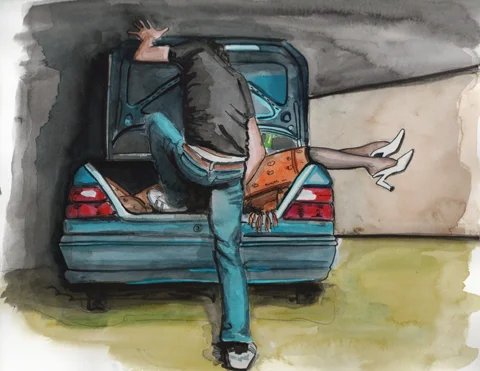
I've Got a Body in the Trunk of My Hyundai (or How to Keep From Losing Your Mop)
I’d mopped the second and third floor corridors before I remembered the body still in the trunk of my Hyundai.

Illustration by Tracy Hetzel
I’d mopped the second and third floor corridors before I remembered the body still in the trunk of my Hyundai. I work the nightshift in an unremarkable office building downtown, and after 11pm I’m usually the only janitor on duty. In fact, apart from two security guards and the occasional night owl law clerk, the place is practically vacant. The building itself is beige, nine floors, with overly tinted windows and revolving glass doors in the lobby.
It’s not the first time I’ve had a body in my Hyundai, and normally I wouldn’t pay much mind to such an instance—at least not until all the urinal cakes have been replaced. But the corpse currently residing in the cramped confines of my trunk was an especially messy fella, so I was worried parts of him might be leaking through an unseen crack or crevice and pooling onto the parking lot. Also, I usually park on P2, but today—for whatever reason—I parked on P3. P3 is a lot less populated, but your car is also much more noticeable when it isn’t crowded by a sea of Beamers and Range Rovers. Like I said, I drive a Hyundai. Not a great car, but just flashy enough it won’t get noticed by the white color corporate types. It took a year’s worth of saving to finally buy the damn thing, but I finally got there. I take good care of it, too. I get it washed every other day—sort of a ritual—and I’ve come to realize mediocre, yet immaculate cars, tend to go unnoticed to the rich man’s eye.
I usually dispose of the bodies before I get to work, but I was in a rush today and couldn’t find the time. My trunk is tightly wrapped in plastic and duct tape, so I’m not exceedingly worried about it. There’s just this one thing, though: there’s this kid in the building who keeps eyeballing me—real suspicious and all. Tonight, he’s walked back and forth two or three times, as if the kid is inspecting my mopping skills or something. And when I call him a kid, I just do that because I’m...well...shit, I’m 52 years old now—and this kid looks to be about...shit...I can never tell...maybe he’s 26-27. These S.O.Bs look younger and younger every day.
I made my way down to the lobby stairwell, leaving my mop outside the door on the third floor. I figure I can just go check and make sure there’s no blood or brain matter leaking out of my Hyundai. As I passed by the lobby door the damn thing opens and the 26-maybe-27-year-old-kid saunters into the stairwell. At first, we just stare at each other, mouth of our mouths open like a couple of wheezing Neanderthals. I can hear the fluorescent lights buzzing, the emergency floodlights recharging, the quaking sound of our breath. Then the kid—even though he’s not in my way and I’m not in his—says, “Excuse me.”
He looks at my nametag and I wish life were transparent enough so I could read his. He eyes me the way young kids usually eye a night janitor. Either he’s trying his damnedest to figure what life choices led me to become a night janitor, or he’s smirking internally at the very distinct possibility I’m a serial killer.
My bet is that the kid will smile and say something like, “Sorry about that, Glen,” even though my nametag clearly says it’s Gene; and then, later, he’ll go tell his friends he met some creepy night janitor who was slinking down to his car to check the body in the trunk of his Hyundai. And they’ll hoot and holler and take solace in the fact that their wild theories are, most likely, unfounded.
The kid says, “Sorry about that, Gene,” and I’m impressed he gets my name right.
“No bother at all, young man,” I tell him.
He trots up the stairs, glancing back only once. I offer him a genial smile before he continues on. I listen to the kid’s feet racing away. He must be wearing dress shoes, because they offer the cramped stairwell a distinct clicking sound. It echoes across all nine floors and reverberates in the bowels of my heart, and I wonder what that kid’s name is.
Finally, one of the stairwell doors opens and subsequently slams shut. Sounds like the kid got off one floor six, which is peculiar because I saw him earlier on floor two, and then again later on floor three. But maybe that’s just my paranoia kicking in. I’ve been off my meds for the last six days, so that’d make sense. Even though my therapist says the drugs will have some residual effect in my system, and insists it’s not the paranoia, I don’t trust him all that much, so to hell with him. Besides, he hasn’t even figured out I’m a serial killer, so I’m not inclined to vouch for his astuteness.
I lumber down to P3 and check my Hyundai, not an ounce of blood and the body is still neatly wrapped. I’m in the clear. I close the trunk, lock the doors, and make my way back to the sixth floor. I think that’s where I left my mop.
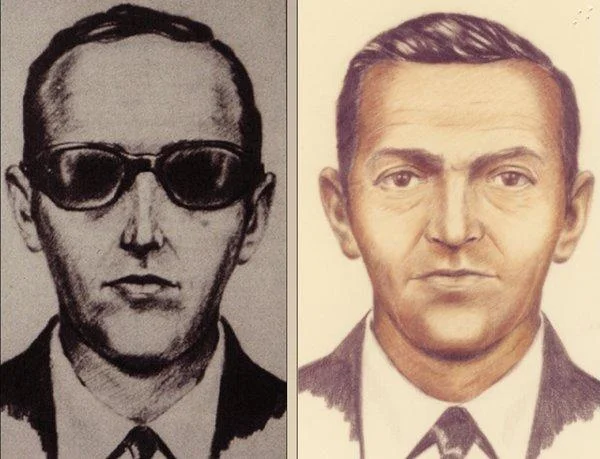
Finding D.B. Cooper
I think it was when I found the duffel of money and the open parachute bag that I realized my grandfather was D.B. Cooper.

I think it was when I found the duffel of money and the open parachute bag that I realized my grandfather was D.B. Cooper. It’s really tough to say, as it’s hard to trust the memory of a nine-year old. I remember I told my mother about the duffel and parachute to which she replied, “Maybe he’s D.B. Cooper.” She laughed and went back to chopping her vegetables that were to be the victims of our next dinner. I mentioned the same thing to my father and he, too, grunted, “Probably D.B. Cooper.”
At the time, the name D.B. Cooper was unfamiliar to me, so my third grade legs pedaled down to the local library and I researched any book I could find for the name D.B. Cooper. This proved more troublesome than anticipated, and by the time I reached my fourth book without the faintest mention of Mr. Cooper, the librarian approached my cubicle and asked, “Is there something I can help you with, young man?”
“I’m looking for D.B. Cooper.”
She cackled just like my mother. “Why on earth are you looking for D.B. Cooper?”
“Because I think my grandfather is D.B. Cooper.”
Her face darkened, unsure if what I had said was a joke or not. Honestly, I didn’t really care one way or another I just wanted an answer. “I’m not a fan of sarcasm, young man,” she said.
“I’m not being sarcastic.”
Her face further darkened. “Row 26,” she said. “There are some books on plane hijackings there.” She moved away, grumbling something as she went. I don’t think I cared much for that librarian.
I walked to Row 26 and found the first book on plane hijackings. No D.B. Cooper. I opened the second book and found a quick blurb, but nothing substantial. The third book, however, proved to be most useful. There was an entire chapter about D.B. Cooper and it was utterly fascinating. He was quite a character. A real wisenheimer. Apparently, while waiting for his ransom money, he cracked wise with the flight attendants and drank bourbon and water. Can you believe that? A wisenheimer like that drinking bourbon and soda while holding people hostage. What a character!
I checked out the book. The librarian said it was due in six days. I never returned it. I’m sure it chapped her hide, but that’s all right. It really was a very good book.
As I rode home it started to rain. It was early June. Flowers were sprouting, leaves were budding, and the rain gave the air a profound freshness. I placed the book in the bicycle’s basket and covered it with my sweater to protect it from the rain.
When I got home I went straight to my room and read the D.B. Cooper chapter three times before I gave my eyes a rest. I learned so many things, all of them interesting. Honest! I mean, at least, I thought so. I learned he who wore sunglasses all during the hijack. He also wore a lightweight black raincoat over a dark suit, a neatly pressed white collared shirt, a black necktie, and a mother of pearl tie clip. He had a receding hairline and chain-smoked cigarettes. He told the flight attendant he had a bomb in his briefcase and would use it if necessary. He told her to sit next to him and that the plane was being hijacked. His demands were simple: $200,000 in negotiable American currency, four parachutes, and a fuel truck standing by in Seattle. It really was quite an amazing story. But the most fascinating part was—and honest it was!—that after Mr. Cooper got his money, he released the passengers except for the flight attendants and pilot, and the plane took off again. Apparently, Mr. Cooper was headed for Mexico, but the plane needed to stop in Reno, Nevada for refueling. But on the way to Reno—and this is the interesting part I was telling you about—the plane’s aft air stair opened and Mr. Cooper jumped out of it wearing one of those four parachutes. Isn’t that something? I couldn’t believe it. Well, the authorities tried and tried and tried, but they couldn’t find a single trace of Mr. Cooper. Isn’t that something?
After a long while of reading my mother called me down for dinner. When I got downstairs my father was at the table drinking a martini and my mother was setting out our roast and creamed peas.
“You missed your grandfather,” my mother said.
“Grandpa was here?”
“About an hour ago.”
“You were up in your room making all that racket,” my father grumbled.
“I was reading,” I said.
“What were you reading, sweetheart?” my mother asked.
I told them all about the book I’d gotten at the library.
“Why are you researching D.B. Cooper?” my mother asked.
“Because I think Grandpa is D.B. Cooper,” I said.
My parents laughed. My father sipped at his martini.
“And why do you think that, dear?”
“Because of the parachute and bag of money I found in his garage,” I said.
My parents laughed so hard my mother nearly dropped the roast and my father spilled his martini.
“Your imagination is quite something,” my mother said.
“I’m serious. I found them both in a little crawlspace behind his tool bench.”
More laughter.
This didn’t sit well with me.
“I’m telling the truth! I even read about Grandpa in a book at the library today.”
“I knew it wasn’t his imagination,” my father grunted, gulping down the last of his martini. “You see? The boy said he got it from a book.” He was smug. My father was positively unbearable when he was smug. He shook his empty glass at my mother and she went to fetch him another martini. Boy, the food had just been set down and already she was on her feet again.
“I’m not lying,” I said.
“Nobody said you’re lying, honey.” My mother’s words were barely audible over the sound of the ice in the cocktail shaker.
“If your grandpa was D.B. Cooper, why would he just store the money in his garage?” my father asked. “Why wouldn’t he go out and spend it?”
“They said in the book they tracked the serial numbers,” I said. “Maybe he was afraid to spend it.”
My father grunted something I did not understand.
“I don’t think your grandfather was D.B. Cooper, sweetie,” my mother told me. “He was a family man, a hard working one, at that. Also, I bet I can count on one hand how many times that man has been on a plane. No, dear, I don’t think your grandfather was D.B. Cooper.”
“But how does that explain the parachute and the—“
“That’s enough!” my father shouted. “Your mother said to drop it, now drop it.”
My mother glanced at me with these solemn, understanding eyes, but said nothing. She set the fresh martini in front of my father and he ate the olive immediately. He sure could be a grouch sometimes. He smacked his lips and I poked at my mushy peas. We ate in silence the rest of dinner, the only sound coming when my mother went to clear the table. I slunk up to my room and went straight to sleep. I was too defeated to crack back open the plane hijacking book.
In the morning I did the only logical thing I could think of: I biked over to my grandfather’s house to ask him if he was D.B. Cooper. At the time, it didn’t seem like too bad of a plan. I had the book in my basket and was pedaling faster than I had ever remembered pedaling. The air was thick and dewy. It sure was hard to breathe, but that only made me pedal faster.
When I pulled up in my grandfather’s driveway I saw him putzing around in the garage. There was a green rubber hose wrapped around his shoulder. My grandfather was a thin man, but was stronger than anyone I knew. He was bald except for two thin patches of grey hair at the sides of his head. He had narrow black eyebrows and his jaw was wonderfully severe, almost like an isosceles triangle. He waved to me as I climbed off my bike. I waved back.
He set down the hose, grabbed at his back, winced. “Darn body ain’t what it used to be,” my grandfather said.
I got the book from my basket and took it to him.
“What you got there?” he asked.
“A book,” I said, suddenly anxious.
“What book is that?”
“A plane hijacking book.”
He scratched his chin. “That doesn’t seem like something a nine year old boy should be reading,” he said seriously.
“Mom says I can read anything I want,” I said. “Even Stephen King.”
My grandfather laughed. “Your mother always was an old softie.” He ruffled the hair on my head. “What brings you by so early in the morning? Summer vacation boring you already?”
“I wanted to ask you something.”
“Oh?” he said, curious. “And what’s that?”
The book was shaking in my hands. I tried to think of the most delicate way to go about it, how to ask a subtle question without much pushback. It would be best to posit a simple inquiry, gain a bit of information, posit another, and so on and so on and so on until he broke down and admitted he was, in fact, D.B. Cooper. My slow and plodding plan was ready to unfold when I blurted out, “Are you D.B. Cooper?”
My grandfather looked at me thoughtfully and scratched his chin again. I thought he was going to laugh as my parents had, but he said calmly, “What makes you think something like that?”
“Because I found an open parachute and a bag of money in your garage,” I said, still unable to help myself.
“This garage?” His calmness was unnerving.
“Yes.”
He looked around. “I don’t see any parachute in here,” he said.
“It was in a crawlspace.”
“A crawlspace?”
“Over there.” I pointed to the area under his workbench.
“I don’t keep anything in there besides paint cans,” he said. “Have a look for yourself. Here, I’ll hold your book.” He took the book from my hands and I walked tentatively over to the crawlspace under the workbench. This was it! I had him!
I pushed open the crawlspace door ready to find 200,000 smackaroos, ready to find a fraying nylon parachute, ready to find the evidence that hijacking book said I would find. But when the door opened all I saw were paint cans—all eggshell, all unopened—and the occasional brush. The room was dark and musty, just as I had remembered it when I first found the money and parachute, only now the items I sought were gone.
I turned back to my grandfather. I was sure I was crying, but I couldn’t feel my face—or any other extremity for that matter. He was still looking at me with that thoughtful expression, only his eyes were a bit more narrowed and, while I couldn’t be sure, I thought I saw a small smile work its way onto the corner of his mouth, only this wasn’t his usual amiable smile, this was something more sinister.
“Come here, pal,” he said.
My feet traced across the garage floor as I made my way back over to him. He set a hand on my shoulder and said, “That imagination will get the best of you.”
“They were in there,” I said helplessly. “I saw them.” My lip was quivering. My vision blurred; bright, white stars popped everywhere. I could still feel his hand on my shoulder.
“Run along home,” he said. “You don’t want to go wasting your summer vacation chasing ghosts now, do you?”
I nodded, but it didn’t really matter. I barely heard him.
“Run along,” he said again.
I ambled over to my bicycle and rode myself home. I don’t remember much about the trip; all I remember is getting home, going up to my room, and going to sleep. My mother woke me some time later and told me dinner was ready. I could hear my father downstairs talking to somebody. They were laughing. The laughter made my stomach turn.
We went downstairs and took a seat at the table. My father was where he usually sat, shoving another martini down his gullet. Across from me was my grandfather, an empty rocks glass in front of him. They continued to laugh. What was it they found so funny? Boy, I sure hated their laughter. The sound was driving me nuts!
“Hey there, squirt,” my grandfather said to me when his laughter finally subsided.
“Hi,” I said.
“Dad,” my mother said closing up the oven, “did you hear our little whippersnapper’s most recent theory?”
My father began to laugh again. “Oh, you’re gonna love it. Wait until you hear it!” He had tears in his eyes from laughing. Can you believe it? My father was actually laughing so hard he was crying. That sure made me sore.
“That I’m D.B. Cooper,” my grandfather said.
Everybody burst into laughter. I swear the house shook from all the laughter.
“Can you believe such a theory?” my father said, downing the last of his martini.
“Quite the imagination,” my grandfather said.
“That’s what I said!” My father was in tears again.
“How about I freshen up those drinks?” said my mother. “Another martini and the same for you, Dad?”
“Sure. Why not?”
My mother—meal, once again, freshly set on the table—went to fetch my father and grandfather their drinks.
“Your boy has quite the mind,” my grandfather said.
“I just wish he used it for his studies. He’s got fourth grade coming up, no use wasting that brain on crackpot theories.” My father slopped a helping of chicken and gravy onto his plate.
“It’s good to have an imagination,” my grandfather said.
My father pretended not to hear him.
My mother returned with the drinks. “A martini for my love.” She set the glass in front of my father. “And a bourbon and soda for my other love.” She kissed my grandfather on the cheek and he smiled up at her with his fantastically deep brown eyes.
Bourbon and soda...
My grandfather took a drink and leaned back in his chair. “I never tire of these,” he said, toasting the table.
Bourbon and soda...
“I don’t know how you can drink that stuff,” my father said. “Taste like turpentine to me.”
“A man’s gotta have a drink,” my grandfather said. “You have your martini, I have my bourbon.”
...Soda...
“Oh boy...” I said, though I said it so quietly I wasn’t sure anybody had heard me. In fact, I said it so quietly I was quite sure I’d even uttered the words. D.B. Cooper had drunk bourbon and sodas. That’s when he was cracking wise with the crew! What a character that guy was! And there my grandfather was, sitting at our dining room table sucking down Jim Beam and Schweppes with impeccable ease.
“What was it you were doing down in the basement the other day, Dad?” my mother asked.
This seemed to stir a bit of unease beneath my grandfather’s gruff exterior. He squirmed in his chair and ran a finger around the edge of his bourbon glass. “Just storing a few things while I finish up painting the living room,” he said.
“You were in the basement?” I asked.
He was almost expressionless. “Yes,” he said.
“Yesterday?”
“Yes,” he said again.
“Speaking of which,” my father interjected. “Was that paint all right?”
“What’s that?” my grandfather asked.
“The paint you borrowed from us, was that the color you wanted? Eggshell, right?”
“Yes...”
My parents had painted all the walls in our house two years back and had spent a small fortune on large buckets of eggshell paint. They’d stored them in our basement ever since. Much to my father’s chagrin, a few months back I tripped over one of the cans while playing hockey and spilled the thing everywhere. I’d been banned from the basement ever since.
But rules were ready to be broken.
“May I be excused?” I said.
“Where you going?” my father grumbled.
“Bathroom,” I muttered.
“Don’t be long,” my mother said.
I slid back from the table and headed down the hallway feeling my grandfather’s eyes on me. As I disappeared around the corner, I heard my father boast about a recent sale he’d made and curse at the bit of martini that had slipped out of his glass and onto his slacks. I didn’t dare turn back.
I turned on the bathroom light and closed the door—a decoy technique I had read about in an old Hardy Boys novel—and continued down the hallway to the basement. Laughter came from the dining room—my mother and my father’s. My grandfather was silent.
I opened the basement door smelling its musty aroma. It was dark and humid and, as I descended the steps, felt my breath labor. While I hadn’t been down there since Easter not much had changed. The washer and dryer were still against the far wall, the water heater stationed next to it. There were boxes of books and old movies stacked in the corner and faded memorabilia from my father’s high school glory days on a shelf next to them. Everything was dusty and untouched, the basement unmolested save for the area under the stairs—the area where my father had stored his paint cans. I believed there were twelve total, though, as I mentioned earlier, it’s tough to trust the memory of a nine year old. Especially since, on this particular day, in the paint cans’ place were stacks of old LIFE Magazines. I’d never noticed them before, nor did I ever notice my parents reading LIFE Magazine, nor had I even ever heard of LIFE Magazine. It seemed terribly peculiar that one, let alone stacks of them, would be in our basement. Behind the magazines was something I found even more peculiar: a wicker basket four feet wide and two feet tall. I suppose there’s nothing peculiar about a wicker basket, but the fact that there was a faded United States Air Force decal on its top was very odd, indeed. Neither of my parents had ever been in the Air Force. In fact, my father was absolutely petrified of flying. The mere sight of a plane made his palms sweaty and stomach nervous. Crouching there in that basement I was certain of two things: those were not my parents’ LIFE Magazines and that was not their wicker basket. Something was truly amiss.
I pushed apart two stacks of LIFE Magazines and crawled over to the wicker basket. My hands were trembling. I pulled the top off the basket’s top and saw what I had expected, but could barely believe. On one side of the basket were four stacks of $100 bills. On the other side of the basket was that open nylon parachute, ripped and tattered in places, fraying from age in others. Set on top of the cash was a pair of dark sunglasses and white dress shirt with a few spots of dried blood around the collar.
I was so preoccupied with the contents of the box that I didn’t hear my grandfather come down the basement stairs and say, very calmly, but forcefully, “So you found it again, have you?”
I nearly fell into one of the stacks of magazines.
“Grandpa...” I said.
“I knew you were curious,” he said. “I just hoped you would’ve stayed away from this one.”
“You’re D.B. Cooper?”
My grandfather sighed, knelt down. He didn’t look angry, but his expression was terribly grave. I felt my tongue swell and the roof of my mouth dry. He set a hand on my shoulder. Even over my t-shirt I could feel how gruff it was. He was a small man, but seemed to possess a tremendous strength.
“I thought if I moved this out of my crawlspace that would have been the end of it.” His eyes were sad. “I guess I was wrong.”
“So you are D.B. Cooper?”
He was quiet a very long time before he said, “Yes,” but then corrected me, “I was D.B. Cooper. But I’m not anymore.”
“But...” My mind was spinning. “Why?”
“Why what?”
“I mean, you didn’t spend any of the money...I mean...it’s just...if you didn’t do it because of the money, why did you do it?”
“Because I wanted to,” he said plainly. “Because I needed to. The head of the airline—D.W. we called him—he was a real son of a bitch.” In all my years I never heard my grandfather curse. “I knew him from the war. He nearly got me killed—on multiple occasions no less! Damned fool, that’s what he was.” He was gritting his teeth and the expression frightened me. “When I got on the plane I didn’t even think I’d do it. I thought I’d lose my nerve. But I just kept thinking of old D.W.’s face, so smug, so arrogant. And before I knew it I was telling the flight attendant I had a bomb. And she took me seriously! Honestly, I couldn’t believe it. The whole thing was so preposterous. When she asked me my name I nearly said D.W., just out of reflex, but then I muttered, D.B. and used Cooper to fill in the blank. The whole thing was just so easy. I swear I couldn’t believe it! When I jumped from the plane I didn’t think I’d have a chance in hell of making it. But when I landed safely on the ground—except for maybe a few scratches on my neck—I knew I’d be okay. It was about a mile and a half to the nearest town. So I popped off my tie and trudged that mile and a half to a service station. I bought a proper bag, stuffed the money and parachute inside, and...” His voice trailed away and he seemed almost nostalgic. “Well, I guess that was it. I had this money from D.W.—money I didn’t even want—but I knew the fact that he paid some schmuck a portion of his fortune would eat him up inside. The S.O.B. retired a few years later. He never was the same.”
“Why didn’t you just get rid of the money?” I asked. “Or the parachute for that matter? If you didn’t even want it, what was the use in keeping them?”
“The money? Hell, I don’t know. I suppose if I got rid of it I wouldn’t have had the same satisfaction. I took a bout of shrapnel because of old D.W. and every time I took a gander at that money it made this rickety hip of mine feel a little better. And the parachute? I suppose it was like an artifact, just couldn’t part with it. Same goes for the sunglasses and shirt. I loved who I was in that moment. Even though I scared a lot of people, I made a lot of them laugh, too. Hell, a lot of them didn’t even know what was going on, most of those passengers were sleeping, anyway. When we stopped to deplane in Seattle, a few of them were even saying, ‘I think we’re switching planes because I heard there’s something wrong with the engine.’ Can you believe that? This whole charade is going on and they’re clueless!” He sort of hung his head and scratched his chin. “I suppose I should feel bad for it...I suppose...”
I put my hand on his shoulder. “It’s okay, Grandpa,” I said. “I won’t tell.”
His eyes lit up, as if my discretion was the only thing in the world he cared about. “You mean it?” he asked. Never once did he mention the fact that nobody would believe a nine year old, or the story was too ludicrous for anyone to listen to, or my parents would be the first to scoff at such a suggestion. All my grandfather said was, “You mean it?” and it ballooned my heart.
“Sure I mean it,” I said.
He smiled. “Thanks.”
“Sure, Grandpa.”
“Come on,” he said. “Let’s close this stuff up and we’ll get it out of here after dinner.”
“Even if my father found it I doubt he’d put two and two together,” I said.
My grandfather laughed heartily. “I suppose you’re right.” He patted the top of my head with his calloused hand. “Come on, your folks will be wondering where we wandered off to.”
“All right,” I said.
“You’re a good kid,” he said. “And you’ll make a fine young man some day.”
I said, “All right” again and D.B. Cooper and I closed the wicker basket and went upstairs for dessert.

Babs
Even before she sat down, Harry and Tom wondered if they had all met some place before.

Photo Credit: One Green Planet
It was on a Tuesday when Babs came into the lives of Harry and Tom. There was a mystery to Babs, that was undeniable. She was fabled and storied, peculiarly wise, but there was also a crassness to her. She walked with a swagger she knew she had and would never lose. And even before she sat down, Harry and Tom wondered if they had all met some place before.
They figured Babs could have been anywhere between forty and sixty years old. Her hair was cut short, bleached blonde, and spiked. She wore jeans that hugged her hips and thighs in the most unpleasant way, and her shirt was cropped low around the neck and chest. She wore enough makeup to blanket a small child, but her skin was still tired and weary. Her hands were cracked and old, the way paper mache looks when left out to dry. Babs was eager to believe she was still 22, but as her days waned, it was becoming harder and harder to accept the lie.
Harry and Tom were sitting on the couch with full glasses of whiskey and a half-smoked joint set between them.
The door pushed open. “Hello, boys!” Babs called from the entryway, sounding a bit like a 1920s lounge singer, the kind with glaring, unapologetic moxie.
“H’lo,” they muttered.
“What a fine evening it is!” Babs was carrying two overstuffed duffels. She dropped the bags on the floor and took a seat in a nearby chair. “It’s Friday and I ain’t got no work tomorrow. I got a half a pack of smokes, and I’m looking for love, lust, luck, or a bit of all three. You boys feeling me?” Babs removed a compact mirror and a tube of lipstick from her back pocket.
Harry was the first to speak. “I’m sorry, do we know you?”
“My name’s Babs.” She applied a thick coat of red.
“So we don’t know you,” said Tom, irritated.
“I gave you my name,” she said. “Seems like you know me now, yeah?” Babs smacked her weathered lips together. “And what fine names do you fine boys have?”
They were just drunk enough to answer. “Tom.” “Harry.”
“And what are you two doing in on a night such as this?”
“Wait,” said Tom. “…Who are you?”
“I’m Babs,” she said plainly. “I’m Carlin’s mom.”
They looked at her with unknowing expressions. The joint continued to burn.
“Carlin’s your next-door neighbor, dear,” she said. “And, technically, I’m not his mom. I’m his foster mom. Well, I was his foster mom.” Babs was rambling. “That’s the thing about being a foster mom: once the kid moves out, do you continue to be their foster mom? Or has your tenure in that department come to an end? Ain’t that something to ponder?”
They blinked at her.
“Do you do this often, Babs?” Harry asked.
“Walk in on two strangers?”
“Yes.”
“Only when I’m looking for something.” Babs pulled a pack of Virginia Slims from her front pocket and tapped one out. “You mind if I smoke?”
“I’d prefer if you didn’t,” said Tom, still irritated.
Babs stuck the cigarette in her mouth anyway and lit it. The Slim was so slim it burned away after a few unappealing drags. She lit another one and the room filled with smoke. “So what’s your boys’ story? You two lovers? Brothers? Friends with bennies?”
“None of the above,” said Harry. “This is Tom’s place. I’m from out of town.”
“Whereabouts?”
“Baltimore.”
“I lived in Baltimore once.”
“Is that right?” Harry asked, his tone bordering on condescension.
Babs finished her second cigarette and lit another. She inhaled so hard the third cigarette burned off in one drag. She picked a piece of tobacco from her tongue and wiped it on the front of her jeans. Her wheels were spinning, but there was little truth behind her thoughts. “By Camden Yards,” she said finally. “Up on Lombard.”
“How ‘bout that.” Harry was scratching his chin and staring at Babs the way a judge might stare at a witness.
“And what do you do, Harry?”
“I sit in the dark and write things.”
“Mmmm.” Babs inched closer. “I like that.” She set a hand on Harry’s thigh and gave him a playful slap. “And what about you Tom?”
“I do all sorts of things.”
“Like what?”
“All sorts.”
“You ever deliver mail?”
“Sure, I’ve done that.”
“You ever worked as a butcher?”
“Yeah, done that, too.”
“What about a distiller? You ever work as a distiller?”
“Sure. Been doing that for years.”
Babs set a hand on Tom’s thigh, but didn’t slap it. Tom squirmed and drank his whiskey down.
“You boys mind if I have some of that J?”
Tom shook his head and handed it to her.
Babs took a long, deliberate drag then let the smoke escape from her mouth in a fine and sexy billow. “Time is a funny thing, ain’t it, boys?” She took another pull off the joint.
Harry shrugged. “I supposed.”
“I remember when Carlin was just a boy—I don’t know, maybe seven or eight—and he used to run around with this stuffed polar bear. I’d gotten it for him when he was three and he’d take it everywhere. He’d cry if we ever left the house without it. The thing was becoming something of a nuisance. It was always getting dirty and stained, turning rattier and rattier. So, on his seventh birthday, I took it away and replaced it with a new one.” Babs took another drag and her body shivered. “Damn, that’s a good joint!” she declared. “I usually only meet guys who get that dried sage or dried thyme.” Babs took a final drag and finished the joint. She stubbed out the roach on Tom’s desk and wiped the ash on the floor.
Tom no longer cared.
“Anyway, Carlin finds the new stuffed polar bear in his room and just starts to cry. And all these kids are around—I mean, they’re all there to celebrate his seventh birthday—and he can’t stop crying. And then—in front of everyone—he just rips the bear up. I didn’t think it was possible for a seven year old to have that much strength, but he tore up that thing right on the spot. Fabric and stuffing are flying everywhere and all the other kids start crying and I’m just standing there with this birthday cake with these trick candles burning down and wax getting everywhere. Ruined the whole damned cake!”
The room fell silent. Babs took the pack of Virginia Slims from her pocket and popped out another cigarette. She thought about lighting it, but, instead, set it on Tom’s desk. “I don’t know,” Babs said. She hunched over and zipped open one of the duffels.
Harry sipped on his drink but hardly tasted a thing.
Babs pulled a stuffed white polar bear from her bag. The thing was stained and worn by age, and was missing one eye, but, otherwise, seemed to be in reasonable shape. “I’d thrown this in the garbage the morning of his birthday, but fished it out after the party. I barely had a chance to clean the coffee grounds off before he begged for it back.” She bit the skin on the edge of her thumb. “And then, I suppose, everything was fine after that,” she said solemnly.
A gust of wind rattled the windows.
“Hell,” Babs sighed. “My mind sure does wander.”
Harry leaned forward and asked, “So what is it you do, Babs?”
She smiled a smile that wasn’t real and said, “I return stuffed animals. Even if their owners no longer want them.” Babs rolled the Slim back and forth on the desk. She was looking at it with a fondness cigarettes didn’t deserve. Especially Slims. “Well, I think I’ve wasted enough of your boys’ time. I’d better be off.”
“You don’t have to,” Harry said.
“Yeah,” said Tom, no longer irritated. “You can stay.”
Babs smiled. This time it was real. “That’s sweet of you, boys. But it’s my time to get going.” She gathered up her bags. When she stood she barely wavered. Babs didn’t look drunk or stoned or lost; she just looked like Babs. “It was nice to meet you boys.”
“Pleasure,” they said.
“See you on the other side, yeah?”
The boys nodded, but didn’t know why.
“Will you make sure that bear gets in the right hands?”
The boys nodded again, only this time knowingly.
“Good.” Babs turned with her bags and left. She didn’t bother to look back and they were glad that she didn’t.
On the desk sat the stained polar bear and the fresh Virginia Slim. Tom took the cigarette in his mouth and lit it. Harry drank the last of his drink. And the polar bear stared at them glumly.
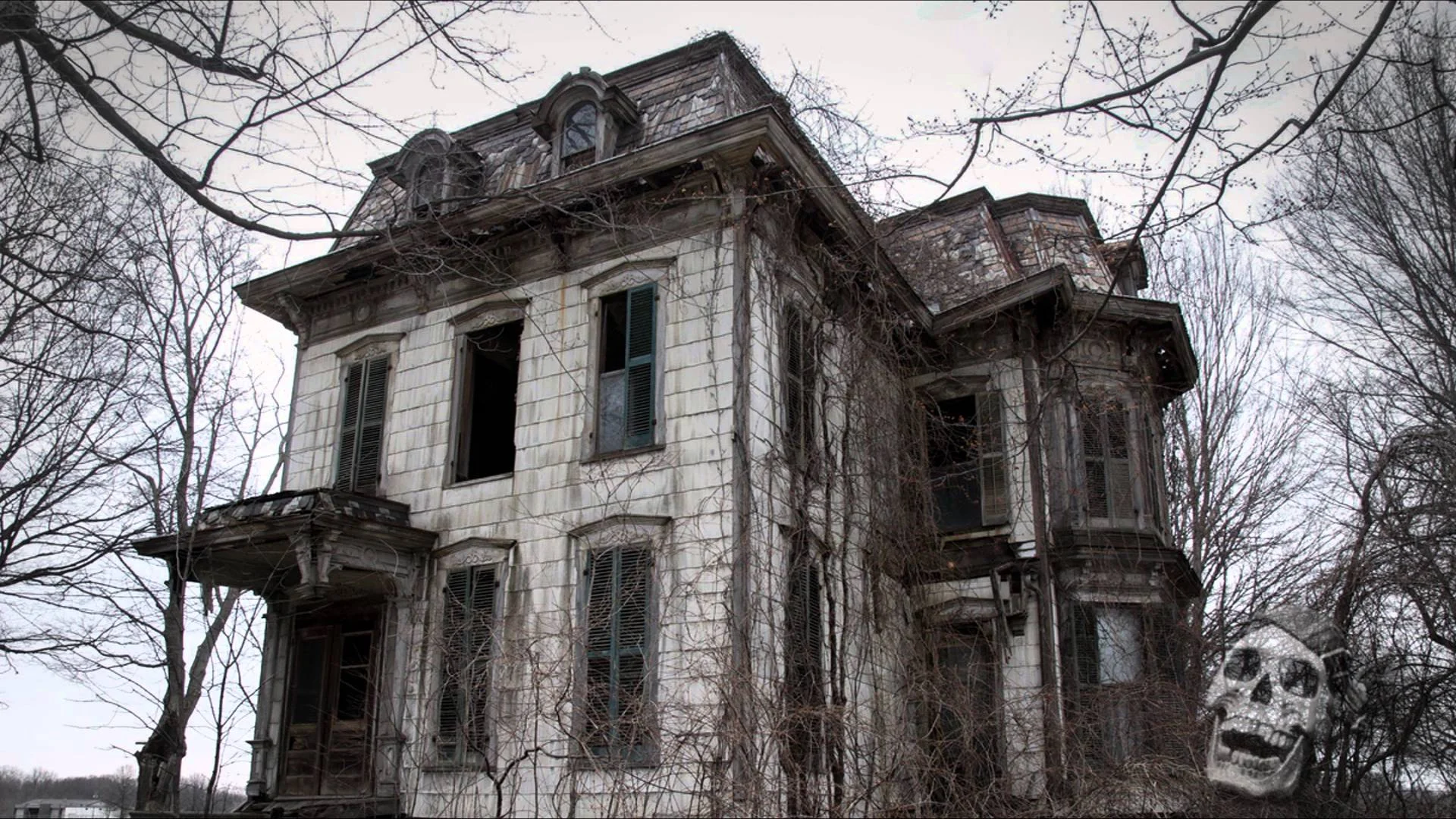
Four Nights With The Women in the Walls - A Horror Story
Did you hear that creaking and a cracking above my bed? Did you hear the vibrations along the beams? The fluctuations within the walls? Did you?

Stop! Wait! Did you hear that?
Did you hear that creaking and a cracking above my bed? Did you hear the vibrations along the beams? The fluctuations within the walls? Did you?
The noise I speak of comes in the night, and only in the night, particularly during my precious hours of sleep. During the times I’m enjoying a hearty breakfast, reading the morning paper, writing my letters, washing behind my ears, shining my shoes, taking in a meal of whiskey, potatoes, and steak, I never hear the creaking and cracking rippling along those trusses. But as soon as I lay my head down on the cool side of that good pillow the noises about the home begin its taunting charade.
The home I resided in could best readily be described as a split-level Victorian with four cramped bedrooms, matted white walls, and newly stained wood floors. Because of the new staining, the floorboards rarely creaked. Instead, I could hear the lovely shuffling of dust-bunnies slip below my socks as I traipsed about the house. The home, itself, was not my own. The owner was an older gentleman of about 70 who lived on the far side of town. His name: Marlowe (and though he was my landlord, his first name has always escaped me). Mr. Marlowe had very old hands and very old skin, but fantastically young eyes. They were pale blue—almost gray—and painfully disconcerting. Marlowe had decided to move into a complex for the elderly three years previous, but never had the soul’s courage to part with the Victorian he called “home.” It was his intent to pass it on to his daughter, but his daughter, sadly enough, had passed away on Marlowe’s sixtieth birthday, and such a plan never came to fruition. Consequently, Marlowe decided to rent it.
I met him at his complex the day before my residence was said to take place. We had spoken on the phone, and his voice was so weak, so alarmingly fragile, I was sure that when my eyes would first lay upon him, I’d witness a shuffling old man carrying a wooden walking stick or flimsy aluminum walker. But when Marlowe descended the apartment staircase I found him to be quite spry, lithe even. He bounded down those steps at an uncommon pace, sometimes two at a time. At one point I was quite sure he’d topple over, that gravity would get the best of him, but Marlowe safely reached the landing and gracefully made his way toward me. It was around the time he reached the third step (or perhaps it had been the fourth—time has muddle a few things) when I first noticed those eyes. Those cold, grey eyes! We exchanged keys and deposit without many words—words, even to this day, I have no memory of—and I left with a frosty feeling in my heart.
I was not the first tenant of that Victorian, but I will most certainly be the last. I know this fact for a multitude of reasons, but such reasons would, at this particular juncture, do this story little justice, so I will promptly move on from them. The six previous tenants had departed without warning and without cause. Some had even abandoned their belongings, as if they had left in a discombobulating haste. Among those belongings were an old record player, half a dozen books by various authors (none of whom I’d ever heard of), and a picture frame displaying the face of a young woman. The woman was so bland looking I could never tell if it was an actual picture taken by the previous tenant or if the portrait had come with the purchase of the frame. She had blonde hair that was so bright, looked almost silver in the picture’s light. Her irises were blue, her nose was pointed, and her skin was wonderfully fair. I kept all of the tenant’s belongings as I had found them. I never altered the placement of the frame, never flipped a page of one of those books, but had been known, from time to time, to cast an album or two on that rickety player.
It was late when the creaking began. The record player had been properly stowed for the evening, a glass of water propped on my nightstand, and the curtains tightly drawn. But I awoke to the vibrations almost at once. I was roused from some dream, the content of which I can no longer remember. The house appeared to be leaning, tilting on its axis. I had the sensation of falling and grabbed onto my bed for support. The beams belched another shuddering vibration and I jumped from the comforts of my covers. There came another low, rumbling followed by several clicks. The clicks were quiet at first, but they soon amplified, as if somebody was pitter-pattering around in the attic.
I fastened up my robe and made my way into the hall. An eager breeze ran up from the stairs, the likes of which made my teeth chatter. Above me was the attic door, a frayed hemp string dangling from the latch. I pulled the string and the attic door fell open, a set of discolored wood steps slid down and clunked against the flooring. I shuddered to think about the scratch I’d find in the morning, but before I had a chance to dwell on the thought I found myself ascending the attic steps.
The house let out another moan.
Before I reached the darkness of the attic the clicking footsteps stopped. The suddenness of it was so jarring I quite nearly spilled over. Thankfully, I managed to catch myself by the last sole of my slipper. I craned my neck toward the dark rectangle that was the attic’s opening and listened, waiting for the trusses to crack again, but the sound was no more. Instead, all I could hear was a shallow, restless breathing. But that breathing mussing the silence surely must have been the wind or the trees or the darkness…
I cinched tighter my robe and stepped through the opening, smelling the dusty air, thick with asbestos and mildew. There was another light in the attic, this much I knew, but I fumbled to find its cord. By the time I did find the little bastard I half expected to flip the switch and see a rotting corpse resting before me. But when I pulled the cord and the attic became apparent, there was nothing but empty light and two forlorn boxes resting in the corner, both sadly marked in bold block letters: Winter Clothes. I stepped toward the boxes, positive these flimsy cardboard constructs were the source of the creaking and cracking, but when I flipped open their tops I found nothing but poorly knitted sweaters and several women’s cardigans. It was so odd to feel such a sense of relief and disappointment all at once. I scanned the empty attic one last time and switched off its light. Another howl of wind happened outside and I convinced myself the house was just my imagination. I descended the steps feeling wonderful fogginess wash over me. I hit the pillow, relieved to find the sheet had become cool again, and waited for sleep to take me, my last memory being: I was glad that that insubordinate night was over.
But the next night was still to come…
I awoke at dawn. I showered, dressed, went to work, ate dinner, listened to a record, drank a whiskey, listened to another, and traveled off to bed. The entire affair had been calm and easy. But when I put on my pajamas and untucked my sheets the vibrations came again. The house moaned, begging me to help it. Only this time the moaning was within the walls, not the ceiling.
I jumped from my bed and ran to the window, flipping the blinds so hard they snapped. I looked out on a quiet street. Lampposts rested easily at the corners, pulsating their yellow light. The neighborhood was magnificently still.
Another creak resonated from the depths of the home and I dove back into my bed. I think I may have screamed, though there was no way of telling. Mr. Marlowe’s house was ready to topple over! I was sure of it! But just as I convinced myself the thought was fact, the house settled and the vibrations tapered. I lifted my head from the covers and swear I felt the house sigh.
The next morning I did not wait for the sun to show its wicked face before I showered, shaved, and dressed. I ate a hearty breakfast of eggs, bacon, toast, and jam and covered the platter in a hollandaise I had cut with double butter. I proceeded to drink three cups of coffee and slap four handfuls of aftershave upon my weary cheeks. But even after I did I found my skin was still bleak and sallow. My eyes were grotesquely sunken and frightfully dark, and though the scale would not corroborate my sentiments, I felt as if I had shed a dozen pounds after those two fretful nights.
Work was mundane and I struggled to keep sleep at bay. I returned home just after five, ate beans and biscuits, drank a whiskey, and read a book of no implication by candlelight. As soon as the sun went down I carried myself upstairs with a restlessness my body had never felt before. I took quite some time to dress for bed, delaying the inevitable. But when I slipped open those sheets and slid myself into their comforts, I heard no creaking and I heard no cracking. The house was spectacularly quiet. Nay! It was spectacularly still!
I waited one agonizing moment, sure the home’s final breath would result in one last moan, but neither came and I shut my eyes, convinced the previous two nights had been but a dream.
Alas, some wishes are not meant to be true, and just as I readied to extinguish the candle I heard faint signing echoing within the walls. The home, to my horror, was no longer creaking, and it was no longer cracking, the damn thing was singing! It was this horrible, dangerous melody that I wished would stop as soon as it started. The song was pleading and unrelenting. It was a wailing mess that droned on and on like a person’s cries in the blackness of a sea. No note carried even though every note screamed.
I grabbed hold of the bed frame just as it began to shake, the singing reverberating around me, harassing my eardrums with its torturous notes. I cried to the heavens, begging it to stop! But no such luck found its way to my bed.
It came time for me to jump from my covers; I nearly toppled over the nearby nightstand as I did. The cool night air met me and I realized my pajamas were soaked in sweat, my brow exceptionally wet. I crashed into the wall and felt its vibrations, they were violent and heavy, glaringly palpable. I pulled away from the wall with such a force I fell over, crashing against the slick wood floor with this splendid thud.
The singing morphed into harsh, broken screams and I covered my sensitive ears as I lie on that brittle Victorian floor. And then, just as suddenly as the screams began, they ceased. An echo of them disappeared down the hall and out one of the open windows. My breathing was thick, but painfully disconnected.
All at once, the home turned exceptionally frigid. I turned to look at my bedroom window, and though we were in the midst of a heat wave that summer, frost began to line the window’s frame. At first it was slight, as if my eyes were deceiving me, but then the ice crystals expanded, little distorted mirrors weaving their way across the window. I exhaled and saw my breath accentuated by the candle’s light. It wafted into the air the way the first drag of a cigarette might look.
And then came the tapping…
The taps were intermittent, but calculated, sounding a bit like morse code coming from the soul of the home. Tap, silence, tap tap tap, silence, tap tap, long silence, tap tap tap tap tap.
I curled up on the floor, bringing my knees to my chest. I was an animal in a kennel of hell.
Tap tap tap.
My head was swimming. My body was shaking.
I turned my neck at an odd angle and felt a twinge run along my jawline. I looked back up at the window and saw the frost was gone. I no longer could see my breath. And that’s when I realized the tapping had stopped.
But my body was still shaking…
It would shake until morning came, but the house would remain still. After that, I have no idea how long I slept, or if I slept at all, but I never once removed myself from that perfectly polished, perfectly stained pine flooring. I was too afraid at what might happen if I did.
I couldn’t bear the thought of work the next morning. As I stared at myself in the bathroom mirror it appeared as though I’d aged seven centuries in three days. There was a hollowness to me. I was a fragment of what I once was.
I didn’t dare bathe. I didn’t dare make a breakfast. I didn’t dare dress. I sat in the comforts of my tautly upholstered chair until the morning paper came. Though, I didn’t dare go fetch it. I stared out the window, watching the day come to fruition, and when my neighbors began milling about, gathering their own papers, disposing their own garbage, heading off to their own jobs, I snatched up the phone and dialed Mr. Marlowe.
He answered on the first ring and I was momentarily paralyzed by my relief as well as my foolishness. In a second I ran the entire story and events through my head and didn’t know whether to laugh or cry or scream about what had happened. Was I to be deemed insane? Would Marlowe declare me a nut and have me committed? What could I have said that he could possibly respond to?
“Mr. Marlowe?” I asked carefully.
“Yes,” his weak voice responded.
“This is John Hedge.” Marlowe didn’t respond so I offered a further nugget of information. “I rent the Victorian from you.”
“Yes?” he said without any sort of pleasantness.
“Well, you see…the thing is…”
“Yes?” he said with the same colorless tone.
“I think there’s something wrong with the house,” I said abruptly, the words escaping my lips before I could snatch them back.
“Oh?”
“Yes. I’m quite certain of it.”
“Is that so?”
“Yes, sir.”
“I’m sorry to hear that.”
“Well, what do you intend to do about it?”
“I’m sorry, dear boy, but what ever could be wrong with the home?”
“There’s…I don’t know…there’s something strange about it. It’s making noises.”
“Making noises?”
“Yes, sir, noises!”
“My dear boy, I’m afraid I don’t understand.”
“Mr. Marlowe, the house is shaking at night. It’s creaking and cracking and driving me mad!”
There came a low laughter on the other end of the receiver. “Oh…Oh my dear boy!” I could picture Marlowe wiping the tears of laughter from his eyes. “It’s a very old home. You yourself referred to it as the Victorian! Surely you know old homes such as those are bound to have a tad bit of creaking.”
“But this isn’t a tad bit, Mr. Marlowe, it’s incessant! And then there’s the…” But my voice trailed away.
“There’s the what?” he asked, genuinely curious.
“There’s moaning…or something.”
“Moaning?”
“Or singing. Or both! Mr. Marlowe, I think there’s something genuinely wrong with your house.”
“Now you listen here,” he said with a sudden rage. “There is absolutely nothing wrong with my house! If this is some scheme to get your deposit back you can take it up with my lawyer. We made a deal Mr. Hedge, a deal you agreed to in writing. And for you to call and try and weasel a few hundred bucks out of me…well, I simply won’t have it!”
“Mr. Marlowe, I haven’t slept!”
“I suggest you get to bed then!”
“But the house is screaming at me!”
“Then the house and I have something in common! Good day, sir!” Marlowe slammed the receiver down and my ears adopted a heavy ringing.
I sat back down in my armchair and looked out the living room window. Across the street a wife kissed her husband goodbye and he headed off to work. She sauntered back inside, ready to enjoy the comforts and serenity of her home. A woman who wasn’t destined to be tortured by the screams and insensibilities within the walls of Marlowe’s Victorian.
My knees jumped, I chewed my fingernails down to their nubs, I would shiver, then clam, and then shiver all over again. When I felt my eyelids becoming heavy I would hop up from the armchair and dance about, feeling insanity sink in. I couldn’t take the sleep anymore, but the thought of facing the world’s reality with my two frightened eyes was even more debilitating. Being mortified to shut your eyes is one thing, being mortified to open them is another thing altogether.
I poured a whiskey and drank it down, feeling myself go mad. I poured another and a dreariness hovered over me. I drank down the last of the whiskey resulting in this terrible knot in my stomach.
The morning light slipped away with little grandeur and the afternoon shadows crept across the drive. The concrete sizzled in the summer sun and I longed for the light to stay. The moon and the stars were my enemy and I would have given eight fingers to keep them at bay. But such fates are not meant for men such as me and the afternoon evaporated into a blackness that was darker than anything I had ever seen before. At one point, through a sleepiness I can describe only as haze, while gazing out my living room window, I noticed the street was perfectly black save for one streetlight stationed along the far curb. When first lit, the light was blindingly white, abrasive and harsh. But after it had been illuminated for some time the streetlight turned a soft shade of amber. I stared out at that black street and saw a figure standing below that amber hue. The figure’s silhouette was staring at me! Staring through me! I thought perhaps he was smoking, but that couldn’t be, for shadows do not smoke and never intend to smoke; shadows are lifeless, aloof.
I drew the blinds and escaped up to my room with legs that had no business carrying me. My body was shot. And my mind (I believed because of that cartoonish shadow) was beginning to play tricks on me. The entire affair was atrocious. But with such a fragile exterior and deteriorating interior, I couldn’t help but let the weariness consume me.
Through nonsensical dreams of fantasy and myth I managed to find a pocket of unattested sleep. In my subconscious I waited for the dreams to end and the screaming to begin, but I was far too exhausted to be roused by such a trivial thing as a woman’s screams. Then in the caverns of those dreams I became lost, and during this abduction I convinced myself morning would come and the Victorian would settle.
But luxuries never last as long as you wish, and at half past four in the morning I woke suddenly. I was sure there would be screams, reverberations, cracks, creaks, anything and everything. But as I turned my ear to the home I heard no such disturbances. And I was foolish enough to let a cautious optimism seep into me.
It was around this time—the time when my heart swelled with relief—I heard a beating heart. At least I think it was a heart. It was hard to tell against the pounding of my own pulse.
I threw the covers to the floor and lit the candle next to my bed. A long shadow cast over the room as the flame flickered, licking its surroundings with insatiable thirst.
I jumped from the mattress with an energy I didn’t think existed.
Then the moaning came…
It was that abhorrent, incessant moaning I had heard the nights previous, but now it was mixed with that deranged heartbeat, making it all the more unbearable.
I cried my protest to the walls, but my protests were met with soft knocks within the sheetrock. Something was calling to me, and for a brief moment I thought of the shadow in the street, the smoking man who stared at me from the incandescence with a startling patience.
Tap tap tap, said the wall.
I grabbed hold of a nearby lamp and thrust its base into the wall. Sheetrock flew, a fine mist of white powder dissipating into the air. I coughed, momentarily seized by the effects of the crumbling wall. But I refused to stop. With each strike a bit more sheetrock fell away and the wall’s mysteries became more evident.
The candle flickered again.
My strokes became fiercer and fiercer. Finally, the base of the lamp broke off with this dull clink and fell to the floor. I promptly flipped it around and used the shade end to gorge the rest of the wall.
The candle continued to glow its gentle glow and my violent tearing never knew its end.
The moaning raged! The heartbeat pounded! The singing was a chorus of hell! But, still, I waged war on that wall. And by the time a four foot section of the sheetrock fell away, I felt almost guilty. My motives were astonishingly unclear. Was the only thing driving me my own madness?
Stop! Wait! Did you hear that?
I looked into the sheetrock’s gaping hole and saw her.
Her!
She stared back at me with hollow black eyes. Her hair was still intact, brilliantly blonde, almost silver. But apart from the hair, it was only her skeleton my eyes could perceive. Her bones were grey and cracked, little bits of decayed skin still stuck to her cheekbones. Her mouth was slightly ajar and I could see one of her teeth was gold, the result of some accident or cavity. The corpse buried within the Victorian’s walls stared back at me with a potent and deadly friendliness. It did not take much inspection to realize the corpse was that of the woman in the picture frame I had found. I could never forget that face. I could never forget her.
I remembered the clothes I had discovered in the attic and wondered if those might have belonged to her. But such a thought was cast away as I turned toward my bedroom door, realizing it had been unlatched. Standing before me, a hunter’s knife glistening in the candlelight, was Mr. Marlowe. His eyes gleamed with rage, furious at his tenant’s insubordination.
“Mr. Marlowe?” I croaked.
His mouth slipped open and he seemed to smile at me. It was a perfectly queer sight seeing that reckless smile next to the serrated hunter’s knife. There was an aura of darkness behind him, following like a forlorn raincloud, unable to keep up.
“Mr. Marlowe…” I said again, this time pointing at the decomposed body within the wall. Though something told me Marlowe was all too aware of the woman from the picture. He barely glanced at her as he advanced on me. “Mr. Marlowe, what are you doing?”
“You shouldn’t have been meddling, Mr. Hedge,” Marlowe said. “That woman was a meddler and she found the inside of my walls. You shouldn’t have been meddling!”
“Mr. Marlowe…I…”
“Did you find the others, Mr. Hedge?”
“The others?”
“Did you find the others? What have you done with them? What have you done with my corpses?” Marlowe was screaming. A bit of spittle shot from his mouth and caught me in the chest. “You’ve found one, Mr. Hedge! Surely you have found the others!” Marlowe raised the blade above his head and swung it down in one furious motion. It breezed past my pajama tops, slicing through the fabric, but missing my skin. I jumped back, crashing into my nightstand. The candle tipped over onto my bedding, a bit of hot wax landing on the back of my neck.
Marlowe swung again, this time catching me across the forearm. I let out a horrific squeal and saw Marlowe recoil against the noise. It gave me just enough time to scramble to my feet.
Flames rose up from the bed sheets, engulfing the comforter in a matter of seconds. But Marlowe was hardly concerned with the fire raging in the room; there was a fire in his belly that was a far greater inferno.
I clutched my arm and felt the warm rush of blood seep between my fingers. My eyes flitted toward the wound, but were quickly kidnapped again by the hunting knife slicing through the air. I leaned back, falling against the sheetrock, and the knife buried into the corpse’s skull. There was this shuddering crack as the knife broke through the woman’s cheekbone and her gold tooth rattled in her mouth.
Marlowe struggled to dislodge the weapon, but I was on top of him before he could manage. I thought one swift tackle to the ground would disarm the man of 70, but he barely lost a breath as we fell to the floor. The slickness of it caused us to slide into the doorframe.
I felt heat lick my back and I turned to find the flames had spilled off the bed and onto the floor. The recent staining swallowed up those flames and raced across the shimmering wood, ready to gobble up whatever it could.
I rolled to my right just as the flames reached Marlowe’s heavy work boots. He shrieked, swatting at them.
I reached for the knife still dangling from the corpse’s cheek. Mercifully, the knife dislodged and I turned back toward Marlowe, the weapon raised and ready. But when my eyes found Marlowe he, too, was ready, back on his feet, the fire extinguished, his work boots a smoldering mess. The heavy scent of burnt rubber filled the air as the rest of the flames in the room began to work their way up the walls. Heat radiated all around us as the Victorian began to cede to the fire’s angry inquiry.
“Stay out of my walls!” Marlowe screamed, diving for me.
I brought the knife down, but Marlowe knocked it away in one stilted motion. It fell onto the bed, which was now engulfed.
Flames reached the ceiling, burning away the Spackle with a rusty, coppery finish.
Marlowe pushed me into the bed frame but I managed to avoid the fire. He went to strike again, but I was too quick, jumping toward the wall next to the decaying woman. Her gold tooth flashed in my vision as I heard Marlowe scream. I looked back and saw his hands had collided with the fiery comforter. He screamed again as the flames peeled away his skin, his palms breaking out in crude formations of puss and blisters.
Marlowe turned on me, his eyes filled with blinding rage. He had had enough. He reached into the fire and carefully removed the hunter’s knife. The blade was practically glowing. He rushed at me a final time, a roar emanating from the depths of his diaphragm, knife raised, mouth open, tongue flapping against his cheek like a deranged woodland predator.
I grabbed for the broken bedside lamp and swung it around, connecting with the side of his temple. The eyes rolled back in Marlowe’s head and the knife fell from his hand. He stumbled backward and fell onto the bed, instantly consumed by the flames. Screams tore through the room, but were quickly stifled by the flames scorching Marlowe’s esophagus. His body snapped up from the bed, as if pulled by a string. The flames seemed to race down his clothes, but I realized Marlowe had inadvertently wrapped himself in one of the burning sheets and couldn’t procure a way out. The flames ran down to his feet and those smoldering work boots turned, once again, into burning work boots.
But, still, Marlowe would not quit. He cried through his anguish and made a blitz for me. The flames, however, were too great, and Marlowe could no longer see. He fell into the woman’s smiling corpse and her head tilted, as if inspecting us. Marlowe spun in the sheet, struggling mightily to shed himself of the fire. But it was of no use. There came a low, howling groan—a groan I couldn’t tell came from Marlowe or the house—as he tipped toward the bedroom window and crashed through the glass. His cries echoed away as he fell three stories to the street below. And then there was nothing.
The sudden rush of outdoor oxygen fueled the flames, bewitching the rest of the room. I offered the woman in the wall one last somber glance before rushing into the hall. I looked back a final time to see the flames crawling across that beautifully stained wood floor. In a matter of minutes, that floor would be ash, and its beauty would be nothing but a vacant memory I thought I might have had once.
I raced down the stairs and out the door. By the time I made it outside, the Victorian was consumed by a blaze so great it was a wonder how we had lasted so long inside. I saw the body of Marlowe lying on the concrete, the sheet smoldering pockets of flame.
As the flames tore away at the beautiful construct I wondered how many others were in those walls and in those ceilings begging me to get them out.
The fire fighters arrived some time later, but their attempts were pointless. Before the first hose rained its brilliant shower the home shook, emitted one final creak, one final crack, and collapsed in.
By morning the authorities would remove six bodies from inside that Victorian, all had been buried behind the walls, somehow preserved. When I asked the coroner if I could see the body of Mr. Marlowe, he looked at me with this devastatingly quizzical expression I could only describe as dumbfounded, and he told me, “Son, the bodies we found were all women. There were no men.”
“No,” I said helplessly. “The man…the man who was lying just outside the bedroom window. The man who had been wrapped in the sheet. Mr. Marlowe! Surely you must have found Mr. Marlowe!” I was beginning to sound deranged, even in my own ears.
“I’m sorry,” said the coroner, his voice bordering between sympathy and antipathy. “But there was no such man anywhere near this crime scene. Like I said, only women.”
“That’s not possible,” I said. “I watched him die. I watched Marlowe die!” My knees became weak and I had to grab hold of the corner’s van for support. “I’m just telling you what we found.” The coroner slammed the van door and he, along with the bodies of those six poor souls, sped away.
I sat there until midday, eyes fixed on the remnants of the place I once called home, and waited for Marlowe to return.
But Marlowe never showed.
“Mr. Hedge,” a woman’s voice came from behind me. It was my neighbor. Her husband stood behind her, hands cupping her shoulders. “Mr. Hedge, are you all right?”
I ignored her and turned back to the Victorian’s black ashes, tipping my ear toward its wreckage. “Stop! Wait!” I said. “Did you hear that?”
“Hear what Mr. Hedge?”
“The creaking and the cracking…” I rocked back and forth, hugging my knees. “The creaking and the cracking…the creaking and the creaking…the creaking and the cracking…”
The Willinghams
It was bitter that day. I remember the air tasted of soot and aluminum, the way my tongue feels before I’m ready to vomit.

It was bitter that day. I remember the air tasted of soot and aluminum, the way my tongue feels before I’m ready to vomit. The wind nipped at my cheeks and harassed my nose. I had happened upon nothing pleasant as I wandered those Scottish alleyways, and I watched solemnly as dawn turned into day, day turned into dusk, and, finally, night had come. The hours plodded along as the soles of my shoes traced listlessly over the cobblestone streets. I walked with my head down, paying little attention to the lights or where the crosswalks might have been. The cabbies would occasionally honk and yell, irritated by my aimlessness, but I paid them little mind. I had stopped several times, searching my pockets with clammy hands for a stray cigarette, only to remember I had quit smoking years earlier. But as the night clouds rolled in over the firth, I began to wonder how in the hell I ever decided to quit smoking.
Even through delirious nicotine cravings and the intermittent depressive states, I couldn’t help but appreciate that Edinburgh is the perfect place to get lost. There are countless roundabouts, dead ends, and one ways, all seemingly disconnected, but distinctly fluid. It’s impossible to tell where people should walk and people should drive. Pedestrians are honked at more frequently than motorists, and the only things that seem to have the right of way are obnoxious, yapping puppies.
I hadn't eaten for hours—maybe even days—but I was far from hungry. My legs were weary and a faint dizziness began to wash over me. I was no more than a block or two south of Heriot Row and knew of a cafe nearby. Rest and caffeine would do me good. I quickened my pace and turned north on Dundas Street.
Rush hour had relaxed, but now the pubs were open and the drunks were out. I could never decide which I liked less in Scotland: the traffic or the drunks. Barflies are one thing; drunks are completely—and appallingly—different.
I followed a herd of jaywalkers across Northumberland Street and saw the cafe just up the way. Even from my distance I could see a fire burning in back, a family of four huddled around it, the mother telling her children stories as they sat patiently at her feet. The cafe workers milled about, setting teas and cocoas in front of their shivering guests. Nobody seemed to be in a hurry, and I was happy this particular cafe was where I chose to lay down my burdens.
There was an open booth in back, just adjacent to the family and their stories. The family’s patriarch sat in one of the leather armchairs, tucked away, reserved. He was reading a crinkled copy of the morning paper which he veraciously shook every few seconds. I saw his nails were chewed to the skin, flush with irritation. He smiled at his wife and children with an awkward rigidness, as if putting on a front for a family he didn’t particularly care for. I saw that his teeth were faded and yellow, their hue resembling that of a former smoker, not quite putrid, but far from glistening. Shitty father or not, one former smoker must always pause to admire another.
The mother was occupying her children—a girl and a boy—with wild stories of mythical beasts and heroic warriors. The children stared up at her, wide-eyed, impressionable. Two cups of cocoa rested in front of them, marshmallows bobbing like miniature buoys. The fire crackled behind them.
I removed my jacket and hung it on the rack with the rest of them. Shedding a layer of clothing was a relief. It had rained during my walk and the jacket never completely dried.
A fair-faced waitress, maybe 30, came over and asked if I wanted coffee or tea. I told her I’d like a coffee and a couple slices of uncured bacon. She left, and by the time she returned I noticed the girl sitting at her mother’s feet was staring at me. She had these wide, blue eyes that were gentle, but piercingly fierce. She looked at me with the curiosity only children seem to have. I blinked at her, flitted my eyes down at the limp pieces of meat, then looked back, half-sure when I did, her attention would have returned to her mother. But it hadn’t. She was still staring. The mother, who continued to gesticulate her wild stories of myth, seemed not to notice her daughter looking at a complete stranger. I found this odd.
I took a bite of bacon. It felt cold against my tongue. I dunked it into the steaming cup of coffee. It didn’t help. I returned the bacon to my plate and sat back in the booth. A wave of exhaustion came over me and I felt my eyelids become heavy.
I heard the mother mention something about a character named Dragoon and his magical sword in the Land of Mirth, and I finally lifted my lids. I wasn’t sure how much time had passed, but when I looked back over at the family I saw the girl was still staring at me. My eyes met hers and she smiled and waved. I looked around the cafe, thinking she was waving to somebody else, but when it became apparent that she wasn’t, I reluctantly waved back. The girl smiled again and stood up from her cross-legged position. She was wearing a pleated khaki skirt over a pair of elastic leg warmers. Up top she wore a blue and maroon argyle tennis sweater, a gold crest of some indistinguishable symbol on her left breast. Her hair was slicked back—either because of the rain or product, I couldn’t say for sure—into a tight ponytail. The girl looked straight out of a Saturday Evening Post painting. Her mother barely flinched as the girl crossed the room, pulled out the chair opposite mine, and sat down. I suppose the mother was too engrossed in her own tale of lore to pay attention to such a trivial thing as her daughter. So it goes for some kids.
“Hello,” said the girl.
“H’lo,” I muttered.
“You look tired.” While the girl sported an exceptionally thick Scottish accent, each one of her words perfectly distinguishable. She dropped her syllables seemingly at random and dragged her O’s the way those with a southern drawl might do. “Why do you look so tired?”
“I’ve been out walking.”
“Out walking?” she said. “And whereabouts has an American like you been walking in a place like this?”
“Like Edinburgh?”
“Aye. It doesn’t seem like too nice of a day to be out walking, what with the rain and all.”
I looked at her a long time then asked, “How old are you?”
“Ten. But I’ll be eleven next month.”
“You don’t talk like a ten year old.”
“What do I talk like?”
For a ten year old—Scottish or otherwise—the girl spoke with stunning elegance. Her words were thoughtful, full of inexplicable maturity. She used phrases that were beyond the lexicon of most thirty year olds, and she did it with such confidence, it seemed she was creating her own language none of us knew, but all of us believed. Though, all I said was, “I’m not quite sure what you talk like.”
She squinted at me, examining my features, trying to decide if she believed me or not. Finally she said, “All right, if you don’t know, then you don’t know.”
I looked about the cafe to see if anyone was looking at us.
“Don’t be nervous,” said the girl.
“Why would I be nervous?”
“Because you’re counting the minutes until people start staring at you for having tea with a ten year old.”
“I’m not drinking tea.”
“Six of one, half dozen of the other.”
I leaned across the table and whispered, “I’m not nervous.”
“You’re doing a bloody terrible job of hiding it then.”
I sat back and folded my arms across my chest, eager to display some semblance of calm. But I found I was still glancing about to see if anyone had taken an interest in us. It was damn near impossible not to fidget.
“So how about it then?” she asked. “Whereabouts were you carrying yourself this cold autumn evening?”
“All over, I suppose.”
“All over?”
“Didn’t really pay attention. I just started walking, and then I kept walking.”
“Any reason?”
“A man needs a reason to be out walking?”
“No. A man doesn’t need a reason to be out walking,” she said. “But a man whose shoes are worn to their bloody nubs, and whose jacket is soaked to the core, now that man needs a reason.”
I wrapped my clammy hands around the cup of coffee, but I no longer felt its warmth. I set them back in my lap and began to pick at the ends of my fingers, discarding dead skin on the floor of the cafe.
“So…Are you going to tell me?” she asked.
“What?”
“Are you going to tell me the reason you’ve been out walking?”
“I don’t think that would be appropriate.”
“Why not?” “Because you’re ten.”
“Eleven next month.”
“You’re still ten.”
“What does age have to do with it?”
“Age has everything to do with it.”
“Why?” she whined.
“It just does.”
“But why?”
“Now you’re starting to sound like a ten year old.”
The girl looked back at her mother who was still fully engrossed in her own theatrics. “That’s my mum.”
“So I gathered.”
“And that’s my dad and my little brother.”
“I gathered that as well.”
“We’ve been out walking, too.”
“So why, pray tell, have you been out walking?”
The girl pursed her lips and narrowed her gaze. I thought she might not answer, that she’d stow away her stories just as I had. But then she leaned forward, her chair creaking as she did, and said evenly, “My dad lost his job.” She dropped her voice to a whisper, glancing around the cafe just as I had, nervous others would be listening. “We only go out walking when something bad happens.”
“Do bad things happen often?” I asked.
The girl shrugged. “My mum will tell my brother and me to put on our galoshes and coats, and then my dad will come out of his study, always with the same somber expression. And then my mum leads us through Old Town and in to New Town until we end up in this cafe—always this cafe,” she said, annoyed. “And we sit by the fire and she tells us stories of extravagance or fantasy, anything to lighten the mood. At least, mine and my brothers’ moods. My dad’s mood never seems to lighten—maybe that’s what happens when you get old.” She considered this point a long time before going on. “We come to this cafe because either he lost money at the track, or got yelled at by his boss, or ran out of oil on the motorway. Each excuse to go walking seems more cumbersome than the last. But this walk was the first walk where we all felt a little gloomy. Now he’s sitting in that chair looking through the classifieds.”
“I’m sorry to hear that.”
“You don’t have to be.”
“I know. But it doesn’t change the fact that I am.”
The girl glanced back at her family, scrunched her face into an unusual expression, and looked back at me. “So, what’s your name? I figure I gave you a nugget of information from my life, surely I deserve one from yours? So before I go on, I’d like to know your name.”
“You’re going to go on?” I chided. I thought the comment might make her smile, but she scrunched her face up in that same pained expression and I immediately regretted it. “My name’s Willingham,” I said before she could articulate her offense. “Willingham Powell.”
The girl seemed momentarily startled. She rocked back in her chair so far I thought she might tip over. “Willingham?” she asked, gulping down a breath of uncomfortable air.
“Yes. Willingham Powell,” I repeated.
“Oh…”
“Does my name disappoint you?”
“No,” she said quietly.
“Are you sure? You seem awfully disappointed.”
“I’m just…surprised, that’s all.”
“Surprised? Why would you be surprised?”
“Well,” she said awkwardly. “The thing of it is, my name’s Willingham, too.”
I sat back in the booth and tasted a bit of bacon that had gotten caught in one of my molars. I tried to pick it out, but the bugger wouldn’t budge. “Is that so?”
“My name is Sophia Jasmine Willingham.”
“That’s a very nice name,” I told her.
“I guess.”
“You don’t have to feel strange.”
“I just haven’t met another Willingham before, first name or last.”
“I haven’t either.”
I saw Sophia’s mother finish the first of what I could only assume had been many stories. She cast a furtive glance my way and whispered something to Sophia’s brother. The brother looked up without any sort of reaction. He took me in, assessed me, but didn’t seem to have any particular opinion of me. He sighed heavily as he got to his feet and walked over to us practically dragging his knuckles. His disinterest in Sophia and me was astounding. “Sophia,” he said begrudgingly.
“Aye?”
“Mum says you have to come sit down now.” The boy looked at me suspiciously. He was a boy of perhaps six, maybe seven, but he had these wise, ancient eyes, as if he’d seen my kind a thousand times before and he knew me fantastically greater than I would ever know myself.
“I’m having a conversation,” Sophia told him patiently. “I’ll come sit down when I’m ready to come sit down.”
“Mum’s gonna get mad.”
“Then you’d better excuse yourself from the situation before you become a part of the situation, Liam.”
“I’m already a part of it,” Liam said. “Mum made me come over to get you. She made me a part of it. Now you are further continuing to make me a part of it by refusing to listen. Please, just come sit down before you get us both in trouble.”
“Hush up you little minion,” she said. “Go tell Mum you’d like to hear the story of Goron and the Eight Knights, that should occupy her for a while.”
“But I’ve already heard that story a million times,” Liam groused.
“Go!” she snapped.
Liam walked, flat-footed as possible, back to his mother. He pointed at me, then at Sophia, and told her something I couldn’t make out. The mother smiled—pleased, I’m sure, that her son requested another one of her stories—and instructed him to return to the carpet in front of the fire. Sophia’s father continued reading his paper. The waitress set another cup of cocoa in front of him. He seemed mildly pleased, twirling the marshmallows with the tip of his finger. The mother launched into the tale of Goron and his knights and Liam’s wheel continued to turn.
“Where were we?” Sophia asked.
“You were troubled having met another Willingham,” I said.
“I wouldn’t say I was troubled.”
“No?”
“Just surprised, I told you that.”
“All right then.”
“And you still haven’t answered my question.”
“Which was?”
“What was it you were doing out walking?”
“Just thinking.”
“Thinking about what?”
“All sorts of things.”
“Top three then.”
“I’m sorry?”
Sophia groaned. I was wasting her time and her patience was waning. “If, while out walking, you were thinking about all sorts of things, give me the top three things you were thinking of. Shouldn’t be that hard. You said yourself you’d been out there a long time. Only so much a man can think about in so many hours. Just like I know there are only so many things a ten year—almost eleven year—old girl can think about in so many hours. So before I go confusing things any more, why don’t you tell me the top three things you were thinking about while your shoes got worn and your jacket got soaked.”
“You are one confident and eccentric young girl, Sophia.”
“People find me off-putting and unimpressive,” she said. “My third grade teacher called me ‘alienating.’”
“That doesn’t sound very nice of her.”
“Him,” she corrected.
The waitress returned, but she suddenly looked nervous. She stole a few glances at the father (who did not return her looks), as well as the mother. The mother eyed me just as Liam had, dubiously. “Can I get you anything else?” the waitress asked. “Or would you just like the check?”
“The check?” Sophia interjected.
“Yes,” said the waitress. “If the gentleman is all finished, perhaps he’d like his check.”
“No,” Sophia said. “We’d like another plate of bacon. This time, make sure it’s hot. It cools far too quickly in this place and I simply don’t understand it. And I’d like a cocoa, a fresh one. And bring the gentleman—sorry, Mr. Powell,” she corrected with a fair amount of sass, ”bring Mr. Powell a fresh cup of coffee.”
The waitress towered over us, her mouth hanging open for a spectacularly long time. God, did she look awful. She just stood there staring at us! Fortunately, she turned to the mother, shrugged helplessly, and headed off. The mother mentioned something about an elf or a fairy or an elvish fairy to Liam and pretended not to notice. I was beginning to believe all the stories this woman told were bullshit.
“I sure do get tired of being interrupted, don’t you?” Sophia said.
“I don’t have too many conversations to interrupt.”
“Bit of a loner, are you?”
“Something like that.”
“Then let’s get to it. Tell me why you’ve been out walking before you revert to your hermit ways and disappear into the ether from whence you came.”
I pushed the cup of cold coffee to the edge of the table, making it obvious I was done, and said, “My fiancée left me.”
“Your fiancée?” she asked carefully, almost unsure if she had said the word correctly or not.
“Yes.”
“What’s a fiancée?”
“What’s a fiancée?” I asked, my pitch rising.
“I don’t know what a fiancée is.” She was beautifully candid.
“You know words like ‘ether’ and ‘whence’ and you don’t know what a fiancée is?”
“Correct,” said Sophia. She scratched at the sleeve of her sweater fraying bits of maroon thread from its end. The waitress returned, setting down the cocoa, coffee, and bacon (it still looked cold and limp) before disappearing all over again.
“Well, a fiancée is somebody you intend to marry,” I said.
“Oh.”
“Yeah.”
“And she doesn’t want to marry you anymore?”
“It would appear so.”
Sophia stopped picking at her sweater. “I’m sorry to hear that.”
“Why are you sorry?”
“It’s always sad when people get left behind.”
“Left behind?”
“You know, when one person moves on from the other, but the one who gets left behind can’t understand why that happened. That’s always sad.” She hesitated slightly before saying, “I guess that’s why there are no happy endings?”
“You don’t really believe that, do you?”
She shrugged with her tiny, shallow shoulders. “I don’t know…I guess I don’t mean that.” Though I didn’t believe her. I don’t even think she believed herself. I wanted her to go on, to say something light and whimsical, but her hands fell to her lap just as mine had and her expression turned dark and grave. “It’s just sad, that’s all.”
“Your pop lost his job,” I said. “That seems plenty sad.”
Sophia practically scoffed. “Jobs come and go. Some people have careers while some people are destined to be nomads of the workforce. My pop, he’ll find a new job, and he’ll hate it just as much as the last. He’ll get paid a little while, money he’ll spend outside our means. Then he'll lose that job and we’ll start this course all over again. Jobs have a way of leaving people behind, sure, but the world just goes on spinning. A fiancée…that’s different. I think only about one of those is supposed to come along in a lifetime, yeah? And you just lost yours. Now that’s about the saddest thing I’ve ever heard. A situation like yours…that’s why I believe there are no happy endings.”
I realized my hand was shaking. “You sure do speak bluntly.”
“I guess I don’t know any other way to speak,” she said. “Maybe that’s why my teacher thinks I was alienating.”
“Who knows? People are idiots nowadays.”
“Too right you are. But, to me, there isn’t one bloody reason why we shouldn’t speak with candor, or courage, or honesty, or passion.”
“Yeah?”
“Aye,” Sophia said sternly. She stirred the marshmallows into her cocoa. The milky substance wavered in the liquid, floating on the surface like this strange, sugary icecap. She took a drink and wiped the marshmallow from her lips.
I was so engrossed watching her I hardly noticed Liam approach our table again. “Mum still says you have to come sit down. She’s starting to get annoyed.”
“I’m starting to get annoyed. I told you I don’t want to listen to any more of her stories.”
The boy blinked at her uncomprehendingly. “What would you like me to say?” he asked with an old man’s diction.
“Liam, did you know this man’s name is Willingham?”
Liam looked at me with his tiny brown eyes. “Willingham?”
“Aye.”
“But…our name is Willingham.”
“You’re right, it is.”
“But…how can his name be Willingham?”
“Because his first name is Willingham?”
“His first name is Willingham?” Liam asked, more confused than ever. “I’ve never heard of someone with a first name of Willingham before. That’s strange.” Liam thought about it a moment longer and confirmed, “Aye, that’s very, very strange.” He headed off, scratching the back of his blonde mop with a pensive finger.
“He’s a rambunctious little fella,” Sophia said.
“He seems all right.”
“He does now, sure, but try spending every waking hour with the guy. He’s a handful.”
“All kids his age are.”
“I wasn’t.”
“All right,” I conceded. “Perhaps it’s just boys then.”
“Aye,” she said thoughtfully. “Perhaps it is just boys. I don’t much understand boys.”
“You’ve got time to figure them out.”
“I never want to figure them out!” she insisted.
“You don’t?”
“No way!”
“Why not?”
“Boys are dumb.” Sophia’s elegance waned.
“I’m not dumb, am I?”
“No,” she said. “But you’re not a boy.”
“There aren’t any boys in your grade that aren’t dumb?”
“No,” she said flatly. “They’re all dumb. Do you know how exhausting it is being around dumb boys all day?”
Liam returned, staring up at his sister with that boyish wonderment. “Mum says you have to stop bothering this man.”
“Liam, go sit down.”
Liam looked from Sophia to me, and back to Sophia. He blinked. “Mum says you have to stop bothering this man.” Liam was an automation, programmed for one thing, and one thing alone.
“Am I bothering you?” Sophia asked me.
“No,” I said. “But perhaps your mother—“
“See? I’m not bothering him, Liam. Go sit down.”
“Okay.” Liam left again.
“See what I mean? Boys are so dumb.” Sophia absently pushed her cup of cocoa toward my coffee cup. “So why do you think your fiancée left you?” The question momentarily floored me. I rocked sideways in my seat, admiring (but also hating) her tenacity. “I’m sorry,” she said. “Was that too personal? I never know if I’m being too personal. I guess God didn’t build that filter in me. Do you have one of those filters? Oh, bloody hell, there I go again, digressing and such. If you don’t want to answer the question, I understand…I mean, I can understand if—“
“—She didn’t love me anymore,” I interrupted.
Sophia slumped down in her chair. “How do you know she doesn’t love you anymore?”
“Because she said, ‘I don’t love you anymore.’”
“And then what?”
“And then she left.”
“Just like that?”
“Just. Like. That.”
“You seem to keep getting sadder and sadder, Willingham.”
The waitress returned. She grabbed the discarded cup of coffee, but left Sophia’s cocoa. She thought about asking if we’d like anything else, but, mercifully, she retreated behind the bar without uttering a word. It was the best thing the waitress had ever done.
“I don’t know, Sophia.”
“You don’t know what?”
“I honestly don’t know why she left. I mean, yes, she said she no longer loved me, and I believe that. But there was more behind those terrible, terrible eyes of hers. Something buried deep down, all the way to her core. And no matter how much she tried to hint at whatever it was, I just never got it.” I bit the end of my tongue and felt the warm, coppery taste of blood in my mouth. “I’m afraid I am yet another consequence of the shitty little thing called love.” I paused. “Pardon my French, of course.”
“It’s all right, I’m Scottish.”
“I guess I was guilty of believing in love; believing that it was enough when it clearly wasn’t. I want to believe in love again, but the more I try to justify it, the less sense it makes. My fiancée did a bang-up job of ridding me of whatever optimism I may have had.” I began to laugh, a low, rumbling chuckle that turned into hysterics. I wasn’t sure how long it had been before Sophia interrupted my laughter by asking, “What’s so funny?”
I wiped the tears from my eyes and said, “It’s amazing how appalled she was at my romanticism.”
“That’s amazing?” Sophia asked, truly perplexed.
“It’s amazing because she made it clear—especially early on—how much she loved boyish charm and eternal hope and chivalry and all that nonsense. But the moment I try and hold her hand in public, I became this hun, this beast of a being who had no worldly business taking up space in her miserable little existence. I mean isn’t that hilarious? Isn’t that just so goddamn Grade A six kinds of fucked up hilarious?”
The fire crackled, popping bits of ash into the air and glowing its fiery glow. I looked over at Liam, he was sitting on his knees, one hand folded under his ankle, the other set in his lap. His mother was crouched next to him, no longer telling her loud, obnoxious stories, but engaging him in a kind of weird secrecy. Liam was quiet, bordering on glum. He glanced over at me with these sad eyes that didn’t seem to make any sense.
“I don’t know, Willingham,” Sophia said. “That situation doesn’t seem to be anywhere near the realm of hilarity. I stand by my original point: it sounds bloody miserable to me.”
I wanted to laugh, but my laughter had evaporated. “Have you always been this strange?”
“For as long as I can remember.”
“Don’t ever change, Sophia.”
“I won’t,” she assured me. “So, how did you feel, then?”
“How did I feel about what?”
“No. Not how did you feel about what, how did you feel about when?” she corrected.
My brow furrowed. “You’re not making a whole lot of sense, Sophia.”
“How did you feeling, Willingham, when she left? I’m not talking about hindsight, I’m not talking about the mistakes you thought you made, or how different you thought you two were, or how she condemned your romantic ideals, I’m talking about how you felt as you stood in your flat and watched her walk out that door, knowing she wouldn’t be coming back.”
It was at that moment when I realized during all my hours walking those dark alleys I never once stopped to consider how I felt when that terrible damsel I called a fiancée left my life forever. I tilted my head back and stared up at the ceiling. The Spackle was cracked and listless, rusty water stains running in random splotches. The glow of the fire turned the water stains a shade of maroon reminiscent of Sophia’s tennis sweater. I looked back at Sophia’s blindingly blue eyes and said, “I felt relief.”
The corner of her mouth curled a bit and her eyes seemed to glaze. “Relief?”
“I was so sad standing there as she said these awful things—some of which were cutting and some of which were true—and as she turned for the door I felt my heart sink, and this wave of nausea come over me. I thought she might cross the room and kiss me one last time—at the very least, a hug—but all she did was pick up this Louis Vuitton bag—a bag she cared about more than she cared about me—and walked out. But as soon as I heard the latch catch on the door the nausea went away, and that sinking feeling in my heart vanished. And I felt nothing but a tremendous sense of relief. At that moment I knew there would be no more sleepless nights of worry, no more fights, no more jealousy. It was all on the other side of that door—a door that was forever locked.”
Sophia brushed a few loose strands of blonde hair behind her ear and tapped our table with the ends of her fingers. It made this hollow, clacking sound. Suddenly she stopped and looked deep into my eyes. The sounds of the cafe and the street washed away as she asked, “So, Willingham Powell, what’s next for you?”
An abrasive bit of wind rattled the windows and those sitting near the entrance shivered. A shadow cast over our table and I looked up to find Sophia’s mother, arms crossed, scowling at me. I noticed she was wearing a white cashmere sweater over which was a sheared mink shawl. Three strings of pearls laced her neck and a pair of diamond earrings studded her unusually small ears. She didn’t look like the type of woman who was keen on telling tales. This woman was classic, constipated. There was nothing about her that had the faintest whisper of courage, or passion, or sex, or honesty, or faith. Sophia’s mother was devoid of any true emotion, a walking robot just like the rest of them. “Sophia, didn’t your brother tell you I was going to tell another story?” she asked.
“No,” Sophia said. “He said you wanted me to come sit back down and to stop bothering this man. I did, however, infer you were going to tell another story. I inferred this, Mother, because that’s all you ever do.”
“What is it I always do, Sophia?” the mother asked with this painful, sarcastic tone.
“You always tell your bloody stories,” she said. “And they’re all identical, so tired and monotonous. Every character is the mirror image of the last, teaching the same mundane lessons that are twenty years too old. Just because you make something mythical, Mother, doesn’t make it poignant.”
“Sophia…” the mother sighed, exasperated. “How many times have I told you to stop talking like that?”
“Like what?”
“Like this!” the mother screeched. “Like a condescending bitch!”
The cafe turned instantly quiet. Penetrating eyes fell on Sophia, her mother, and me.
The mother cocked her head and leaned in close to Sophia. Her lips parted and I saw her teeth slip out of her mouth. They were surprisingly bland. This woman was immaculate except for those teeth that seemed eight decades beyond her age. Sophia cringed (or perhaps that was just my imagination) and pulled back in her chair. I thought about standing to defend her, to come to her rescue, but a startling thought crossed my mind: I had no idea who this girl was. Sophia looked over at me, hoping for my heroic intervention, but I just sat there with this cowardice expression. I was a chicken shit. And it was a regretfully brutal moment when I witnessed a ten year old witness that in me.
“Sophia!” the mother hissed, paying no attention to the gawking patrons. “Come sit down this instant.”
I craned my neck around the mother and saw the father still sitting in that armchair, his head tipped down, reading those classifieds determined to offer his family such little hope.
Sophia turned back to me—doing very little to hide her disappointment—and said, “It was nice to meet you.”
“It was nice to meet you, too, Sophia,” I said.
“Perhaps I’ll see you again.”
“Perhaps.”
“I think I’d like that very much, Willingham.”
“I’d like that, too, Miss Willingham.” I didn’t look to see if the mother found this peculiar, nor did I care.
Sophia gathered herself up from the table, straightening her pleated khaki skirt as she stood. Her mother wrapped her arms across Sophia’s chest and pulled her toward her. Sophia’s eyes dropped to the floor. It was as if she couldn’t bear the thought to look at me. “Thank you so very much for watching my daughter.” The woman’s disdain was astonishing. “I’m sure she was in good hands. Enjoy your…” She noticed I wasn’t drinking tea and practically dry-heaved. “…Coffee.” The mother carried her daughter away. I was eager for Sophia to look back, a final glance as punctuation to an abrupt ending. But she never did.
The family eventually slunk out of the cafe, the rumpled edition of classifieds tucked firmly under the father’s arm. Liam was the only one to peek my way as they left. He looked dejected, but managed a small smile and threw it my way. I smiled back, but my smile felt just as agonized as his appeared. The family disappeared out the door and into the Scottish streets.
I waited for the rain to stop, but it never did. I sat staring at Sophia’s cup of cold cocoa for what seemed like hours. Eventually the waitress came around and told me they were closing. I nodded and left a handsome tip on Sophia’s stained saucer.
Another gust of wind rattled those fragile, colonial windows. I buttoned up my jacket as tight as I could. It was still wet. I walked to the door and took a final look back. The fire in the far end of the room crackled its last crackle. The remaining bits of dying ash coughed into the air. The log was black and cancerous, dead to the world. Tomorrow there would be another log, and another fire, and more crackles, and more ash to eventually disappear.
I nodded at the fair-faced waitress again (she didn’t nod back) and carried myself out into those treacherous cobblestone streets. I felt something prodding at my right breast and when I reached into my jacket I found an abandoned cigarette tucked away in one of my side pockets. It was slightly bent, its paper creased and wrinkled, but otherwise in good shape. I ran the cigarette under my nose and smelled its filthy power. That nausea I had felt with my fiancée returned and I fought the urge to retch. The streetlights hummed above me, glowing their strange incandescence. I twisted the cigarette between my fingers and watched the wind carry the tobacco away. The filter I flicked into a nearby drain before I began walking again. I was headed back to my flat with the certainty it was time to go.
Also certain I had worn out my welcome in Scotland.

Paradise Yellow
Before my mother died and my father turned drunk, the two of them used to take my brother, Brian, and me to a battered little cabin along the banks of a meandering Minnesota creek.
Before my mother died and my father turned drunk, the two of them used to take my brother, Brian, and me to a battered little cabin along the banks of a meandering Minnesota creek. Above this creek was a string of extravagant homes, their panoramas looking down on our malnourished shack. Since my family had neither the means nor the reputation to rent a home on the hill, my father could only covet them from our muddy banks below. I, however, admired those banks, in spite of my father’s cries they felt like some distant memory of a concentration camp.
The other shacks along the creek housed many families just like us. “Us” being the Wallaces. We were an unremarkable family, content with meager means, a fact that seemed to perturb only my father. Next door to us were the Andersons, a six-member family with three girls and a boy. The father Anderson was a year or two ahead of my father in terms of experience with the bottle. He worked at the post office and swore up and down he’d been struck by lightning not once, but twice. The mother Anderson was a homemaker who didn’t make much of a home. She smoked cigarettes and drank sangria, and that was about it. Their girls were pleasant enough, casting stones in their ratty yellow sundresses, stomping in puddles when it rained, and playing tag across the brittle, yellow grass along the banks. The boy was much more an introvert. You could always find him sitting on a faded tire swing reading his comics and swatting at mosquitoes. He barely spoke, and when he did, was nearly inaudible, only the youngest of the three girls seemed to understand, translating for him whenever she deemed it necessary.
The Baker family was housed next to the Andersons. They seemed to be the most economically well off (as compared to the rest of us), but they were still poor saps, brutally overspending at every maladroit opportunity that wandered their way. They had two boys who were mean--exceptionally mean, bordering on sociopaths. The older of the two boys loved to whip stones at birds and the other liked to burn ants with his magnifying glass. They spoke mostly in grunts like true Neanderthals. And they always seemed to be leering, these little, evil smiles that could drain the color from my face in an instant.
When I was nine and Brian was an infant, we drove the three hours to our rented shack in a downpour I thought would carry our car right off the road. My father drove fast—much too fast—and it frightened me. Brian was crying as my mother held him in the front seat. The headlights reflected off the sheets of rain and fog as if we were stuck in some kind of portal, forever driving in the same place. My father’s neck was rigid, broken out in pulsating blood vessels. His ears twitched and the greys of his temples had adopted small droplets of sweat. He gripped the steering wheel so tight his knuckles had turned white and his elbows were cocked out to the sides like a strutting chicken. I had never seen my father look so frightened.
But then the storm broke and the road parted the black clouds. Brian’s cries slowly died off.
“About goddamn time that kid piped down,” my father growled.
“He’s a good boy,” my mother said, more to Brian than to my father.
Our shack appeared before us, a cheaply built four walled structure with a tin roof and a chimney that led down to a wood-burning stove (the shack’s only source of heat). There were two windows on each side, four total, the first two looking out at Highway 210 and the other two looking out on the creek bed. If I stood on my tiptoes and leaned to the right, I could see part of the lake and a large, expansive home perched on the hilltop. The home was awe-inspiring, massive white columns with windows too large to comprehend. It was painted a pale yellow that seemed to turn a dramatic gold just after sunset. I never saw the owners. I never saw children playing. I never saw housekeepers or landscapers or anybody for that matter. The pale yellow home seemed like an uninhabited museum. Look, don’t touch, it screamed.
My father parked in front of our shack and I saw the Bakers and Andersons cars parked in front of their own respective homes.
“Well, shit,” my father said. “The Huns are already in their hovels.”
“Be nice,” my mother scolded.
I thought I saw him smile, but years of tainted memories beg me to believe that that’s one of life’s true impossibilities.
We unloaded the car and carried our things inside. The interior of the shack was almost as unimpressive as the exterior. The wood burning stove and a cheap aluminum sink were in the far corner. Stacks of chopped pine rested precariously between them. A small square table my father had carved from a dead birch tree rested in front of the sink. My mother used it to chop her vegetables or roll her pastries, but we seldom ate there. There was a single bed under one of the windows that looked out on the creek and a double bed under the other window. There was a shabby maroon couch against the windowless wall and a ragged, leather-bound armchair next to that. My father always sat in the armchair, never the couch, smoking his cigarettes and reading his paper and drinking his drink.
The afternoon came and went like a wistful daydream and the Bakers, Andersons, and Wallaces gathered in the collective backyard and struck up a fire. The men gathered around the pit, choosing to exercise a piece of flint and knife rather than the modern marvel of matches. It took much longer than anticipated and by the time the fire raged through the dried twigs, wood, and newspaper, the sun barely hung above the horizon.
The adults formed a semi-circle around the fire with their flimsy plastic patio chairs. The men cracked a bottle of bourbon and the women uncorked a bottle of White Zinfindel. They drank from plastic cups that, even at my unripe age of ten, I thought looked terribly classless.
I watched the Baker boys wander off. They pushed each other until one of them fell and began to cry. Their parents paid them little attention, only pausing to tell them to wander off farther. The Anderson girls sat in a small clearing across the creek and sorted out the late summer flowers like poker chips. The Anderson boy sat on his trusty tire swing, his nose buried in one his many X-Men comics. Occasionally he would glance up at the adults as they hooted and hollered through long pulls of whiskey and wine. He looked at them with little adoration, more so annoyance.
I wandered to the edge of the creek bed, staring down at the slowly running water. I was close to my parents, but I was far enough down the embankment so that my father wouldn’t bark at me to get lost.
“Helluva summer we’ve had, huh?” the Anderson father asked mine.
My father mumbled something about how it had been fine and drank from his plastic cup as though somebody was watching him. Always suspicious was my father.
“We sure are lucky,” said the Baker patriarch.
“In what way?” my father groused.
“Look at us,” said Baker. “It’s the end of summer, the weather cleared up, we got these beautiful places on the lake--“
“--On the creek,” my father interrupted.
“Yes, of course, on the creek,” he said tentatively, and then went on, “We got these beautiful families and a fresh bottle of bourbon. Can’t get much better than that.”
“Amen,” said Anderson, and they toasted with their own plastic cups. My father, however, sat this cheers out. “You’re fools,” he told them.
“Don’t be like that, Wallace,” Anderson said.
“You’re both cheap, ignorant fools!” My father was getting drunk—much drunker than the others. The mothers Anderson and Baker regarded him with contemptible glances and my mother lowered her eyes with a submissiveness that made me sad.
“We got nothing!” my father declared. “We got nothing and all of us goddamn fools know it!”
I wandered away from them to where the creek’s mouth was. The mouth small, no more than six feet wide, and the water at the end of the creek was so clear I could see the suckers and minnows swim through its transparency before disappearing into the darkness of the lake. There was something about the lake that seemed so nasty, so arrogant. I hated the lake. Yet, I envied it.
The bottom half of the sun slipped away and the sky turned honey and gold. Dark blue clouds with sharp outlines drew into the background and the remaining moisture on the trees sparkled like a sea of diamonds. I looked up at the yellow home on top of the hill and felt a longing that, if my father knew had existed, he would have beaten me halfway to sunrise. The home was a towering monument. From my distance, if the structure collapsed and it was later determined it had been made of paper and glue, I wouldn’t have surprised in the least. There was an improbability to it, a wonder erected for show rather than application. The yellow home made no sense, but somehow it made all the sense in the world. I wanted it and I hated it, and as I pondered this thought, I stared deeply into the lake’s blackness wondering where all those suckers and all those minnows had gone. I was almost too transfixed by the lake’s darkness to miss the dusty wave of smoke floating behind the yellow house. Almost. At first the smoke didn’t seem real. It was like a cartoon drawn by a five year old on a priceless painting. It didn’t fit. But then the smoke grew, doubling in size as the purple and honey sky turned an ominous shade of navy. The windows of the yellow home morphed into a fiery orange, the flames licking the insides like some sort of demon.
“Pa!” I called. But nobody seemed to be listening. “Pa!” I called again. He finally looked up, eyes blazing with bourbon, and shouted, “Pipe down, boy!”
Smoke plumed around the pale yellow home, an aura of evil. The image was no longer cartoonish, but staggeringly authentic, and I felt fear well up in me from the depths of my bowels. “There’s something wrong!” I called.
My mother picked Brian up from his carrier, clutching her glass of wine in the other hand, and made her way over to me. My father followed her, his drink also in hand, stumbling a little. He had very little of a pokerface and even from across the yard I could see he was ready to wring my neck. How audacious it was for a young boy to interrupt a drunk’s drunk.
“What is it, Tommy?” my mother asked with the pleasantness she always had, drink or no drink.
“There!” I called. “Look! Up on the hill!”
My parents looked up at the yellow house and saw its wicked blaze. “Holy Christ!” my father muttered. He said it so quietly I could barely tell if the fire registered. My mother was much more frightened, but still stunningly diplomatic: “Oh, my.”
My father turned back to the others. “Call the fire department! Tell ‘em there’s something wrong with...” he tried to remember the road that led up the hill, but the bourbon was blocking it. “What’s the name of that road?” The mothers and fathers Anderson and Baker all shrugged. We were not the types of families to venture across the creek’s bridge and into the fairer part of town. The tributary’s mouth was as far as we went. “Just tell them it’s the home at the top of the hill,” my father shouted. “Tell them there’s a fire!”
The Bakers and Andersons exchanged quizzical looks, but nobody moved.
“For piss sake,” my father cried. “Go!” This time my mother didn’t scold him for his language. Anderson ran inside and the rest of the Bakers and Andersons ran to the edge of the creek, huddling nearby so they could get a view of the inferno. The fire intensified and the black smoke kidnapped whatever was left in the dusky sky’s remaining beauty. It was enthralling and terrifying and sickening all at once.
A minute later Anderson returned from his shack and informed us, “They’re on their way.”
My father assessed the damage, scratching at his thick stubble and rubbing the nape of his neck. Even from our distance he determined the fire department would be too long. “The whole place will be a tomb by the time they get there. They’ll be lucky if the structure’s still standing.”
A little ways down the road we watched three fire trucks tear across the bridge and up the hill. But my father was right. Even in his drunken stupor he knew they were too far away. The home was already lost.
My mother mentioned how terrible it was. My father remarked at what a painful loss it would be (financially, of course). I believe the Bakers and Andersons agreed with my mother’s sentiments, sharing them in their own special way. Their hearts had gone out to the anonymous owners of the multi-million dollar home. They gasped and they awed and they did everything a person does in a situation like that. Most of the children watched with eyes that weren’t quite captivated, as if the fire had interrupted their precious playtime. After a few minutes of tugging at their parents’ pants and skirts, they scurried off to splash around in the creek. The Anderson boy hadn’t moved from his tire swing. He had finished the first X-Men comic and had moved on to another. The fire hadn’t impacted him in the slightest.
I pulled away from my father and waded out into the creek’s mouth, feeling the cold water run along my calves. I think my father called after me, bellowing something about how a boy my age shouldn’t be mucking around, but I was no longer listening to him. A school of minnows swam between my legs and I looked up at the yellow shrine. I could hear the wail of the fire engines in the distance, full of desperation and void of hope. The fire grew and I found myself smiling. I watched as the fire raced across the rest of the home, consuming that pale yellow beast, my eyes burning with a paralyzing sense of ecstasy.
There came a low rumble from atop the hill and the home seemed to brace for the end. The trusses wavered and the windows rattled. The flames ran up the side of the house, tearing away at the yellow paint. The fire trucks pulled into the drive just as the home collapsed in on itself, the crumbling structure resonating across the lake like clattering bones. And then, without notice, a small giggle escaped from my lips as I savored the destruction.

The Men Who Rake Leaves
It always ended at the Vegas Lounge.

It always ended at the Vegas Lounge. I don’t mean to say it didn’t end other places. It certainly did. But the Vegas Lounge had this power of holding you hostage until the night ceded. Nobody popped in for a few cocktails before a show or stopped by for a beer and a little mundane work gossip. No, far from from. Once you entered that bar, there was no going back. It led you down a path of destruction and blackness, and on the last day of autumn, on a surprisingly hot and putrid day, Billy Buttle, Jerry Saint, and Wally Martin were taken by the Vegas Lounge.
But I fear I’m getting ahead of myself. Allow me to start from the beginning, as stories usually do.
Their afternoon started with vodka, lemon, and ice, but they soon graduated to Old Fashioneds and Torontos. They drank their drinks, mostly in silence, intermittently placing the condensation-laced glasses against their foreheads.
“It’s too hot for December,” one of them said.
The other two wiped their brows, but said nothing.
They were atop a swanky terraced bar in downtown and were in the midst of a perfectly lovely, and respectable, Saturday. But as they finished the last of their drinks a plan began to formulate. Mayhem was brewing. What that mayhem would be was unclear. But one thing was for certain: they would find another bar; some place bound to have a happy hour. Downtown terraces hardly screamed thriftiness, so their wallets were thirsty for a dive.
“There’s a place across the river,” Wally said.
“What’s it called?” Billy asked.
“Terry’s. They have good burgers and a decent happy hour.”
“Sold.”
Jerry chewed the last of his ice. “Yeah, why not?”
They paid their check, tipped (handsomely, of course), piled into Wally’s Saturn, and drove the mile and a half across the bridge. They parked adjacent to Terry’s and were pleased that it wasn’t terribly busy. They found three open seats, took them without asking, and ordered three burgers, three fries, three beers, and six whiskeys. They ate and they drank, but anything beyond that is of no significance to this story and I will promptly move on from it.
The sun dropped and the moon rose and they stumbled out of Terry’s and back to Wally’s rusty Saturn. They had spectacularly full bellies and a blaring buzz; the day had treated them well. But just as they readied themselves for the comforts of the Saturn’s bucket seats, a light from across the street caught their eye. But it was more than a light. It was a beacon. And though they would never admit it, the beacon was calling to them. Under the beacon’s glow was a modest concrete building similar to the outside of an elementary school. There were two windows, tinted black, and a parking lot that housed mostly pickups.
They let go of the door handles and made their way toward the building, moving like drunken zombies, souls possessed. Billy saw a loveless couple standing out front, a cigarette burning in the woman’s hand. She inhaled and exhaled calmly. The man, however, was irate. He frantically waved his arms and pointed his finger at the woman. It was the most accusatory thing Billy had ever seen. Wally and Jerry seemed not to notice.
As they got closer they noticed what the beacon was: a nondescript sign hanging loosely over the building’s entrance. It almost seemed to be dangling. One strong gust could rip the thing from its screws. On the sign were full block letters against a coarse white background. The words were simple: THE VEGAS LOUNGE. Though, nothing about the place screamed Las Vegas. If anything, it seemed like some podunk place you’d stumble upon in east Nebraska. But flashes of Nebraska were more than all right for Billy, Jerry, and Wally on that good night.
The Vegas Lounge had the faint aroma of stale tobacco and Coors Light. It was filled with blue—hairs and little else. The people, who smelled of freshly trimmed grass and gasoline, milled about listlessly, as if the bar was some sort of purgatory. Billy, Jerry, and Wally were paid little attention as they cut their way through the faceless seniors.
Crazy Connie was working. Even in the darkness of the Vegas Lounge they could tell her exterior was exceptionally pallid. Wrinkles crowded the sides of her mouth and eyes. Her grey hair was spiked with gel that glistened against the bar’s spinning disco ball. Of course, none of them had come across Crazy Connie before, but she made her presence known even before they stepped to the bar. “Whatcho doin’ in here?” The place was swimming in a sea of Oldies—tons of Ricky Nelson, Fats Domino, and The Ronnettes—but the three could still hear Crazy Connie’s voice boom over the jukebox.
“Got anything good to drink?” Jerry asked.
“It’s all good to drink,” she said gruffly.
“Is that right?” Jerry was acting a sleaze.
“I just said it was, didn’t I?”
“Did you?” It was unclear if Jerry was hitting on Crazy Connie or not. But, in the Vegas Lounge, who hit on who was hardly of concern. It was who you woke up with that mattered.
Billy looked to his left and saw a man standing next to him. He wore a grey beard and a leather jacket that had seen the ends of time and had come back unscathed. He sipped on a Coors and gave them a knowing nod as Crazy Connie laid into them. “I ain’t got time for an attitude, boy! Now did you come to drink, or did you come to drink?”
Jerry took a step back and said plainly, “Three whiskeys.”
“What kind?”
“Maker’s.”
“Real predictable.” Connie sauntered off as The Shirelles came over the jukebox.
“What is this place?” Billy asked.
“I have no idea,” said Jerry.
Wally wandered off as if he heard some noise the other two hadn’t. There was a place Wally needed to be, and only the Vegas Lounge knew his path.
“Where’s he going?”
“Who cares?” Jerry said.
Crazy Connie came back with three glasses of brown. The color of the booze didn’t seem like whiskey, and it didn’t seem like rum, it seemed like something Crazy Connie had concocted shortly before dawn in the unsanitary depths of her bathtub.
“$9.50,” she grunted.
Jerry handed over the money (a tenner) and she returned with no change. Billy grabbed two of the drinks and Jerry grabbed the other. “What a battle axe, huh?”
Billy shrugged.
They turned to the rest of the bar and, amongst the slew of old people, saw a dwarf with curly hair, a drag queen (or an otherwise poorly dressed woman), and a gay couple engaging in an act of domestic abuse. Everyone passed in front of Billy and Jerry like a dream. And not the kind of dream you’d want to wake from, the kind you are a part of and you know it’s a dream. There was nothing real about the Vegas Lounge, but there was also nothing fake. Everything existed, and it existed specifically for them. They drank their “whiskeys” and watched their puppets, and suddenly the world didn’t seem so complicated.
Wally came back some time later—after many whiskeys had been downed. Crazy Connie had quit keeping a tab and the men merrily drank on. Wally had a woman with him. It was a low-class broad who was missing one of her front teeth. Her eyebrows, painted, had merged into one. She wore a purple sequins dress that hugged every one of her horrible curves. And when she smiled, Billy and Jerry swore the mirror behind them cracked. (Though this fact has never been proven). There was something awful about the woman with Wally. But there was also something majestic, mysterious—but in the worst kind of way. Sometimes people have secrets you never want to know.
“What about you two boys,” the woman asked abruptly.
“What about us?” Jerry was drunk and irrationally aggressive.
“What’s your boys’ story? I know Wally’s story…” the woman ran a hand through Wally’s matted hair. “But what about you two? You boys like to party the way Wally does?”
“Party?” Billy asked.
The woman laughed with that toothless mouth. “Oh, you boys are a delight!” She laughed again and they caught a whiff of her fishy breath. “I’m gonna go freshen up, sugar. We still good for later?” “You know it,” Wally said drunkenly.
The toothless woman wandered off.
Someone put on John Fogarty and a bevy of couples took to the dance floor.
“Wally, what are you doing, man?” Jerry asked.
“What do you mean?”
“What are you doing with Una-brow!”
“She doesn’t have a Una-brow.” Wally thought about it and then, “Does she?”
“She does! But that’s not the point.”
“What? She’s nice.”
“She’s a hooker.”
Billy turned and looked at Jerry with the same puzzled expression Wally was wearing. “What?” they both asked.
“She’s a prostitute,” Jerry said, dropping his volume to a whisper.
Fogarty blared on.
Wally glanced back at the bathroom, but the toothless woman was still inside. “She’s not a prostitute.”
“Yes,” Jerry said. “She very much is.”
“Really?” asked Billy.
“Are you sure?” asked Wally.
“Yes!”
Wally stroked his chin and glanced back at the bathroom. He said absently, “How much do you think she costs?”
“What?” Billy couldn’t believe his ears.
But Jerry said, almost instantly, “A hundred bucks.”
Billy blinked. “Okay, what is happening right now?”
“Really, a hundred bucks?” Wally asked.
“No doubt.”
“Are you guys putting me on?” Billy’s eyes flitted between them. “Is this a con?”
“A hundred bucks ain’t bad.” The wheels in Wally’s head were turning. He pulled out his wallet and flipped through the cash. Even in the gloom of the Vegas Lounge, Billy and Jerry could see he only had a few bucks. “All I got is eighteen.”
“How are you even thinking about this?” Billy asked.
“What’s the problem?”
“She’s a hooker.”
“So what?”
“It’s illegal. It’s immoral. It’s unconstitutional.”
“It’s not unconstitutional.”
“You know what I mean!”
Jerry, meanwhile, considered the prospect. After a few moments of contemplation he came to the conclusion that Wally’s point was far more valid than Billy’s. He took out his wallet and rifled through it.
“Oh, not you too,” said Billy.
Jerry counted out $94. “Surely enough to cover the cost and tip,” he said.
“Tip?” Billy asked.
Jerry stuffed the bills into Wally’s pocket just as the toothless woman returned.
“We still gonna do this?” she asked.
“Hell yeah we’re gonna do this,” Wally said. He reached into his pocket and pulled out the wad of bills. His hands were a clammy mess.
“What’s that?” the toothless woman asked.
“It’s for you,” said Wally.
“Why is it for me?” Her face seemed to darken.
Wally looked at Jerry who merely shrugged. “Well…because you’re a hooker.”
The toothless woman took a step toward him. For a brief moment Billy thought they might kiss, but then she hissed, “Excuse me?”
“Oh,” Wally said nervously. “I’m sorry. I guess you people don’t like that term.” He corrected himself, “Because you’re a prostitute.”
“Is this some kind of joke?” the woman asked.
“I hope so,” Billy muttered to himself.
“Jesus,” Wally slurred. “You want me to call you an escort? I can call you an escort if you want. It’s just that, hey, I’m the one paying for it, so it seems like I should be able to call you whatever I want.” With each passing word Wally sounded more and more intoxicated. His eyes glazed and then his eyelids fluttered. He was sounding moronic.
“I’m not a prostitute, you dick!” the woman screamed.
“Wait…What?”
“I’m not a prostitute!”
“But…wait…what were you talking about before? About partying?”
“You came up to me and said we were gonna go dancing. That’s what we were gonna do.”
Wally’s nose scrunched into an odd sort of angle. “Oh…”
The toothless woman whipped her hand around and struck Wally in the face. Blood exploded out of his mouth. By the glare of the disco ball, Billy and Jerry saw Wally’s lateral incisor shoot out of his mouth and follow after the shower of blood. The toothless woman now had a toothless companion.
She stormed off, but they didn’t watch her go.
Wally grabbed the side of his face, sobbing. “The f’ck ‘as ‘dat?” he gurgled.
“That’s your tooth,” Billy said, pointing to the floor.
“You tol’ me s’e was’a hooker!” he screamed at Jerry.
“I thought she was.”
The toothless woman returned, this time with the drag queen (which, as it turned out, was an actual drag queen and not a poorly dressed woman), the dwarf with curly hair, the gay couple, and—as if things weren’t bad enough—Crazy Connie.
“What’d you say to my girl Rhonda?” the drag queen asked.
“It was an honest mistake,” said Jerry.
“Look what she did to my face?” Wally cried.
Crazy Connie ignored him. “You think calling a poor girl a whore is an honest mistake?”
“I mean, she’s in the Vegas Lounge and only has one tooth,” Jerry said. “It seemed like the odds were pretty much in our favor.”
The gay couple advanced on Jerry and slapped him across the face, one hand to each side. Jerry slapped them back and they recoiled with the most awful expressions.
A melee followed. At one point the dwarf bit down on Jerry’s thigh so hard he drew blood. Glasses were flung, punches were thrown, and the boys were eventually thrown out the back exit by the drag queen and the gay couple. Billy, Jerry, and Wally landed to the asphalt with a dull thud. They had cuts and they had bruises, but they had left with no bill and a buzz. Crazy Connie would comp them, as she had done so many times for the souls whose nights had ended at the Vegas Lounge.
The three gathered themselves up, dusted their pants off, and found a cab home. The Saturn could wait until morning. Their night was over and autumn had come to a close.

Lost With Wolves
The outlines became more pronounced and the tall man no longer needed to squint. He could see the wolves just fine.

Photo Credit: BBC
They were lost, that much was true. They had been lost for some time, but neither spoke of it. Night had come quickly. The day’s pleasantries were nothing but a distant memory. There was no longer the warmth of the sun or the inviting summer breeze to keep them company. Now they were prisoners of the darkness, wrapped in a blanket of broken trails, clicking branches, and howling beasts. In short, they were fucked.
The first to realize they were lost was the tall man. He was slim and clean, save for a smarmy pencil-mustache drawn across his upper lip. The second man was short, squat, round, and usually red-faced. But out in all that cold and all that dark his skin was exceptionally pale, and his bloated, red face had turned sick and ghostly. The round man had planned poorly, dressing himself in a thin flannel shirt and a pair of slacks more suitable for cubicles than wilderness. His ratty sneakers were worn to the nub, having endured countless months of decay and reeking of furry patches of mold.
Night had been lasting for centuries. The food was gone and they hadn’t come across fresh water for hours. All that was left were a few measly drops at the bottom of the canteen. Their tent had been damaged in the storm the night before and their sleeping bags were still soaked. Their legs were tired and weary and their minds were beginning to play tricks on them. They had lost the map. They had lost the compass. But one thing was true: they still had the gun.
“I never should’ve let ya talk me into this,” groused the round man.
“Just keep moving,” said the tall man.
“I’m! Cold!”
“We’re both cold.”
The tall man could hear the round man’s feet shuffling behind him, dragging across the dirt with his short, fat strokes. This was beginning to irritate the tall man. He hurried on ahead and the round man watched his lanky outline disappear in the dark. The round man tried to keep up, but soon he could no longer hear the tall man’s footsteps. He stopped, surveying the dark. In the silence he could hear a stream nearby.
“Hey!” the round man called up ahead. But there came no answer. “Hey!” he called again. “I hear fresh water.” No answer. “It’s over here!”
Silence.
The round man cut through a cluster of branches and emerged into a wooded glen. Cutting through the glen was a slowly moving stream. The round man uncapped the canteen and dunked it in the water. He splashed a handful on his face and rubbed the nape of his neck. The water was cold, but somehow it seemed to warm him. He tipped back the canteen and swallowed three large mouthfuls that did nothing but cramp his stomach. He fought the pain away and took another gluttonous sip.
A branch cracked behind him and the round man jumped to his feet. He peered through the darkness, but could barely see the cluster of branches he had cut through.
“Is that you?” the round man asked. Another branch clicked. “Quit screwing around,” he called. “I found water.”
A gunshot rang out and the round man froze. He heard the bullet strike the rocks behind him. His knees went weak and he dropped to ground. It didn’t take long for him to notice the bullet hole in his chest. The round man stared curiously at the patch of red that expanded on his grey thermal. Even in the moonless night, the blood seemed to be shimmering. He was still holding the canteen and saw the bullet had pierced it, too. Water poured out of the ends like a double-sided spout.
The round man looked up and saw the tall man emerge into the glen, the pistol held firmly in his hand.
“What are you doing?” the round man asked.
The tall man fired a second shot, catching the round man in the gut. He toppled over, falling back into the stream. The water surrounded him as he struggled to his feet.
The tall man stepped forward and pushed the round man’s face under the water. He thrashed and he gurgled, but soon became still. The tall man let go of the round man’s face and rolled him over. He quickly dispatched of the round man’s clothes and wrapped himself up in them. It wasn’t much, but they provided a bit more warmth and comfort. The tall man pushed the round man’s half-naked body down the stream and he watched the current carry him away. As the body disappeared around the last bend, he said again, this time to no one in particular, “We’re both cold.”
A branch clicked behind the tall man and he spun around, gun still in hand. “Who’s there?” A second branch broke, this time to the tall man’s left. He turned, but saw nothing. A third branch cracked on the other side of him. The tall man was spinning in circles. “Come out!” he called. “Come out, whoever you are!”
A dozen more branches snapped, these ones all around him. The tall man squinted up the stream and saw a pair of eyes staring back at him. The eyes were fierce and glaring. He turned back toward the clearing and saw three more sets of eyes--all with the same vivid yellow hue--emerge from the dark.
“Get back!” the tall man shouted. He fired a shot at those horrible yellow eyes. That’s when he heard the growling. More growls came from behind him--so did more eyes. Outlines began to form and he heard the crunching of leaves under their paws. The outlines became more pronounced and the tall man no longer needed to squint. He could see the wolves just fine.
He fired the gun until the hopeless click of the hammer was all he heard. And then the wolves descended on him.